







Introduction:Sidamo is a renowned high-altitude coffee-producing region in southern Ethiopia, famous for its floral and fruity aromas. Among its offerings, the sun-dried "Huang Kui" coffee beans are particularly noteworthy. This article will delve into the geographical characteristics of Sidamo and its sub-regions, Guji and Hambella, explore the variety background, processing methods, and unique flavor profile of Huang Kui, and provide practical pour-over grind size and water temperature parameters to help you better appreciate the charm of this popular specialty coffee bean.
Sidamo (Sidamo) is an important coffee-producing region in southern Ethiopia. Since becoming an independent administrative zone in 2009, it has nurtured many specialty coffees with rich and diverse flavor profiles thanks to its unique terroir. Compared to Yirgacheffe, also from Ethiopia, Sidamo’s coffees typically exhibit more intense and complex floral and fruity notes, with rounder acidity and pronounced sweetness, making it a classic "floral and fruity representative" in the eyes of many coffee enthusiasts.
Those familiar with Yirgacheffe may know that this region was originally part of Sidamo. However, due to its bright and refreshing flavor profile, highlighted by lemon and floral notes, it was later designated as a separate region. As such, while both share the same origin, their flavor directions are vastly different. If you prefer coffee with bright acidity and prominent citrus characteristics, Yirgacheffe might be your first choice. But if you lean toward coffees with intense fruitiness, including berry and tropical fruit notes, then Sidamo—especially its Huang Kui coffee—is an excellent option.
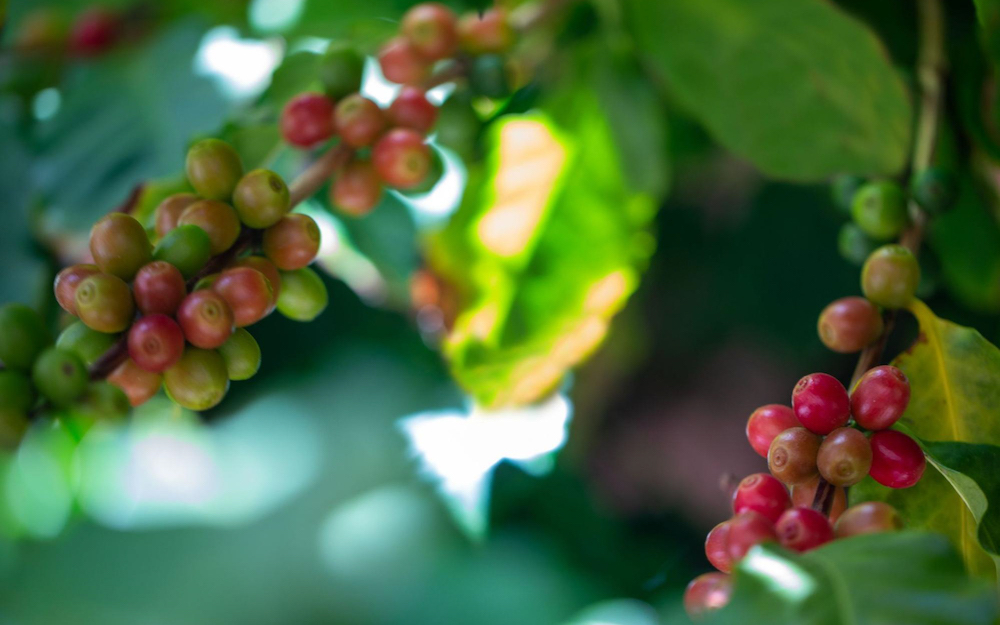
Located on the southern side of the East African Rift Valley, Sidamo boasts exceptional natural conditions. The region is generally characterized by high altitudes, fertile black soils and volcanic soils, and annual rainfall that can reach up to 2000 mm, all of which provide an ideal environment for coffee cultivation. The relatively lower temperatures brought by high altitudes extend the ripening cycle of coffee cherries, allowing the fruits to accumulate richer sugars and flavor compounds. The harvest season also tends to be slightly later than in other regions, resulting in the mellow and complex flavor base that defines Sidamo coffee.
Among the many high-quality producing areas in Sidamo, Guji and West Arsi stand out the most. Guji, once part of Sidamo, was designated as an independent producing region by the Ethiopian Commodity Exchange (ECX) in 2010 due to its outstanding coffee quality. The terrain of Guji is varied, with an average altitude exceeding 1800 meters, and features deep soil layers rich in organic matter. These conditions not only help coffee roots absorb nutrients but also impart a distinctive regional character to the coffee.
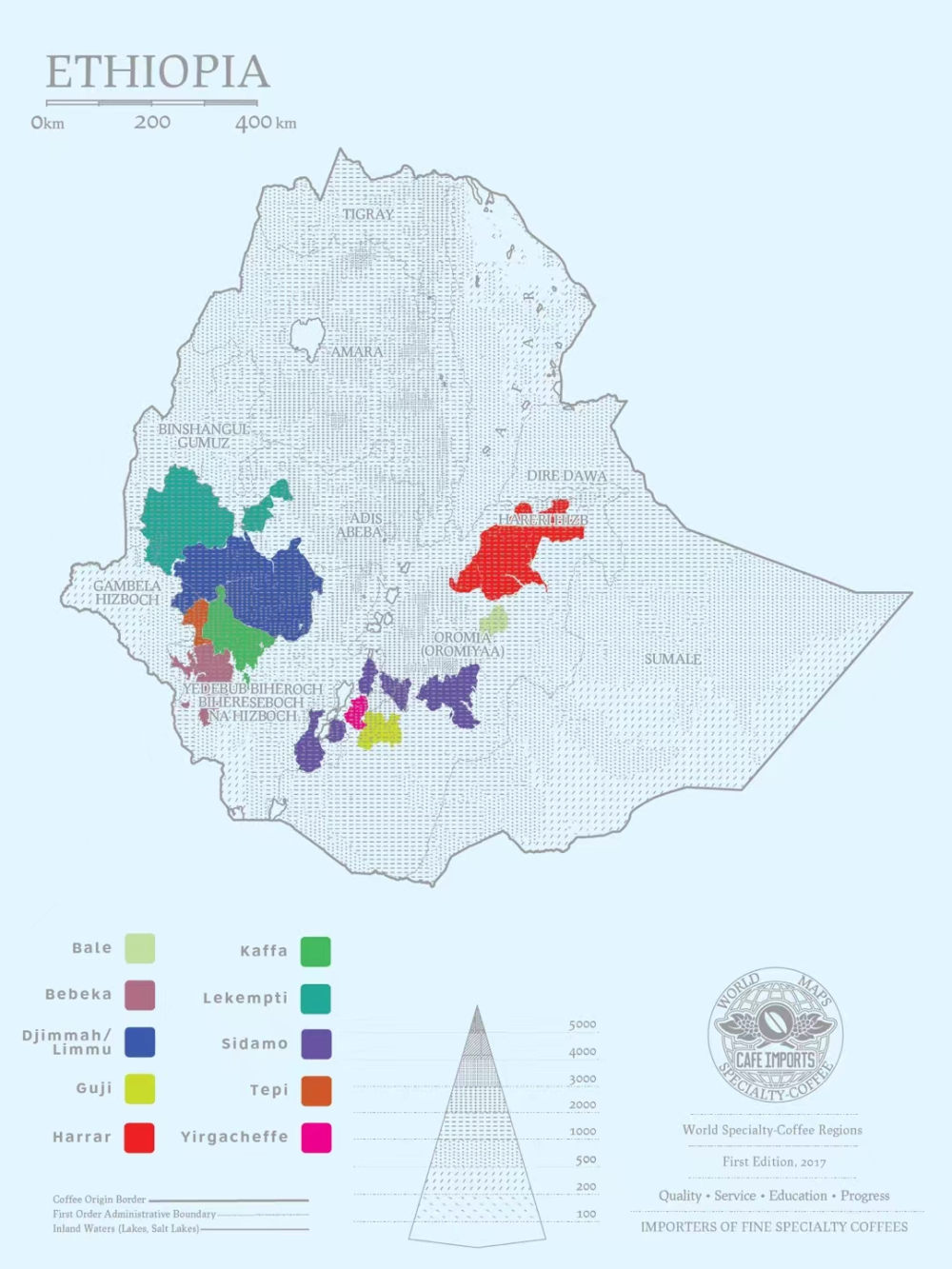
As for Hambella, it is a high-altitude sub-region located at the border between Sidamo and Guji, adjacent to Kochere in Yirgacheffe, separated by mountains as high as 3200 meters, making it one of the highest-altitude coffee-growing areas in Ethiopia. It is here that the highly acclaimed "Huang Kui" coffee originates.
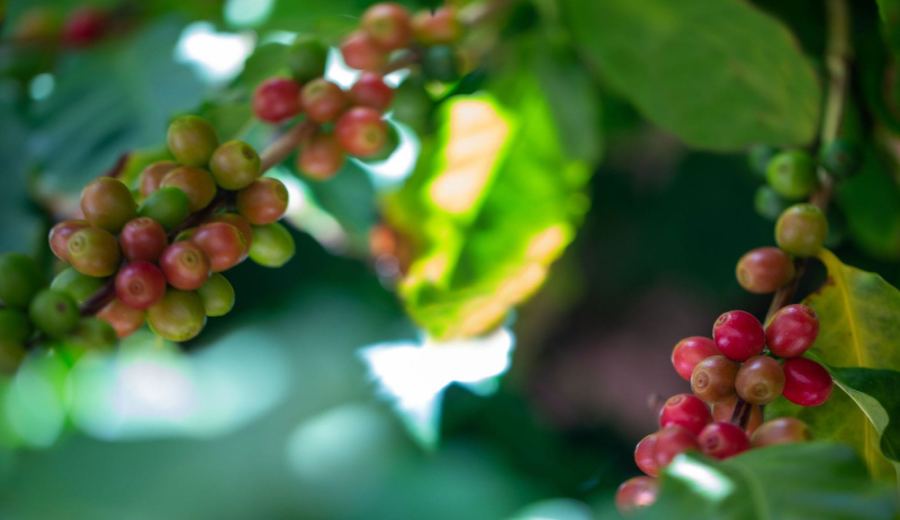
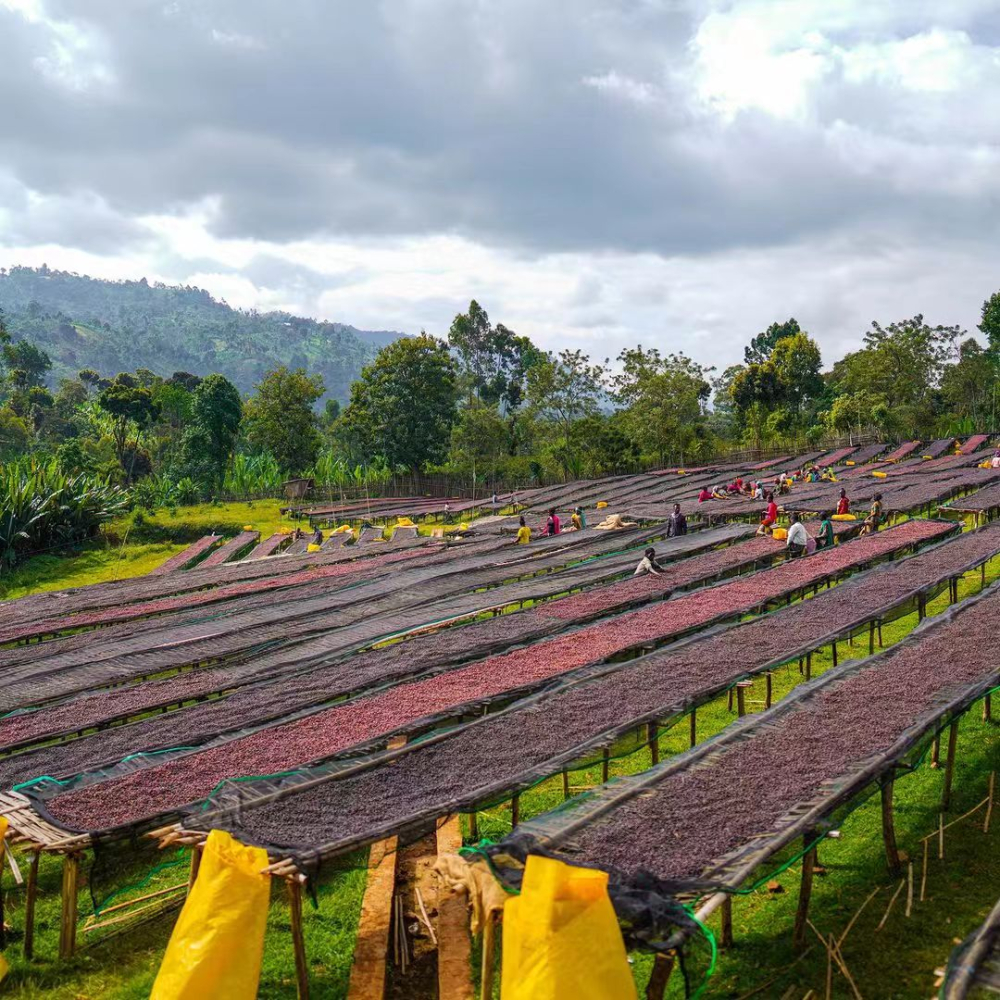
Huang Kui first gained fame in 2017 when it was submitted by the local DW company to Ethiopia’s TOH (Taste of Harvest) competition and won the championship. This coffee is actually named after the producing region "Hambella." It is a sun-dried coffee bean produced by the Buku Abel processing factory in the Hambella area, under the Shakisso woreda of Guji. During the annual coffee harvest season (typically December to January of the following year), the processing factory selects fully red ripe coffee cherries with a sugar content of 30 or higher. After rigorous screening, these cherries are placed on African raised beds for extended sun drying.
During the sun-drying process, to prevent over-fermentation caused by high midday temperatures, farmers appropriately shade the cherries. In the event of sudden nighttime rain showers, they immediately cover the cherries with rainproof tarps. At the same time, the beans are continuously turned to ensure even drying, avoiding fermentation off-flavors or surface scorching. The entire sun-drying process lasts approximately 18 days until the moisture content of the green beans stabilizes at 13%, after which hulling is performed.
The coffee variety used in Huang Kui is the common Ethiopian heirloom (Heirloom). These varieties are genetically diverse, with varying appearances and flavor profiles. Due to the local government’s efforts to preserve varietal diversity, detailed public classification of each strain has not been conducted, so they are commonly referred to as heirlooms on the market. This is also why many Ethiopian coffees possess unique and hard-to-replicate flavor personalities.
For coffee enthusiasts who prefer pour over brewing, selecting the appropriate grind size is key to influencing extraction performance. Generally speaking, grind coarseness directly affects the contact area and time between water and coffee grounds: the coarser the particles, the slower the extraction, resulting in lighter flavors; the finer the particles, the more concentrated the extraction, but over-extraction can easily lead to bitterness. It is recommended to use a standard 20-mesh sieve for testing, with an 80% passing rate as the benchmark—roughly equivalent to the 5th setting on an EK-43 grinder, or a fineness similar to that of fine sugar, suitable for medium-light roasted Sidamo Huang Kui.
In terms of brewing recommendations, to fully highlight Huang Kui’s high-altitude characteristics and intense fruity aroma, it is suggested to use a higher water temperature of 92–93°C, paired with a 1:15 coffee-to-water ratio (e.g., 15 grams of coffee grounds to 225 milliliters of water), and to choose a V60 filter to enhance flow rate and clarity. These parameter settings help balance acidity and sweetness, bringing out layers of berry, passion fruit, and honey-like sweetness, while providing a tea-like soft and lingering aftertaste.
In summary, Sidamo Huang Kui not only inherits the region’s classic floral and fruity characteristics but also showcases a rich, complex, and layered flavor profile thanks to its high-altitude sun-drying process and meticulous agricultural management. Whether you’re a coffee novice or a seasoned enthusiast, this premium coffee bean from Hambella is well worth adding to your tasting list to experience the unique depth of Ethiopian flavors.
The above content is compiled by CoffeeHunters, a coffee news website.


