








Introduction:Have you ever wondered if Flat White, Blonde Latte, and Cortado all belong to the latte family? In fact, these three “Flat White” drinks originating from Australia differ significantly from the classic Italian latte in terms of base and ratio. This article delves into the detailed differences between Flat White and latte in terms of milk foam thickness, coffee ratio, serving size, and flavor, while also providing professional-level preparation parameters and techniques to help you more accurately appreciate and distinguish these two classic milk-based coffees.
Many people’s first encounter with Flat White was through a certain chain brand’s 2015 launch of “Blonde Latte,” followed by other chain coffee brands’ “Cortado” and yet another well-known brand’s “Flat White.” Though different brands give them different names, they are all actually the same classic coffee from Australia—Flat White. This milk coffee from the Southern Hemisphere was first introduced by Italian immigrants who moved to Australia in the 1980s. They brought Italian espresso machines to New Zealand and Australia and localized the drink to create one with a stronger coffee flavor and thinner milk foam.

The common latte is characterized by a large volume and rich milk aroma. A typical hot latte is about 250ml or more—for example, some well-known coffee shops offer a 300ml hot latte, which uses a double shot of espresso (about 40g) as the base, plus 260ml of fresh milk, often resulting in a noticeably filling drinking experience. In contrast, the design philosophy of Flat White is “coffee-first, milk-secondary,” emphasizing the expression of the inherent flavors of the coffee, hence the milk foam is thinner and the serving size is smaller.

Visually and in terms of taste, the most noticeable differences between Flat White (such as the market’s Flat White, Blonde Latte, etc.) and latte are the milk foam thickness and overall proportions. Generally, a cappuccino has a thick milk foam of about 1–2cm, forming what is called a “hamburger-style” top, which usually needs to be sipped before drinking the coffee; a latte’s milk foam is about 0.5cm, while Flat White’s milk foam must be controlled to within 0.3cm. Some shops even choose not to froth the milk at all, pouring only heated milk into the espresso to maintain the flattest possible surface.

In terms of preparation, the ratio of coffee to milk in a latte varies by shop, whereas Flat White is typically served in a small cup of 150–180ml, maintaining the coffee amount of a double shot of espresso but reducing the amount of milk, thereby increasing the coffee proportion to deliver a more concentrated and intense flavor, which is why it is also referred to as a “small latte.” This small-cup design not only makes the coffee taste stronger but also allows it to be enjoyed quickly before the milk foam layers separate, maintaining the optimal drinking state.

With the rise of the specialty coffee trend, many shops have started using single-origin espresso (SOE) as the base and replacing traditional espresso with double ristretto shots to create Flat Whites with more regional characteristics. Ristretto, in Italian, means “restricted,” referring to the extraction of the first half of the espresso shot, which is more concentrated and has a more intense flavor, thus producing a richer and more layered taste when combined with milk. However, it should be noted that each type of coffee bean has slightly different optimal extraction parameters, so it is recommended to fine-tune settings according to the characteristics of the beans used on the day.

As a practical example, a well-known coffee brand uses its own roasted “Sunflower Warm Blend,” composed of 70% Honduran Sherry and 30% Ethiopian Yirgacheffe Natural Red Cherry, which delivers flavors of vanilla, cream, whiskey, and berry fermentation. When making Flat White, they use a double ristretto (20g coffee grounds extracted to 30g liquid, in about 22–24 seconds), and steam 150ml of milk to a fine and smooth microfoam, with the temperature controlled at 55–60°C. The milk is then poured into the coffee without any mandatory latte art, allowing a naturally smooth surface to form.

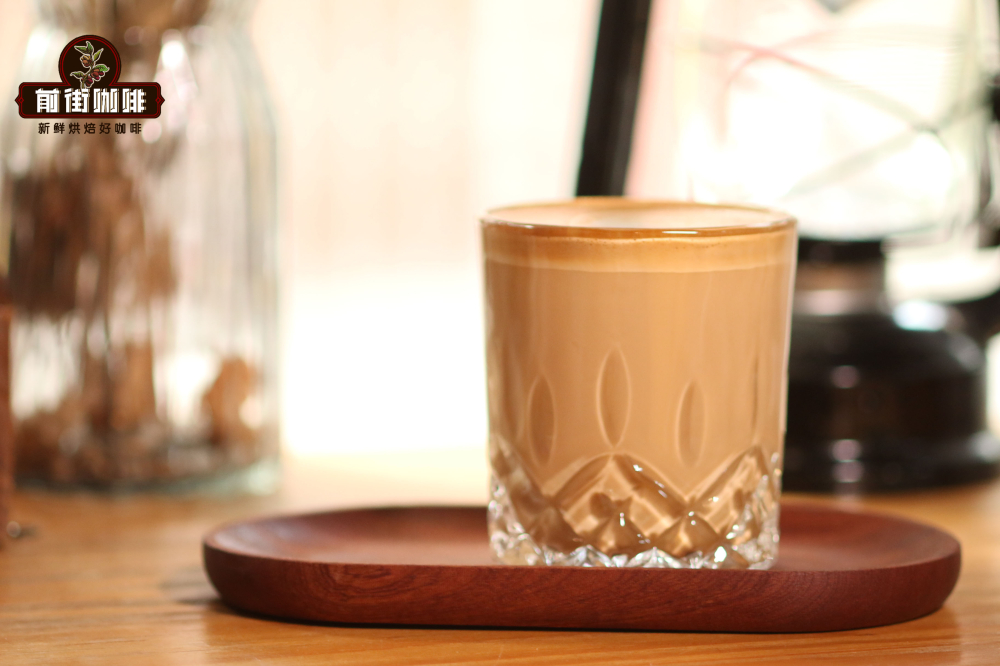
The final Flat White presents a complex aroma of vanilla, chocolate milk, and whiskey truffle, with a silky and rich mouthfeel. The entrance balances fruity acidity and milk sweetness, leaving a long-lasting aftertaste. This classic milk coffee from the Southern Hemisphere is not just about differences in serving size and milk foam thickness—it’s a true embodiment of the pursuit of the coffee’s essential flavors. If you prefer a strong coffee taste, why not start your experience with an authentic Flat White?

The above content is compiled by CoffeeHunters, a coffee news website.


