







Introduction:This article delves into the regional background, unique processing methods, and flavor characteristics of Sumatra’s Golden Mandheling coffee, as well as an analysis of the PWN Special Selection standard. From the terroir differences between the two core regions—Aceh and Lintong—to how the wet-hulling process impacts coffee mouthfeel, and then to the rigorous selection process of Golden Mandheling, it offers comprehensive and practical coffee knowledge to help you better appreciate the charm of this classic dark roast bean.
Mandheling coffee is often regarded as the representative of Sumatran Arabica beans, known for its low acidity, rich body, and distinctive earthy and herbal aromas. This article explores the historical context of how Indonesia’s coffee industry gradually shifted from Java to Sumatra, and provides a detailed analysis of the geographical and flavor differences between the two main producing regions of Aceh and Lintong. It also highlights how the local wet-hulling process contributes to Mandheling’s characteristic bold flavor and unique aromas, and offers an in-depth look at the special qualities of Golden Mandheling produced by PWN in terms of grade, selection, and cupping performance.

As one of the world’s most popular beverages, the history of coffee dates back several hundred years. The earliest documented consumption of coffee appeared in the Middle East, around seven hundred years ago. Over time, coffee cultivation and flavor have continuously evolved due to climate, soil, and people’s preferences. In the early days, coffee was mostly enjoyed by the aristocracy or as a stimulant, but today, many people value the aroma and layered flavors that coffee offers.
Compared to the fruity and floral profiles favored in today’s specialty coffee scene, many seasoned coffee drinkers prefer dark roasts with low acidity, stable mouthfeel, and subtle aromas. Behind every cup of rich coffee lies a long history of development. The birthplace of coffee is Ethiopia in Africa, and it wasn’t until the late 15th century that coffee began to be consumed in other regions. In the 17th century, coffee became all the rage in Europe, and some colonial powers introduced coffee trees to their colonies to control the market.
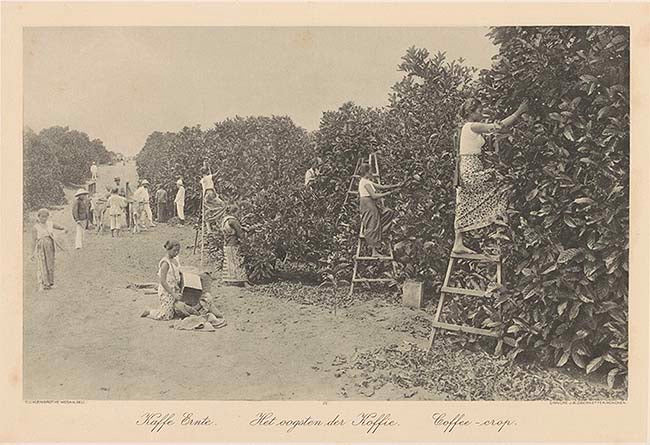
By the end of the 17th century, the Dutch brought coffee seedlings to Java in Indonesia. Thanks to the region’s favorable climate and fertile soil, the coffee trees grew rapidly and gradually expanded to Sumatra. Java once became an important coffee-producing region, and the term “JAVA” even became synonymous with coffee. However, in the early 20th century, Java was hit by a severe outbreak of coffee leaf rust, which killed large numbers of coffee trees, causing the production focus to shift north to Sumatra, and Java subsequently dropped off the list of major producing areas.
Today, Sumatra has become Indonesia’s largest producer of both Arabica and Robusta coffee, accounting for over 60% of the country’s total output. The northern part of Sumatra, including the Aceh Special Region and North Sumatra Province, mainly grows Arabica beans due to its higher elevation. While Arabica beans produced in Sumatra are commonly referred to as “Mandheling coffee,” the main producing areas are actually concentrated in the northwestern Aceh region and the Lintong area near Lake Toba in North Sumatra Province.
The Aceh region is adjacent to Lake Tawar and the Gayo Mountains, surrounded by vast virgin vegetation. With the rise of this emerging producing area, more and more coffee enthusiasts have discovered that Aceh Mandheling features delicate aromas and a relatively brighter mouthfeel. In contrast, the Lintong region is the traditional heartland of Mandheling production. This area boasts high biodiversity, moderate planting altitudes, and is paired with the unique wet-hulling process, as well as the aromas generated by local microbes during fermentation, resulting in Mandheling coffee’s signature bold, thick, and intense flavor profile.
Due to Sumatra’s long rainy season and the fact that the coffee fruit ripening period overlaps heavily with rainfall, the traditional sun-drying method is difficult to implement here. As a result, the region has developed its own unique “wet-hulling” processing procedure. Since the 1970s, this technique has been a key factor in shaping Mandheling’s distinctive flavors.
In the wet-hulling process, farmers first remove the outer skin and pulp of the coffee fruit, perform initial washing, and then leave the beans in a semi-dry state. At this point, the still not fully dried green beans are sent into a machine to remove the parchment layer on their surface, allowing the beans to be directly exposed to air and accelerating the drying process. Although this method significantly shortens the drying time, it also gives the coffee beans low acidity, a rich mouthfeel, and unique earthy and herbal flavors—traits that are precisely what many coffee aficionados love.
It’s worth noting that some consumers perceive Mandheling coffee beans as lacking in visual appeal, often noticing so-called “defective beans.” In reality, this is related to the relatively high moisture content of the beans during the hulling process and their softer texture, which can lead to irregular shapes resembling “goat hooves.” However, many coffee lovers believe that this imperfect appearance is precisely a symbol of Mandheling’s rustic and unadulterated flavors.
Among the many Mandheling products, “Golden Mandheling” is regarded as the representative of quality and purity. This coffee is produced by Indonesia’s PWN company, which sets extremely high standards in bean selection and processing. PWN selects beans larger than 18 mesh and requires no more than 3 defective beans per 300-gram sample to meet the highest Grade 1 (G1) specification. In addition, all green beans undergo three rounds of manual sorting to ensure complete removal of defects, greatly enhancing the coffee’s purity and sweetness.
Precisely because of this stringent selection and processing procedure, the yield of PWN Golden Mandheling is limited and its price is relatively high. Occasionally, some merchants may use G1-grade beans that have also undergone three rounds of manual sorting and have a similar appearance, attempting to attract consumers with a similar look. However, in actual cupping comparisons, PWN Golden Mandheling demonstrates clear advantages in taste purity and flavor consistency, which is also one of the reasons why experienced baristas can easily identify it.
To fully experience the rich mouthfeel and aromatic complexity of Golden Mandheling, it is recommended to use a medium-dark roast level along with appropriate brewing parameters. For practical purposes, it is advisable to use immersion-style equipment such as the KONO filter to enhance the body and layering of the cup. Suggested parameters include a water temperature of approximately 88°C, 15 grams of coffee, a brew ratio of 1:15, and a grind size equivalent to 70% extraction through a Chinese standard No. 20 sieve. During brewing, start with a 30-second bloom using 30 grams of hot water, then slowly pour water in a slow circular motion from the center outward to 125 grams, wait for the water level to drop, and then continue pouring to 225 grams. The total extraction time should be controlled to around 2 minutes. This method helps to fully bring out the bold flavors and rich mouthfeel of Golden Mandheling.
The above content is compiled by CoffeeHunters, a coffee news website.


