







Introduction:Want to understand how coffee bean varieties influence flavor and taste? This article takes an in-depth look at Typica and Bourbon, the most representative varieties of the Arabica family, exploring their origins, characteristics, cultivation challenges, and performance in classic producing regions. It also extends to introduce diverse derivatives such as Maragogype, Caturra, and Yellow Bourbon. From varietal evolution to real-world flavor profiles, it helps you build a systematic understanding of specialty coffee bean varieties.
The variety of coffee beans is the foundation for brewing a cup of coffee, not only determining the aroma profile and taste structure, but also affecting cultivation difficulty and disease resistance. Among numerous strains, Arabica—as the mainstay of specialty coffee—includes Typica and Bourbon as the two oldest and most representative varieties. These two have further branched out into many derivatives such as Caturra, Yellow Bourbon, and Geisha. This article will dissect in detail the historical origins, morphological features, suitable environments, processing characteristics, and typical flavor expressions of these varieties, helping you understand coffee better by starting with the varieties.
The global spread of coffee can be traced back to the late 17th century, initially introduced to Europe by traders from the Middle East. In 1699, the Dutch East India Company first brought coffee seedlings to Java, Indonesia, marking the beginning of coffee cultivation in Asia. In 1706, Java coffee trees were transported back to the greenhouse in Amsterdam, Netherlands, and later presented to King Louis XIV of France in 1713. In 1723, a French officer brought the seedlings to Martinique, and this tree became the origin of coffee cultivation in Central and South America, also marking coffee’s global journey through the Age of Exploration. Today, coffee is mainly distributed across three major producing regions: Asia, Latin America, and Africa, with a small amount also found in Australia.
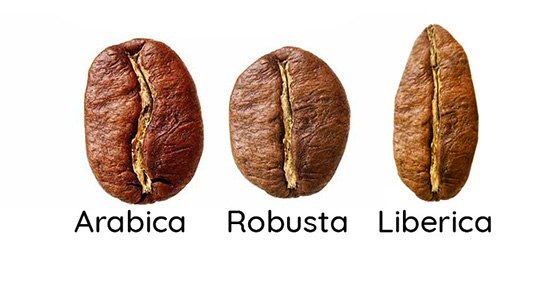
From a botanical classification perspective, globally cultivated coffee varieties with commercial value can be divided into three original species: Arabica (Coffea Arabica), Robusta (Coffea Robusta, also known as C. canephora), and Liberica (Coffea Liberica). Arabica offers the highest quality, with delicate flavors and rich aromas, accounting for about 60–70% of global production, and is the core of specialty coffee. Robusta is highly resistant to diseases, has high yields, but has a coarser flavor, and is primarily used for instant and canned coffee, with about twice the caffeine content of Arabica. Liberica, due to its poor adaptability and unremarkable flavor, holds an extremely low market share and is only traded on a small scale in certain regions.
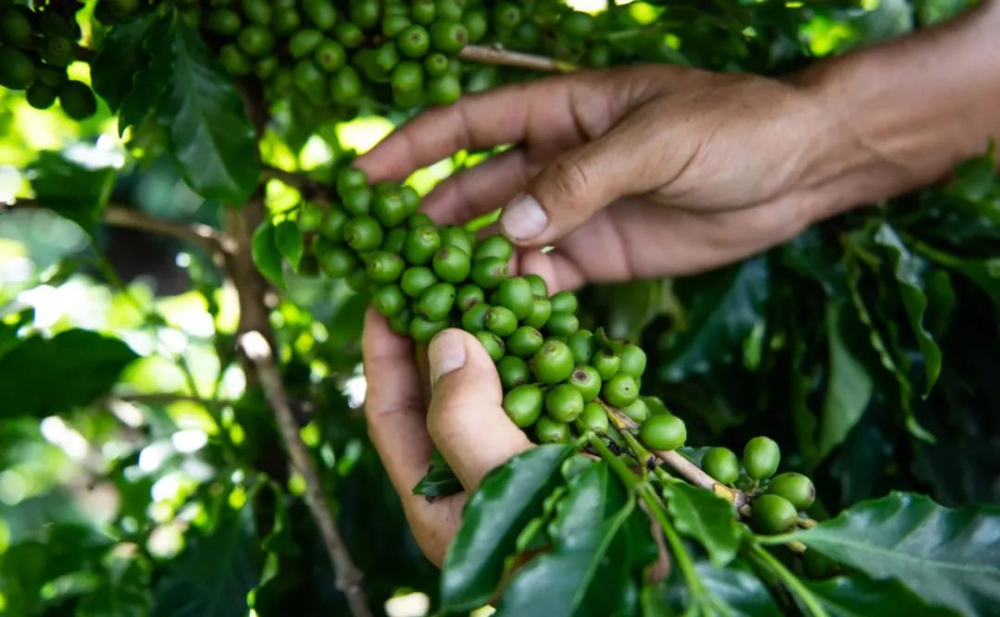
Within the Arabica family, Typica is considered the variety closest to the original wild species, originating from the Kaffa and Yemen regions of Ethiopia. It boasts outstanding purity and a full-bodied taste, often featuring bright citrus acidity and a sweet, lingering finish. The top leaves of Typica display a unique bronze color, while the beans are long and oval or slim and pointed in shape. The plant grows to about 3–4 meters tall, with a conical shape, and the angle between the main stem and branches is around 50–70 degrees. Its leaves are long and narrow with a slightly bronze tint, and the berries are also more elongated compared to other varieties. However, this variety has low resistance to leaf rust, produces scarce yields, and has a long maturation period, making cultivation difficult. Despite this, its genetic lineage has given rise to many variants, such as Mexican Typica, Hawaiian Typica, Jamaican Blue Mountain, Blue Mountain No.1, and the Caturra variety from Elida Estate in Panama—these are all well-known descendants within the Typica lineage. Among them, Jamaican Blue Mountain No.1 is a classic representative of Typica, grown at an altitude of 1310 meters in the Blue Mountain region, showcasing delicate flavors through the washed processing method.
Maragogype is a particularly distinctive variant of Typica, first discovered in 1870 in the Maragogype region of Bahia State, Brazil. Its beans are three times larger than those of regular Arabica, hence the name "Elephant Bean." This variety has a mild flavor with slight sweet and sour notes, but it is more challenging to roast. A light roast is recommended to preserve its delicate qualities, as dark roasting can easily mask its unique characteristics. Maragogype performs better in high-altitude environments, while its flavor becomes mediocre at lower altitudes.
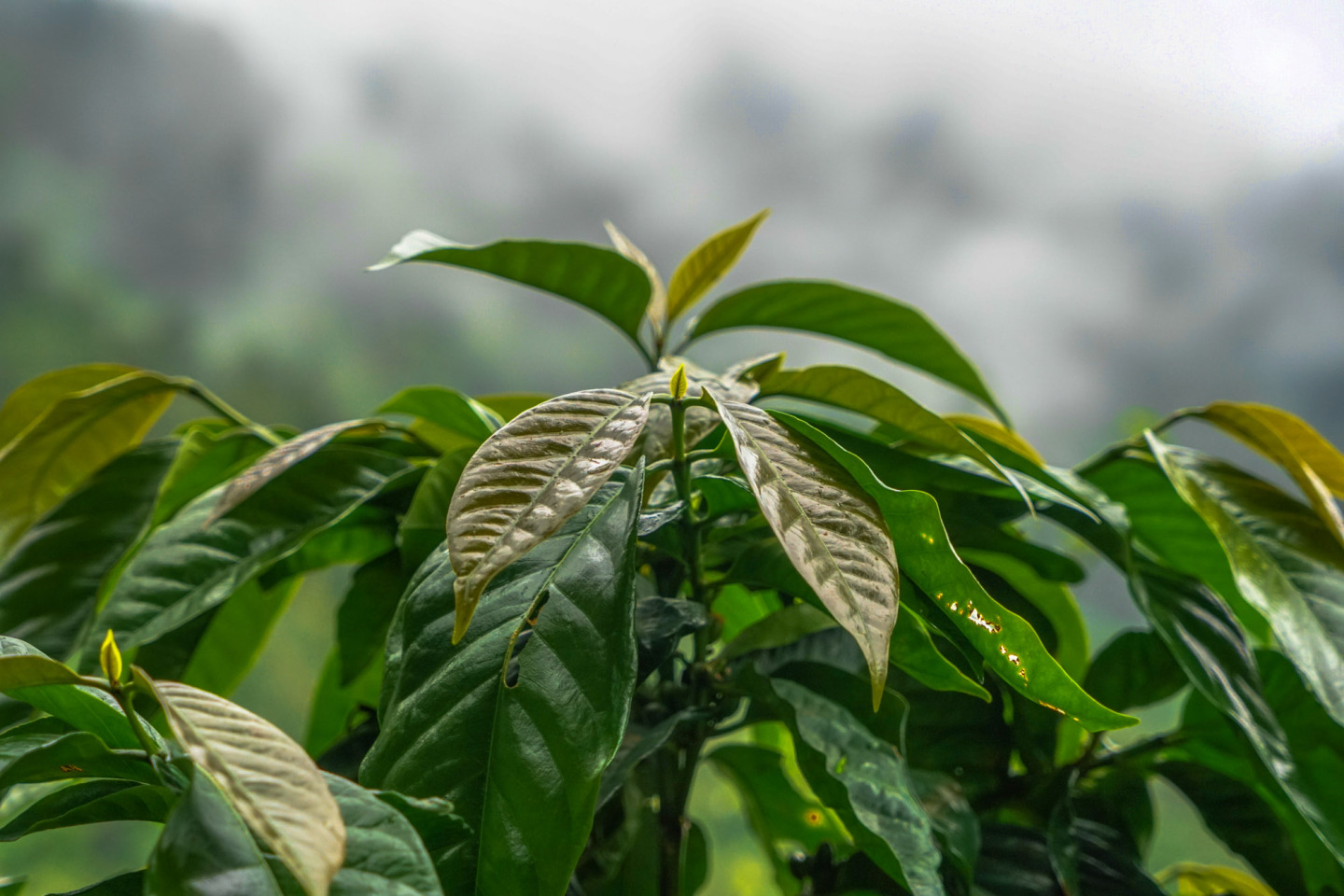
Bourbon is a natural mutation of Typica, originally brought from Ethiopia to Yemen, and then introduced to the island of Bourbon (now Réunion Island) off the east coast of Africa in 1715 by the French, hence its name. The coffee beans of this variety are rounder and fuller in appearance compared to Typica, with a yield that is 20–30% higher. Bourbon offers complex acidity layers, pronounced caramel sweetness, and good balance, making it the foundational variety for many specialty coffees in Central and South America. Bourbon trees have wide, slightly serrated leaves, and fruit colors vary due to mutations—appearing red, yellow, or orange—with red being the most common. It is suitable for cultivation at altitudes between 1100–2200 meters, with flavor improving as altitude increases, though it is similarly susceptible to leaf rust, berry disease, and nematode attacks.
Yellow Bourbon is a special variant within the Bourbon lineage, where the fruit ripens to a rare yellow color instead of red. It was first discovered in Brazil in the 1930s and is believed to be the result of a hybrid mutation between red-fruited Bourbon and some yellow-variant Typica. Although this variety has relatively low yields and is sensitive to environmental conditions, it can exhibit excellent flavor in high-altitude regions—such as intense nuttiness, sweet fruitiness, and clean low bitterness. For example, the Yellow Bourbon planted at Fazenda Rainha in Brazil, when processed with natural sun-drying, presents bright fruity sweetness and chocolatey aromas with soft and balanced acidity.
Caturra is a single-gene mutation of Bourbon, discovered in Brazil in 1937. Compared to Bourbon, Caturra trees are shorter, making them easier to harvest and manage, with both higher productivity and better disease resistance. They are suitable for high-density planting. However, they require intensive fertilization to maintain yield and were not widely accepted by farmers initially, becoming more popular only in the 1970s when coffee prices rose. Caturra thrives at altitudes of 700–1700 meters, with flavor improving at higher altitudes, often featuring bright berry notes and chocolatey aromas. The washed Caturra from Huila, Colombia, is a representative example, offering a rich flavor profile with soft acidity.
Mundo Novo is a natural hybrid of Bourbon and Sumatra Typica, first discovered in São Paulo, Brazil, in 1943, with good growth vigor and stable yields. Catuai is a crossbreed of Mundo Novo and Caturra, combining the strengths of both, with a short tree structure that is easy to manage and firm fruit that is less susceptible to wind damage. However, its overall flavor profile is slightly less layered than that of Caturra. Catuai comes in both red and yellow fruit types, with the red variant performing notably well in international evaluations. The Canet Estate in the Tarrazú region of Costa Rica, famous for its Mozart series in the Musician Series, uses raisin anaerobic honey processing to showcase delicate fruitiness and a full-bodied taste.
In addition, varieties such as Timor and Catimor were developed to enhance disease resistance and yield. Among them, Catimor is the result of crossing Caturra with Timor, boasting extremely strong disease resistance but average flavor performance, and is mostly used for commercial bulk beans. Geisha, on the other hand, is a premium variety within the Arabica species, originating from the Gesha Mountains of Ethiopia. Introduced to Panama in 1963, it long went unnoticed until 2004 when the washed Geisha from Hacienda La Esmeralda won consecutive awards in international cupping competitions, propelling it to fame. Geisha features unique citrus, floral, and caramelized toffee aromas, is suitable for cultivation on high-altitude slopes, and is now a star variety in the specialty coffee world.
The above content is compiled by CoffeeHunters, a coffee news website.


