







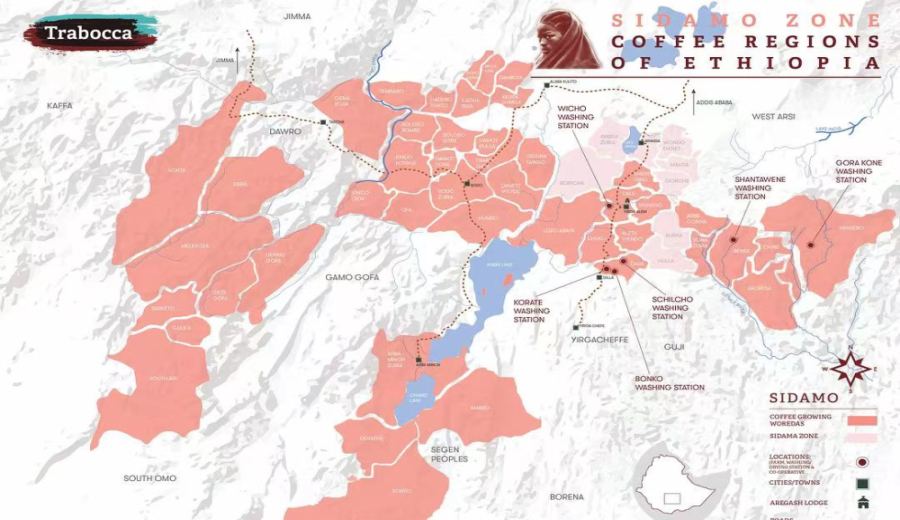
Introduction:Sidamo is one of Ethiopia’s most iconic specialty coffee regions, renowned for its diverse microclimates and meticulous processing methods. It is the birthplace of classic flavor profiles such as Huila, Guji, and Yirgacheffe. This article delves into the geographical characteristics, green bean attributes, and main processing styles of the Sidamo region, analyzing representative natural and washed coffee lots. It also provides practical flavor descriptions and pour over recommendations to help you fully appreciate the charm of this coffee sanctuary.
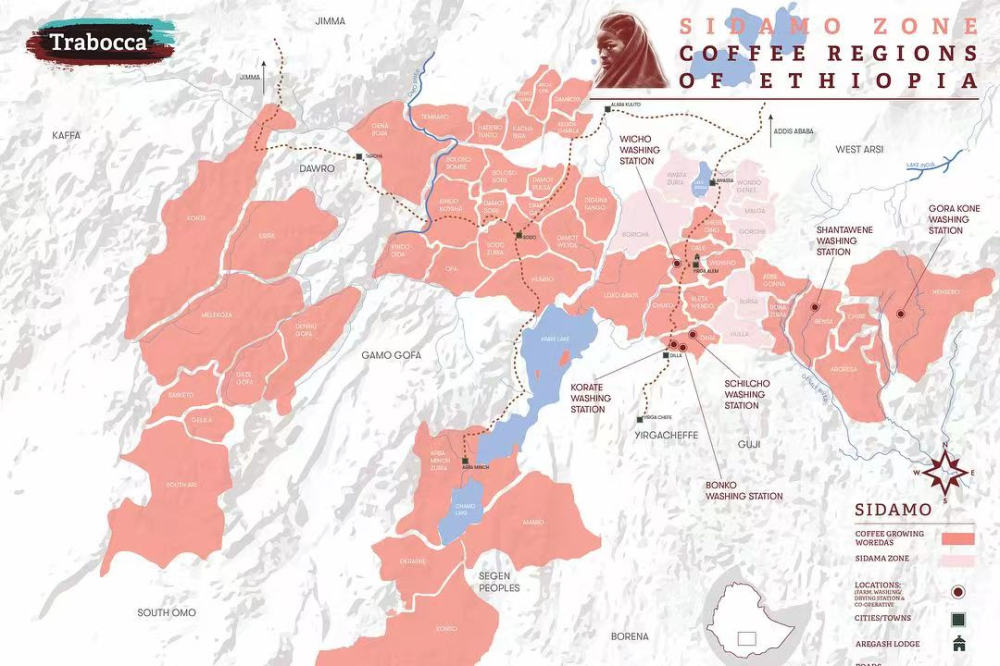
Located in southern Ethiopia, Sidamo (Sidamo) is one of the country’s most well-known specialty coffee regions. The area features varied terrain, with elevations generally ranging from 1400 to 2200 meters, along with notably distinct microclimates. These factors give rise to a rich array of fruity and floral notes, as well as unique regional flavors. Whether you’re a beginner coffee enthusiast or a professional roaster searching for distinctive flavor profiles, you can embark on a fascinating coffee exploration journey starting with Sidamo.
Among the many representative coffees of Sidamo,Natural Guji-Hambella (commonly referred to as Natural Huila) is often the first choice for many newcomers to this region. This coffee actually originates from the Guji zone’s Hambella area, which was formerly part of the Sidamo administrative region but was later designated as a separate Guji-Hambella region due to its outstanding flavor profile. However, the market still tends to understand its characteristics through the flavor spectrum of Sidamo. The cup profile of Huila typically exhibits brightsweet aromas and fruity-floral notes,commonly featuring scents such as strawberry cream, guava, blueberry, and dried mango. The overall flavor is well-layered, smooth on the palate, and has a long-lasting finish, making it an excellent entry-level option for single-origin pour over brewing.
If you’ve already tried Huila and want to explore other flavor styles of Sidamo, consider tryingNatural Hamasho.Hamasho is a local sub-region, and this particular coffee, thanks to careful fruit selection, low defect rates, and refined natural processing, showcases rich yet gentle sour-sweet fruit flavors. It is especially favored by consumers who prefer fresh and fruity taste profiles. Not only are the aromas captivating, but the overall mouthfeel is also relatively balanced, making it another great option for experiencing the diversity of Sidamo.
Sidamo green beans usually have a grayish-green appearance and inconsistent sizes, which is closely related to the region’s diverse growing environments and traditional farming practices. In terms of flavor characteristics, Sidamo coffee possessesflexible and varied acidity,ranging from soft to vibrant, with body that varies slightly depending on processing methods and altitude. Generally speaking, its fruit acids are bright, the mouthfeel is smooth, and it often carries delicate floral and spicy notes. In processing, naturally processed Sidamo tends to enhance floral expressions, though sometimes with slight earthy undertones; washed Sidamo presents a cleaner nuttiness, subtle cocoa notes, and stable citrus tones. Regardless of the processing method, Sidamo coffee generally offers good body and a pleasant drinkability.
In terms of roasting application, Sidamo is suitable forlight to medium roaststo highlight its fruity and acidic qualities, making it highly suitable for single-origin pour over brewing. Medium to dark roasts, on the other hand, can bring out richer caramel and chocolate bases, and are often used as base beans for blends or high-quality espresso. Among them, washed Sidamo green beans are usually light green in color, small-to-medium in size with an elongated oval shape, featuring high fruit fullness and overall stable quality. After brewing, they often carry distinctbrown sugar ginger soup and honey aromas,with acidity as bright and fresh as lemon, and a finish that extends into layers of milk, caramel, and chocolate—a truly representative Ethiopian flavor.
When talking about Sidamo, one cannot overlookYirgacheffe (Yirgacheffe),which, although part of the same region, has developed its own distinctive identity. Yirgacheffe is actually a small town in the northwest of the Sidamo region, which has become one of the global benchmarks for specialty coffee due to its uniquely flavored washed coffee. With elevations reaching above 2000 meters and a cool climate, it is highly conducive to growing high-quality Arabica beans. Yirgacheffe coffee is known for itscitrus, lemon, and jasmine floral notes,with acidity as delicate as fine white wine, a clean and pure mouthfeel, and is often described as “like a freshly brewed, refreshing citrus fruit tea.”
Yirgacheffe green beans are plump in shape, uniformly sized, and represent the classic example of washed processing. In roasting, it performs well across a range frommedium to dark roasts,showcasing its versatility: at medium roast, the acidity is soft with prominent fruity-floral notes; at darker roasts, it can bring out more intense aromas and a fuller body while still retaining its lively complexity. This coffee is often seen as a model of African washed coffee and remains a popular base for flavor experimentation among baristas and roasters around the world. To this day, it still ranks among the most beloved specialty coffees globally.
In summary, from Huila to Yirgacheffe, the Sidamo region showcases the diverse profiles and exquisite craftsmanship of Ethiopian coffee. Whether you’re a newcomer just starting your pour over journey or a seasoned connoisseur seeking unique flavor pairings, you can find your own coffee story within this terroir. By understanding different processing methods, roast levels, and brewing techniques, you’ll be able to more precisely appreciate the nuance and depth of Sidamo coffee, further enriching your coffee tasting experience.
The above content is compiled by CoffeeHunters, a coffee news website.


