








Introduction:An in-depth analysis of the geographic conditions, processing techniques, and nuanced flavor profiles of Brazil and Colombia—two major Latin American coffee-producing regions. From the bold richness of the world’s largest coffee producer, Brazil, to the refined balance of Colombia, discover how they influence pour over flavor expression and gain insights on selecting and brewing representative beans from each region.
Latin America has long been a cornerstone of the global specialty coffee supply, with regions known for their smooth and mellow mouthfeel, moderate acidity, and aromas often featuring cocoa or dark chocolate notes. Compared to the spicy and herbal profiles commonly found in Southeast Asian origins, Latin American beans generally offer a more rounded and balanced drinking experience, making them a top choice for many coffee beginners and daily drinkers.
Among the many Latin American coffee-producing countries, Brazil and Colombia are undoubtedly the two most prominent representatives. The former is the world’s largest coffee producer, boasting an extremely diverse range of producing regions and processing methods, with beans that typically exhibit nutty and chocolatey profiles—ideal for those who prefer rich and bold flavors. The latter is celebrated for its bright acidity, layered aromatic complexity, and excellent balance between nuttiness and fruitiness, making it a favorite among pour over enthusiasts. This article will take you through a comprehensive exploration of the uniqueness of these two regions, from geography and climate to processing techniques, while also introducing representative producing areas and beans such as Brazil’s Cerrado and Fazenda Rainha, as well as Colombia’s Huila SHB and Maragogype, helping you build a more complete understanding of Latin American specialty coffee.

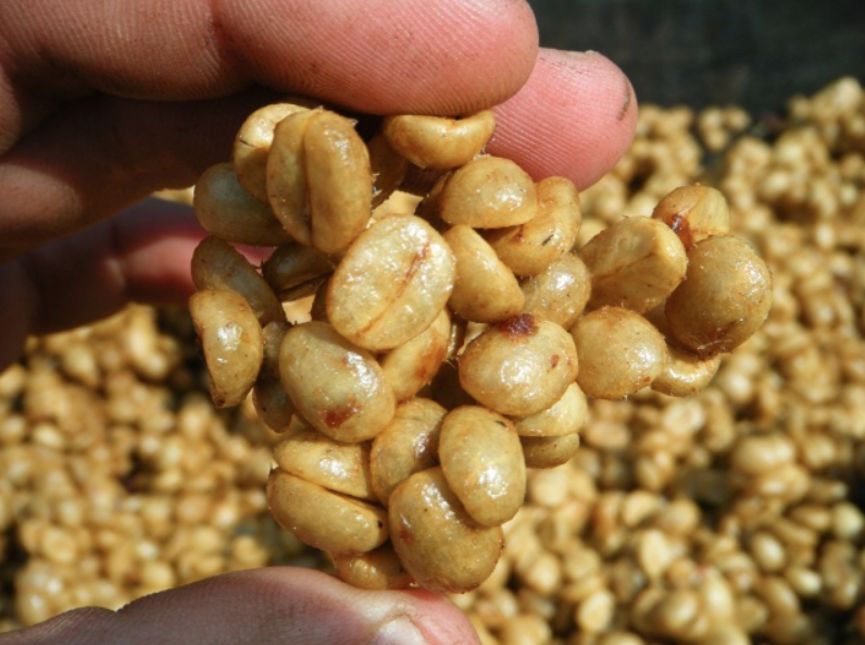
Overall, Latin American coffee beans are primarily characterized by balanced mouthfeel, full body, and gentle acidity. Unlike the heavy herbal tones often found in Asian origins, beans from this region tend to exude intense cocoa or dark chocolate aromas. In terms of processing, washed is the mainstream method, but in Brazil, semi-washed (pulped natural) is more common, resulting in beans that are typically larger in size and have a more intact appearance.
1. Brazil: The Bold and Rich Coffee Giant
As the country with the highest coffee production in the world, Brazil is also the second-largest coffee-consuming market, only behind the United States. Despite frequently experiencing natural disasters, its vast arable land ensures a stable output.
Coffee in Brazil is generally grown at relatively low altitudes, with most regions lacking significant microclimate variations, and many farms not using shade trees. These factors collectively shape the smooth, low-acid flavor profile of Brazilian beans. In the past, there was even a saying that “it’s hard to find specialty-grade beans from Brazil,” which ties back to the industrial-era focus on mass production at the expense of quality refinement.
However, in recent years, Brazil has actively invested in variety improvement and processing technology optimization, adjusting processing methods flexibly according to the humidity and climate conditions of each producing area to highlight regional characteristics. Common processing methods include natural (sun-dried), semi-washed, and washed, with washed being more prevalent in higher-humidity zones and natural or semi-washed favored in drier areas—allowing Brazilian coffee to showcase diverse flavor expressions while maintaining a rich foundation.
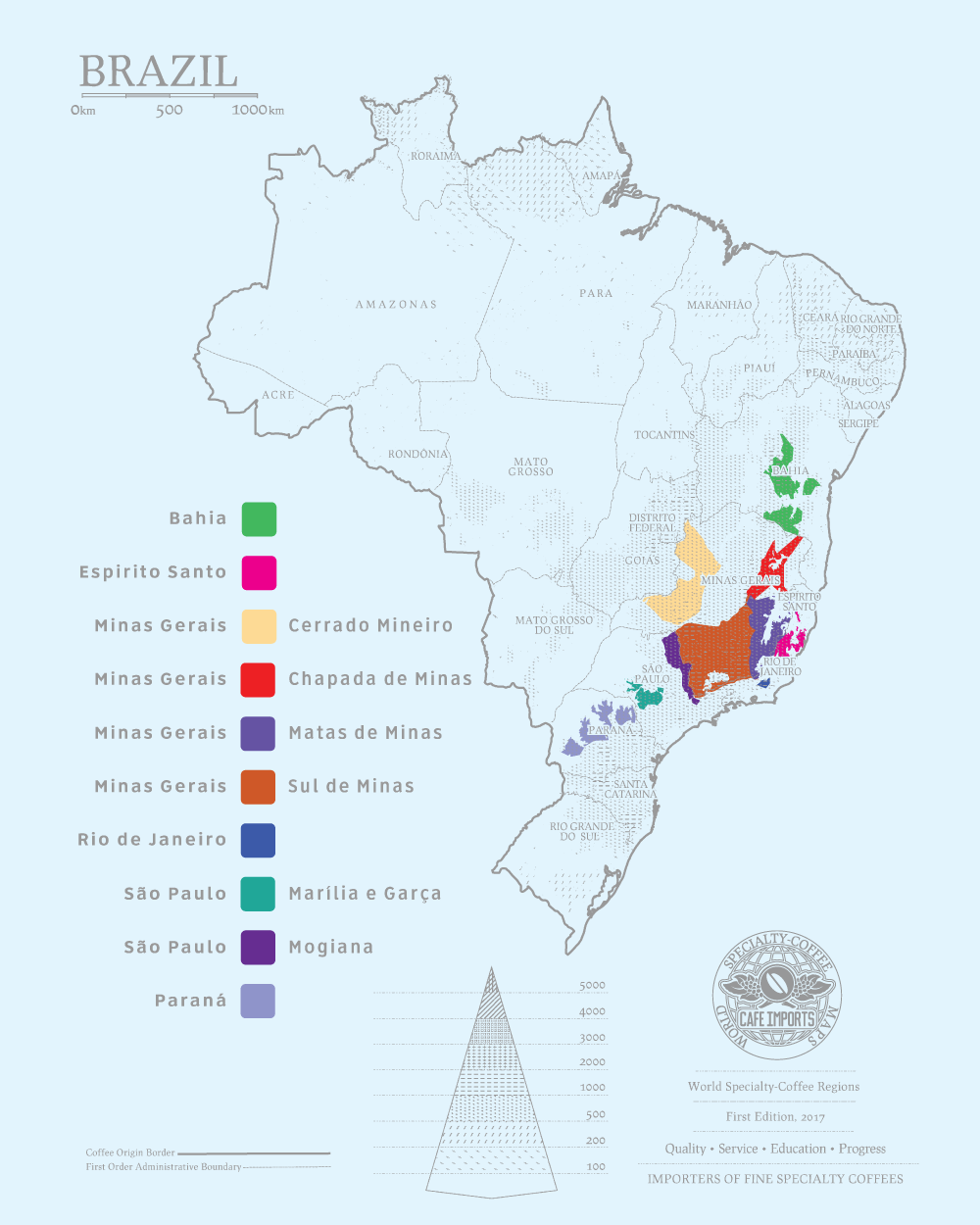
Brazil has 21 states, 17 of which are involved in coffee cultivation, but the top seven producing regions account for 98% of the national output, including São Paulo, Paraná, Bahia, Espírito Santo, Minas Gerais, Rondônia, and Rio de Janeiro. Among these, Minas Gerais, São Paulo, Bahia, and Espírito Santo are the main export hubs, together making up 90% of the country’s total exports.
São Paulo is home to renowned producing areas such as Santos and Mogiana. Historically, when the Mogiana Railway was first constructed in 1872, local coffee production accounted for less than 20% of the national total. However, with the railway’s completion in 1890 improving transportation, the region’s output rapidly increased, once accounting for half of the national total. Even during the 1920s, when Brazil set a record of producing 80% of the world’s coffee—with half of that coming from São Paulo—that golden age no longer exists. As other regions emerged, Minas Gerais and Espírito Santo eventually surpassed it, and the Mogiana Railway Company was taken over by the government in 1952 due to excessive debt.
Minas Gerais is a key source of Brazil’s specialty coffee, with major producing regions including Cerrado and Sul de Minas, both situated at higher elevations. If you’re looking to experience the delicate side of Brazilian specialty coffee, consider trying its semi-washed Cerrado beans, which often present creamy, almond, and chocolate notes, with low acidity and a smooth mouthfeel.
Cerrado is located in the western part of Minas Gerais, characterized by open highland terrain with elevations ranging from 750 to 1200 meters. Sul de Minas, dominated by hilly landscapes, sits at around 700 to 1200 meters in altitude. Since 1999, many farms that have won awards in Brazil’s Cup of Excellence competition have come from this region. Additionally, the southeastern mountainous areas of Minas Gerais, with elevations exceeding 1000 meters, also produce high-quality coffee, while the central-northern regions mainly focus on commercial-grade beans.
Another noteworthy producing area is Mogiana in São Paulo, with representative products such as the Fazenda Rainha coffee beans. Grown at altitudes between 1400 and 1950 meters and processed using the yellow Bourbon variety and natural (sun-dried) method, these beans showcase unique aromas and a rich mouthfeel.
2. Colombia: Balanced and Refined with Diverse Flavors
Colombia is the world’s third-largest coffee producer, located in the northwest of South America. The diversity of its terrain and climate directly influences its coffee characteristics. The eastern plains and southern regions feature a tropical rainforest climate, the central mountainous areas at 1000 to 2000 meters altitude have a subtropical climate, and the northwest exhibits traits of tropical savanna. This three-dimensional climate allows Colombia to cultivate coffee that balances body with aromatic complexity.
While Colombian coffee may not be as bold in body as Brazil’s, nor as vibrant in acidity as African beans, its strength lies in its well-balanced sweetness and acidity, along with clear aromas and distinct nutty notes—making it ideal for consumers seeking refined texture and layered flavor.
Colombia’s harvest season varies between the north and south. Southern producing areas near the equator have only wet and dry seasons throughout the year, with the main harvest period concentrated between April and June, enabling stable year-round supply to the market. This region focuses mainly on specialty coffee varieties, with famous producing areas including Huila, Cauca, Nariño (also known as Narino), and Tolima, among which Huila is particularly renowned.
The Colombian SHB and Maragogype pour over single origins launched by us both come from Huila, showcasing the region’s distinctive aroma finesse and flavor balance.
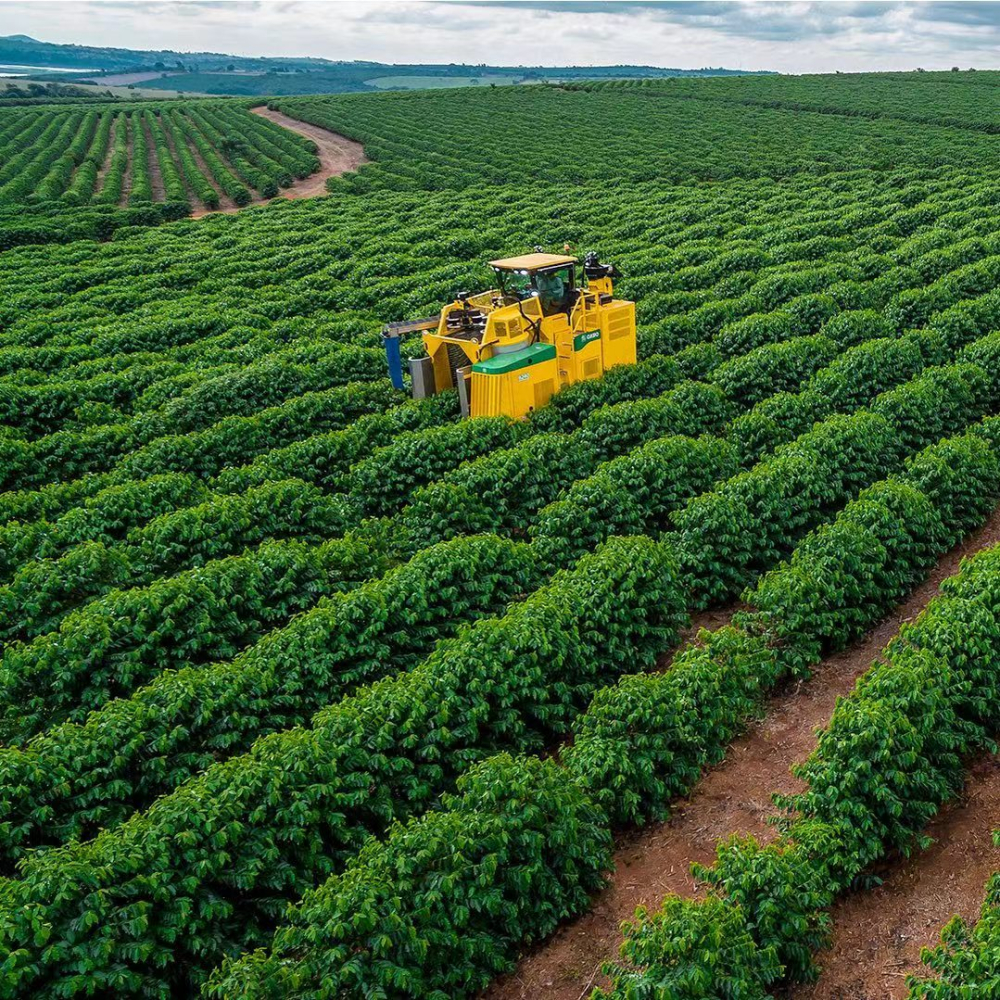
Take Colombian SHB as an example—this coffee from Finca La Línea in Huila is grown at an altitude of 1900 meters, using the Sidra variety and anaerobic natural (anaerobic sun-dried) processing method, delivering richer and more complex fruitiness and sweetness. It’s an excellent choice for advanced pour over enthusiasts. By understanding the unique environments and processing methods of these regions, you’ll be better equipped to select Latin American specialty coffee beans that suit your personal taste and unlock their optimal potential during brewing.
The above content is compiled by CoffeeHunters, a coffee news website.


