







Introduction:Drip bags are favored by many coffee enthusiasts for their portability and ease of use, making them a top choice for coffee on the go or in the office. However, improper brewing not only fails to bring out the intended flavors but may even leave you with a mouthful of coffee grounds. This article delves into the differences between drip bags, instant coffee, and pour over coffee, analyzes four common brewing mistakes, and explains the correct way to brew high-quality drip bags—including vessel selection, water temperature control, pouring technique, and ideal coffee-to-water ratio—so you can easily enjoy a pour over–grade coffee experience with full flavor.
As coffee culture gradually becomes part of daily life, more people crave a rich cup of coffee to perk them up amidst their busy schedules. Yet not everyone has the opportunity to visit a café and savor a professionally brewed pour over coffee. It is against this backdrop of demand that drip bags have emerged as an ideal option that combines convenience with flavor.
Drip bags are essentially pre-ground coffee made from carefully selected and properly roasted beans, ground to a medium-fine consistency and packaged in filter bags equipped with built-in filters. These bags feature "ear-like" designs on both sides that allow them to hang over the rim of a cup. With just hot water and a regular drinking cup, you can brew quickly anywhere. Compared to traditional pour over, which requires a pour over kettle, filter cone, grinder, and more, drip bags significantly lower the barrier to entry while retaining the refined flavor characteristics of filtered coffee.
Despite their convenience, many users, misunderstanding their nature, brew drip bags incorrectly, resulting in compromised flavor—or worse, confusing them with instant coffee. Below are several common brewing mistakes to help you avoid pitfalls and truly appreciate the charm of drip bags.
Mistake 1: Treating drip bags like instant coffee by pouring the grounds directly
Drip bags contain freshly ground coffee, not the synthetic powder found in instant coffee. Instant coffee is made by concentrating and drying coffee liquid into soluble granules that dissolve in water to become liquid coffee. In contrast, only about 30% of the soluble flavor compounds in drip bag coffee can dissolve in water, while the remaining 70% consists of insoluble fiber—the very coffee grounds we often refer to. If you tear open the whole drip bag and pour the coffee grounds directly into the cup with water, not only will the flavors fail to extract effectively, but you’ll also end up with a mouthful of settled grounds, severely affecting the taste.
Mistake 2: Steeping the drip bag like a tea bag
Some users place the entire drip bag into a cup, pour in hot water, and let it steep, believing the coffee grounds will naturally release their flavors over time. In reality, the coffee grounds in a drip bag are medium-fine grind—usually around 10 grams per pack—and the coffee layer is concentrated in the center of the filter bag, forming a relatively dense structure. If you don’t tear open the seal and instead steep the bag directly, the center of the coffee layer often fails to get evenly wet, causing some grounds to release off-flavors rather than essential aromas. As a result, the brewed coffee may taste weak and could even carry undesirable woody or cardboard-like notes.
Mistake 3: Pouring in too much hot water at once
Many people, when brewing, tend to pour hot water directly from a kettle into the drip bag. But if the kettle spout is too wide or the water flow too fast, it can quickly cause the inside of the bag to overflow, leading to coffee grounds spilling out along with the water. This not only affects the visual appeal of the brew but also seriously disrupts the stability and purity of the coffee’s flavor.
Mistake 4: Using a brewing vessel that is too small or too short
Based on experience, for a 10-gram drip bag, it’s recommended to pour about 150 grams of hot water, yielding approximately 140 to 145 grams of coffee liquid. If you use a cup that is too small or too short, the liquid level may easily submerge the bottom of the drip bag during brewing, causing the lower coffee grounds to be soaked for too long and release excessive bitter substances, negatively impacting the overall balance of flavors.
Mastering the correct way to brew drip bags allows you to enjoy a near professional pour over–level coffee experience, whether at home, in the office, or on the go. The following uses a medium to medium-light roasted drip bag as an example to illustrate the optimal brewing process and suggested parameters.
Correct 1: Choose a brewing cup of moderate height
To prevent the coffee liquid level from directly contacting the bottom of the drip bag, it’s recommended to use a slightly taller drinking cup or sharing pitcher, ensuring there’s an appropriate distance between the liquid level and the bottom of the drip bag during extraction to reduce the risk of over-extraction.
Correct 2: Control the appropriate water temperature range
For medium-fine drip bag coffee grounds, the temperature range most active for releasing flavor compounds is approximately 88°C to 92°C. General recommendations: for medium-light roasted drip bags with prominent floral, berry, or citrus notes, use water at 90°C to 92°C; for medium roasted bags with nutty or cocoa flavors, slightly lower the temperature to 89°C to 90°C; for medium-dark roasted bags showcasing herbal, spicy, or dark chocolate notes, aim for 88°C to 89°C to avoid extracting excessive burnt bitterness from overly high temperatures.
Correct 3: Use a little water at a time in multiple pours
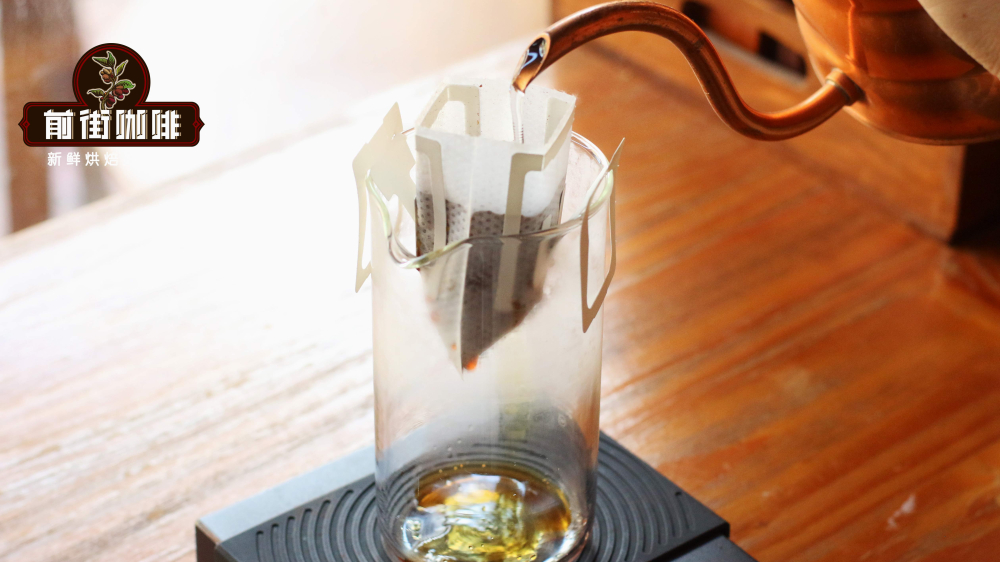
If possible, using a narrow-spout coffee pouring kettle allows for more precise control of the water flow, aiding in even wetting of the coffee grounds and layered extraction. Without specialized tools, you can also manually pour water in small amounts slowly. Just remember to avoid pouring too much hot water at once, which can lead to overly concentrated extraction or overflowing of the coffee layer.
Correct 4: Maintain an ideal coffee-to-water ratio
The generally recommended brewing ratio for drip bags is 1:15—that is, for every 10 grams of coffee grounds, use 150 grams of hot water. This ratio effectively balances richness and brightness, resulting in a smoother and more layered coffee flavor.
The above content is compiled by CoffeeHunters, a coffee news website.


