








Introduction:Kenyan coffee is renowned for its bright acidity and rich berry notes, making it an essential choice for specialty coffee enthusiasts worldwide. This article delves into the history of Kenyan coffee, explores the characteristics of its six major producing regions, examines the rigorous green bean grading system, and provides practical pour over recommendations and parameters to help you better understand this East African specialty coffee and master the optimal brewing methods.
With its vibrant and lively acidity and intense berry flavors, Kenyan coffee holds a prominent position in the global specialty coffee market and is deeply loved by coffee aficionados. However, this East African country, which borders Ethiopia—the birthplace of coffee—only began its formal coffee cultivation history in the late 19th century. From its initial introduction by French missionaries to centralized plantation production during the British colonial period, and evolving into today’s transparent auction system, Kenyan coffee has forged a uniquely institutionalized development path.

Although neighboring Ethiopia, widely regarded as the origin of coffee, Kenya’s coffee cultivation history began much later. According to authoritative sources such as the World Coffee Atlas, the first coffee trees were brought to Kenya from Réunion Island by French missionaries in 1893, with the first coffee bean harvest occurring in 1896. Under British colonial rule, local residents were not permitted to grow coffee privately, so early coffee cultivation was primarily concentrated on large-scale plantations operated by European settlers, with the harvested beans mostly shipped back to Britain for auction.
In 1933, the Kenya Coffee Board was established to reclaim domestic control over coffee sales, and the following year, an auction mechanism was introduced. In 1935, the first official coffee auction was held in the capital, Nairobi, a tradition that continues to this day. By the early 1950s, through agricultural reform legislation, the government enabled more local families to own land, further encouraging smallholders to engage in cash crop cultivation and enhancing the diversity and quality of the overall coffee industry.
Currently, nearly all coffee trading in Kenya is concentrated at the Nairobi Coffee Exchange, where public auctions are held every Tuesday during the harvest season. Traders can obtain green bean samples in advance, and after cupping and selection, bid for them at the auction—the highest bidder wins. This system is considered one of the most transparent and efficient coffee trading models in the world and also encourages farmers to pay greater attention to coffee quality.
Kenya is home to several well-known coffee-producing regions, among which Kirinyaga and Nyeri are the most renowned. Overall, Kenya’s coffee-growing areas can be broadly divided into the following six major regions:
Kiambu: Located in central Kenya, this region was historically dominated by large plantations, though their numbers have gradually declined due to urbanization. The region includes the notable sub-region of Thika, and the coffee produced here features bright acidity and a full body. Kenyan AA beans from Thika have been known to exhibit flavors of black plum and cherry tomatoes, with a crisp acidity, strong berry character, prominent mid-palate brown sugar sweetness, and a berry-like aroma in the finish.
Kirinyaga: Blessed with fertile volcanic soils and skilled processing techniques at its washing stations, the coffee from this region is celebrated for its vivid flavors and complex layers, making it one of Kenya’s most acclaimed top-tier producing areas.
Nyeri: Adjacent to Kirinyaga and home to Mount Kenya, this region features volcanic red soils that nurture numerous cooperatives composed of smallholder farmers. The coffee here is known for its lively blackberry acidity, bold body, and citrus and floral notes, making it a star-producing region in the international market.
Embu: Neighboring Mount Kenya, where about 70% of the population is engaged in small-scale farming, the main cash crops include tea and coffee, though production volumes are relatively modest.
Mount Kenya West: Encompassing Kisii and the Bungoma area of the Elgon mountainous region, most coffee from this area comes from small cooperatives with limited output. The flavors tend toward nuttiness and mild fruit acidity, making it suitable for consumers who prefer gentler acidity profiles.
Murang’a: Located in the Central Province and home to approximately 100,000 coffee farmers, this region benefits from volcanic soil nourishment. The resulting coffee boasts bright acidity, juicy mouthfeel, and a solid body.
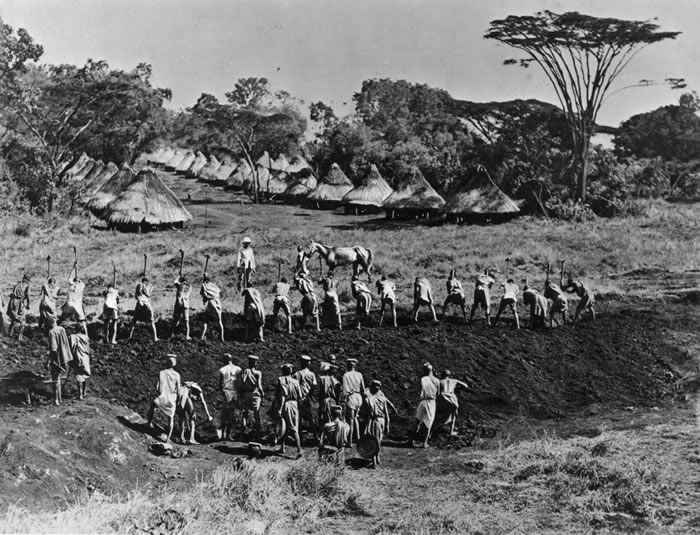
Kenya’s coffee grading system is based on bean size and quality, managed and evaluated uniformly by the Kenya Coffee Directorate, with public bidding taking place at auctions. The commonly seen ‘Kenyan AA’ represents the highest grade, indicating large bean size and excellent quality. Additionally, ‘Kenyan PB’ refers to peaberry—a rare mutation where a single round seed forms instead of the usual two flat ones—often exhibiting more concentrated flavors due to its unique structure.
When brewing Kenyan coffee, it is recommended to use a medium-light roast to highlight its bright acidity and complex fruit characteristics. In practice, a Hario V60 dripper can be used with water at 93°C for pour over. Specific parameters are as follows: 15 grams of coffee, a 1:15 coffee-to-water ratio, and a grind size recommended at EK43s#10 (approximately 80% passing through a #20 sieve). The brewing steps are: start with a 30-second bloom using 30 grams of water, then pour in stages up to 125 grams, wait for the liquid level to drop, and continue pouring up to 225 grams. The total extraction time should be controlled to around 2 minutes, fully showcasing the sweet-acid balance and clear layered profile of Kenyan coffee.
The above content is compiled by CoffeeHunters, a coffee news website.


