







Introduction:Civet coffee, commonly known as cat poop coffee, originates from coffee beans excreted by civets after consuming coffee cherries, undergoing natural fermentation and manual processing. This rare and expensive coffee is renowned for its unique flavor and mysterious production process. This article delves into its regional characteristics, development history, brewing recommendations, and true flavor profile, offering a comprehensive exploration of this highly debated premium coffee—from the highlands of Sumatra to the Lùjiāngbà region of Yunnan. It also provides professional pour over parameters to help you experience its authentic taste.
Civet coffee, also called cat poop coffee, is an exceptionally distinctive coffee variety. It comes from coffee beans that have been naturally fermented in the digestive system of civets after they consume ripe coffee cherries, and are then expelled, cleaned, and roasted. This coffee is not only extremely limited in production but has long been considered one of the finest in the coffee world due to its unique production process and astonishing flavor, often commanding very high prices.
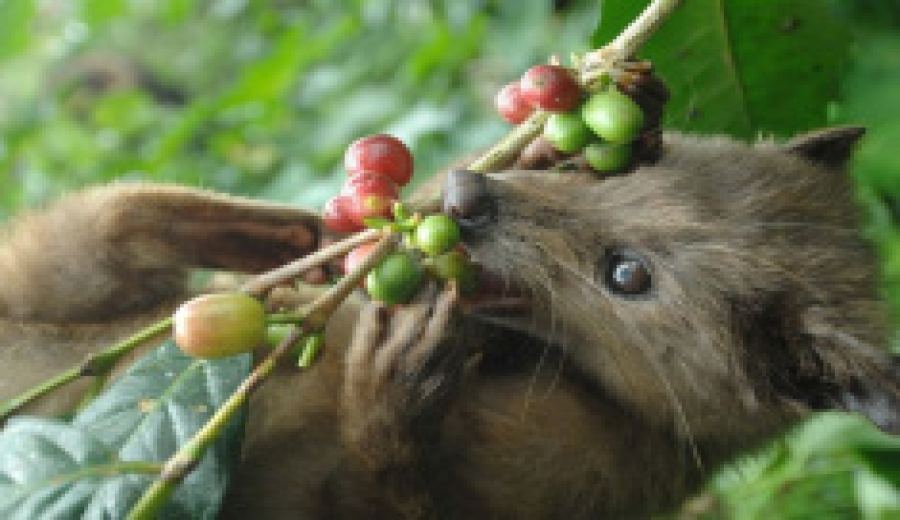
The civet (commonly referred to as Musang or Luwak in Indonesia) is an omnivorous wild animal that prefers to select ripe coffee fruits. They typically only consume the sweetest and most mature coffee cherries, which then ferment in their digestive tract. The originally hard coffee beans are broken down by stomach acid and enzymes, partially destroying proteins, thereby reducing bitterness and adding a rich, rounded mouthfeel. These “processed” coffee beans are then excreted in the civet’s droppings, collected, cleaned, and roasted by gatherers to become the civet coffee sold on the market.
Currently, the main production areas of civet coffee are concentrated in the highland regions of Sumatra, Indonesia, where altitudes of around 1,000 meters or more help cultivate coffee beans with intense flavors. Among them, Musang coffee from Sumatra—known locally as Kopi Musang—is considered one of the orthodox sources. In addition, in recent years, the Baoshan area of Yunnan, especially around Lùjiāngbà in the Gaoligong Mountain range, has also begun developing civet coffee production. Though on a smaller scale, it has similarly drawn market attention.
In the production process, the natural foraging behavior of wild civets is believed to allow them to select the highest quality coffee cherries, thereby enhancing the complexity of the final coffee’s flavor. However, due to the limited number of wild civets, many producers have turned to captive breeding methods, which have consequently given rise to numerous animal welfare controversies. Some unscrupulous operators, in order to increase yield, confine civets in small spaces and force-feed them, leading to health issues for the animals and negatively impacting the final quality of the coffee beans.
Regarding brewing methods, because the flavor profile of civet coffee tends to be rich and full-bodied, it is recommended to use a siphon (vacuum pot) for extraction to fully showcase its abundant mouthfeel and aroma. Suggested parameters are as follows: approximately 17 grams of coffee grounds (about 2 flat tablespoons), with 160–180 milliliters of pure water poured in, water temperature controlled at 96°C, water pressure maintained at 9–10 atmospheres, and brewing time around 1 minute 45 seconds to 2 minutes. When the coffee liquid has completely dripped through, a large amount of golden, fine foam can be observed—this is when the flavor is most concentrated. It should be noted that this type of coffee is not recommended to be consumed with sugar or milk, in order to fully experience its original flavor, nor is it advisable to brew it multiple times, as this may dilute its essential layers.
In terms of flavor, authentic civet coffee is often described as having intense chocolate and honey aromas, a smooth mouthfeel, low acidity but a very strong body resembling syrup, a long-lasting aftertaste, and a subtle cool mint sensation. However, there are also many counterfeit products on the market, most of which are ordinary coffee beans passed off as civet coffee, or simply flavored with added spices—their flavor is far from the real thing. Consumers should pay special attention to origin information and supply sources to avoid purchasing inferior or fake products.
In summary, civet coffee, with its unique production background, scarce production volume, and special processing method, has become a premium coffee that coffee enthusiasts around the world are eager to try. Whether it’s wild civet coffee from Sumatra or niche products from the high-altitude regions of Yunnan, each showcases distinct regional characteristics and flavor potential. If you’re curious about this highly discussed and mysterious type of coffee, why not try it yourself using the professionally recommended brewing parameters—you might just discover the truth behind your own “cat poop coffee.”
The above content is compiled by CoffeeHunters, a coffee news website.


