








Introduction:Delve deep into Ethiopia’s Bench Maji region to uncover the origins, variety grading, and unique natural sun-drying processing of Gesha Village Estate. This article details the altitude and microclimate of the region and their impact on flavor, explores the characteristics of the Gesha 1931 variety, compares it with Panamanian Gesha, and offers practical pour over recommendations to help you master the brewing essentials of this popular specialty coffee.
Ethiopia is hailed as the cradle of coffee, not only the birthplace of the bean but also home to the world’s richest coffee genetic diversity. Among its regions, Bench Maji (Bench Maji), located along the western border, is one of the discovery sites of the legendary Gesha variety. This highland area, bordering South Sudan, nurtures numerous wild coffee varieties and is also the home of Gesha Village Coffee Estate, renowned for cultivating high-quality natural sun-dried Gesha beans that have garnered global attention in the specialty coffee market.
Overview of the Bench Maji Region
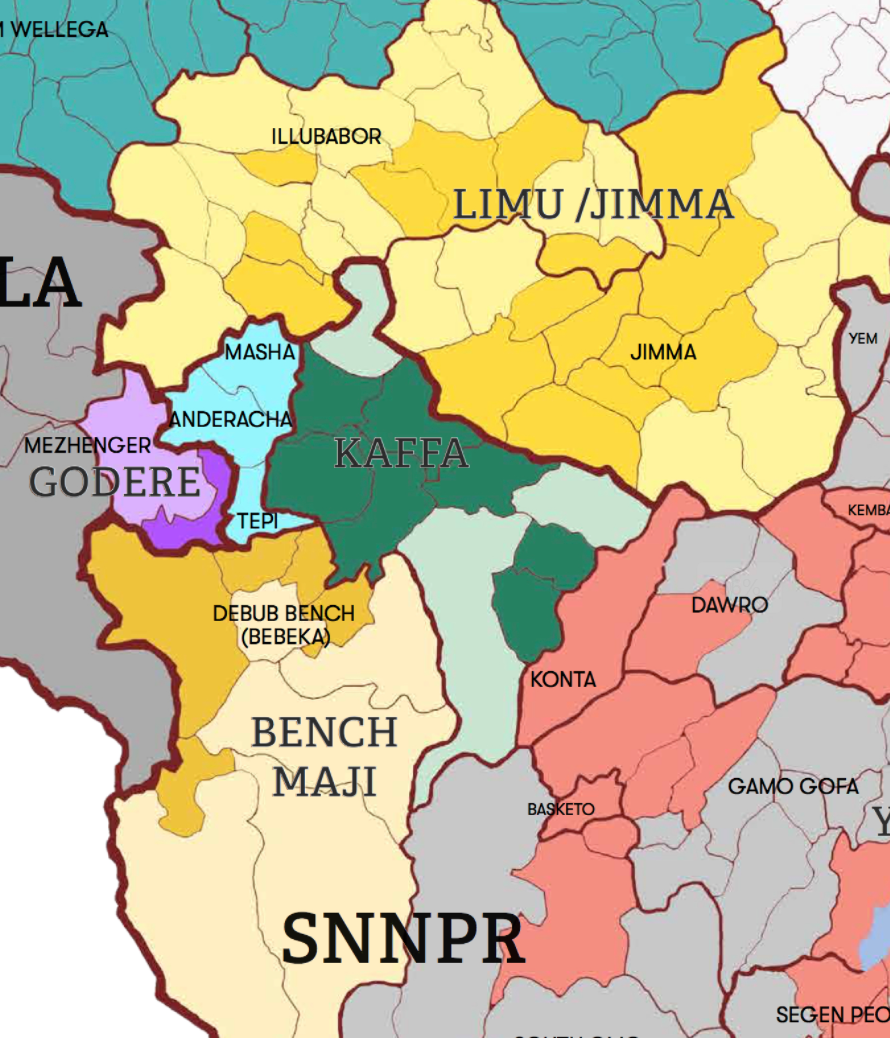
Bench Maji is a Zone under Ethiopia’s Southwest Ethiopia Region, geographically close to the South Sudan border and characterized by typical highland terrain with mountainous landscapes and a well-preserved, pristine ecosystem. The area was historically covered by vast tracts of virgin forest and remained largely undeveloped for large-scale agriculture until recent years, when the rising demand for specialty coffee gradually transformed it into a coffee-growing region defined by forest-coexisting cultivation practices.
Coffee here is mostly grown using a semi-forest system, where coffee trees coexist with native plants, relying on natural shade and humus-rich soil. This minimizes human intervention and contributes to a distinctive flavor profile. Moreover, Bench Maji is the headquarters of the Bench Maji Coffee Farmers' Cooperative Union, a large organization composed of 65 cooperatives representing over 130,000 smallholder farmers and a key driver of the region’s specialty coffee production.
The Birth and Philosophy of Gesha Village Estate
Gesha Village Estate was established in 2009 by documentary filmmaker Adam Overton and photographer Rachel Samuel. They were initially invited by the Ethiopian government to create a documentary about the country’s coffee culture. During their journey, they serendipitously visited the Gera Coffee Forest in the Bench Maji region and developed a deep fascination with its wild coffee.
Inspired by renowned coffee expert Willem Boot, they resolved to trace the roots of Gesha. In 2009, they ventured into the jungles of Bench Maji and discovered the Gori Gesha forest—surrounded by dense woodland—where the original Gesha variety was first found. They collected seeds from the wild Gesha trees there, selected them carefully, and established Gesha Village Estate nearby to cultivate and promote this precious variety.
To commemorate this exploratory journey, the estate was named “Gesha Village,” symbolizing its deep connection to the Gesha variety. Spanning 471 hectares, the estate sits at an altitude between 1931 and 2040 meters. With a cool, foggy climate and abundant rainfall at high elevation, it provides an ideal environment for Gesha coffee to thrive.
Varieties and Grading System
Gesha Village Estate currently cultivates three main varieties: Gesha 1931, Gori Gesha, and Illubabor Forest 1974. Among them,Gesha 1931is the variety closest in flavor to Panamanian Gesha, selected based on plant morphology, bean size, and cupping results;Gori Geshaoriginates directly from wild plants in the original forest and boasts rich genetic diversity; whileIllubaborwas discovered during a scientific expedition in 1974 and cultivated by the Ethiopian Coffee Research Center as a disease-resistant variety.
To enhance product traceability and quality control, one prominent coffee estate adopted the management model of Panama’s Hacienda La Esmeralda and implemented a rigorous grading system. Each batch of coffee is classified into Auction Grade, Gold Label, Red Label, Green Label, and Chaka lots based on processing method, flavor, and rarity. Among these, Gold Label Gesha represents the top tier, offering the most complex and intense flavors, while Red Label Gesha is the most commonly imported item by many coffee channels—offering great value with distinctive flavor characteristics.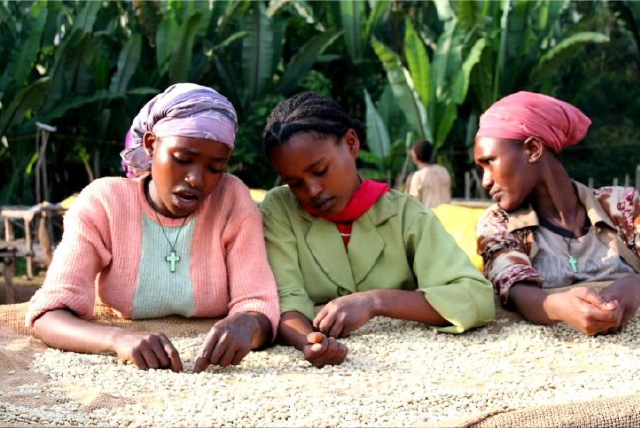
Natural Sun-Drying Processing and Flavor Characteristics
Gesha Village Estate’s natural processing method pays close attention to detail: first, impurities and defective beans are removed, then the coffee cherries are evenly spread on African raised beds or plastic-covered drying beds in thin layers. During the drying process, workers frequently turn the cherries and remove unripe, insect-damaged, or discolored beans. The entire drying process typically lasts 18 to 30 days to ensure full sugar conversion and flavor concentration.
This processing method imparts the coffee with rich sweetness and a full body. The flavor profile is dominated by citrus, berries, chamomile, melon, and a tea-like character, forming an intriguing contrast to the floral notes often associated with Panamanian Gesha. Practical tastings show that natural-dried Gesha lots from Bench Maji tend to yield nutty dry and wet aromas, with less pronounced floral notes, yet deliver distinct juice-like sweetness and layered flavors upon tasting. The finish brings black cocoa and berry undertones, which become even more balanced with hints of maple and berry acidity upon cooling.Pour Over Recommendations and Extraction Parameters
For Gesha Village Gold Label or Red Label natural sun-dried Gesha, it is recommended to use a V60 dripper, with around 15 grams of coffee, a 1:16 coffee-to-water ratio, and a grind size comparable to coarse sugar (approximately 80% passing through a #20 sieve). Water temperature should be controlled around 91°C. Specifically, start with a 30-second bloom using 30 grams of water, then pour in a slow circular motion until reaching 125 grams for the first pour. When the water level is about to expose the coffee bed, continue pouring up to 240 grams, then stop. The total extraction time should ideally fall between 1 minute 55 seconds and 2 minutes 5 seconds.
These parameters help balance acidity and sweetness, avoid over-extraction that can lead to sharpness, and fully highlight the fruity and tea-like qualities of natural sun-dried Gesha.
Conclusion
Gesha Village Estate in the Bench Maji region is not only one of the important native origins of the Gesha variety but also crafts distinctive specialty coffee products through scientific management and strict quality control. From the discovery of wild varieties and forest-coexisting cultivation to unique natural processing and a clear grading system, every step reflects a commitment to quality and terroir. If you enjoy coffee with intense fruitiness, pronounced sweetness, and layered complexity, do try the natural sun-dried Gesha beans from this mysterious highland and experience a different take on African coffee flavors.
The above content is compiled by CoffeeHunters, a coffee news website.


