







Introduction:Want to understand where the unique woody aroma and spicy notes of Sumatra Mandheling coffee come from? This article delves into how Indonesia’s wet hulling method was born in response to the rainy climate, and how it shapes the distinctive character of Mandheling coffee. From Lake Toba to Lake Tawar, from traditional Lintong Mandheling to premium-grade Golden Mandheling, we explore the farming characteristics of different regions and ethnic groups, as well as how PWN Company has established the "gold standard" through strict selection. After reading this, you’ll better understand how to choose and brew a high-quality Mandheling.
Sumatra, a volcanic island on the equator, is one of the world’s top coffee-producing regions thanks to its fertile volcanic soil, cool high-altitude climate, and abundant rainfall. Among its offerings, Sumatra Mandheling is renowned for its rich, bold body paired with unique herbal, spicy, and woody notes—the key lies in the region’s distinctive “wet hulling” processing method.
The so-called wet hulling method is a semi-washed process developed by Indonesian coffee farmers to adapt to the area’s year-round high humidity and rainy climate. This technique not only effectively shortens the drying time of coffee beans but also inadvertently imparts the unforgettable complex flavor profile of Mandheling. Today, wet hulling has become the most mainstream post-harvest processing method in Indonesia’s coffee-growing regions.
Sumatra is the world’s sixth-largest island, characterized by mountainous terrain and a tropical rainforest climate that is often shrouded in clouds, especially in the central and northern highland areas around Lake Toba and Lake Tawar—prime coffee-growing zones. These regions typically sit at elevations between 1200 and 1800 meters, with significant day-night temperature variations, creating ideal conditions for developing layered coffee flavors.
When it comes to Mandheling, the name originally referred to the Mandailing and Batak ethnic groups in northern Sumatra, but it gradually became synonymous with the coffee from the region. Major producing areas include Aceh Province and North Sumatra Province, with Lake Toba and Lake Tawar being particularly famous. Lake Toba, the world’s largest volcanic lake, offers an elevation of around 1400 meters and an average annual temperature of 22°C, along with a rainy environment—conditions that allow coffee trees to thrive naturally under the shelter of existing vegetation without the need for additional shade.
Another noteworthy producing region is the Gayo Highlands in central Aceh Province, surrounded by Lake Tawar. This area is perpetually misty, with volcanic soils rich in minerals, and farmers commonly practice organic cultivation. As a result, the Mandheling produced in the Gayo Highlands is especially notable for its purity of aroma and cleanliness of taste, making it one of the most sought-after regions by leading green coffee buyers.
So why does Indonesian coffee particularly favor the wet hulling method? The answer lies in the climate. Indonesia maintains an average annual humidity of 70% to 90%, with annual rainfall that can exceed 2000 millimeters, not to mention frequent typhoon disruptions. Traditional sun-drying or washed processing methods are difficult to execute consistently. Sun-drying requires two to three weeks of clear weather, while washing demands substantial water and labor. Thus, Indonesian farmers developed the wet hulling method—a processing technique that is both efficient and uniquely characteristic.
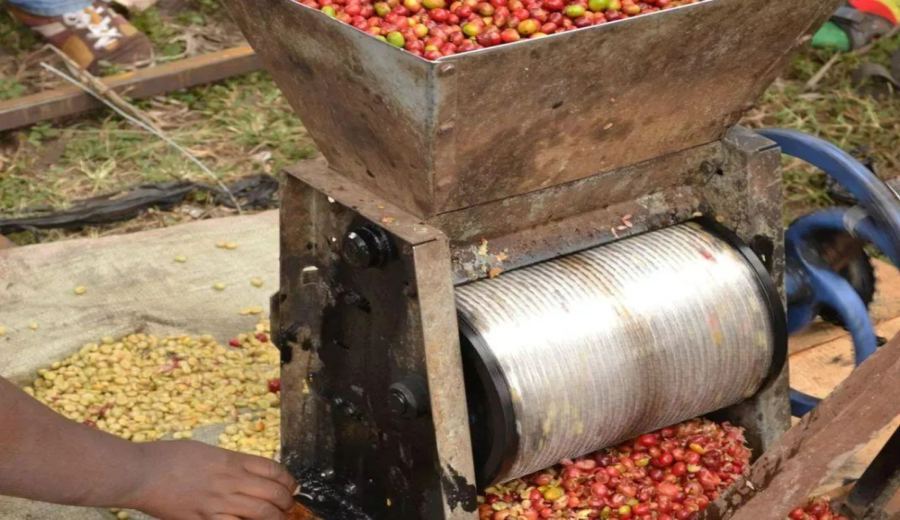
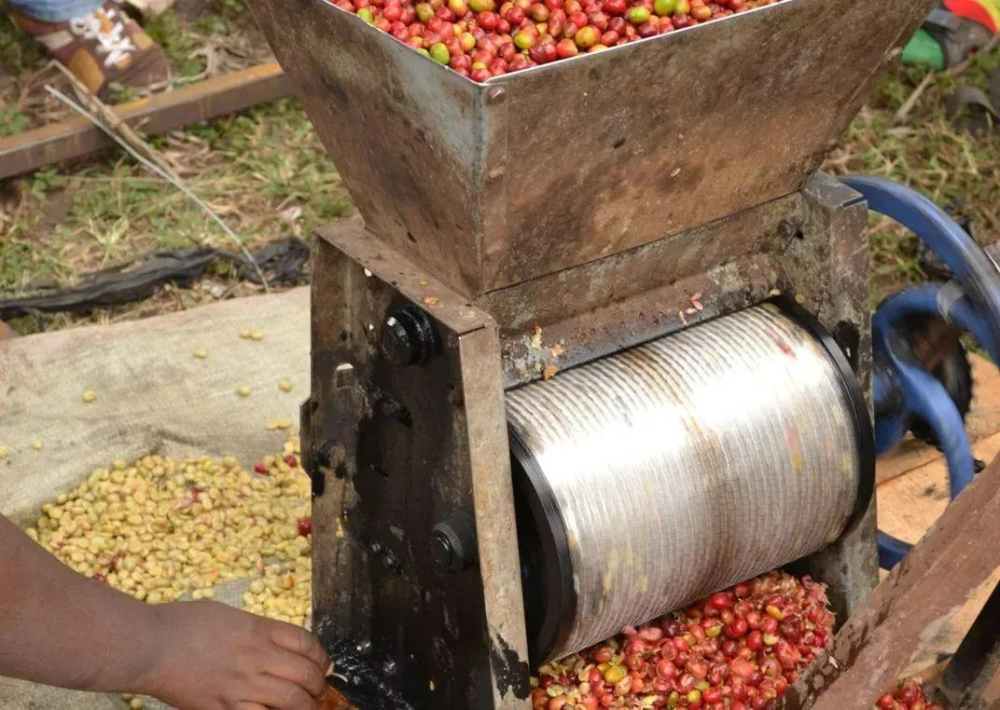
The steps of wet hulling are roughly as follows: first, the coffee fruit’s skin and pulp are removed, and the mucilage-covered parchment beans are soaked in water tanks for a few hours of brief fermentation, then rinsed with clean water to remove residual fruit mucilage. Next, the parchment beans are dried in the shade until their moisture content reaches just 30% to 40%, usually taking about 2 to 3 days. At this point, the partially dried parchment beans are sold by farmers.
The buyers who take over will then use specialized machines to remove the husk—that is, to hull the parchment layer. Since the beans are still high in moisture at this stage and subjected to intense friction from the machine, the surface of the beans is prone to slight damage, causing their color to turn gray-green and emitting a distinctive aroma. At this phase, the beans often show visible defects, such as notches at either end, commonly referred to as “elephant’s foot beans.” Finally, the hulled green beans, having quickly lost their protective layer, are more susceptible to surrounding moisture and microorganisms, which contribute to the formation of Mandheling’s signature intense woody, spicy, and herbal notes.
Speaking of Mandheling grades, one must mention the “Golden Mandheling” launched by Indonesia’s PWN Company. This coffee is not only synonymous with premium Mandheling but has also become a recognized symbol of high quality due to its rigorous selection system and exclusive trademark registration.
PWN (Pawani Coffee Company) is one of Indonesia’s foremost green coffee suppliers. Its Golden Mandheling is sourced exclusively from the highest-quality producing regions, and it adheres to extremely high defect standards. It is reported that PWN conducts multiple checks on factors such as bean density, size, shape, and color, combining both machine and manual sorting to ensure every bean is uniform, free of impurities, and possesses the aroma and taste characteristics expected of high-grade Mandheling.
To protect brand value, this green coffee trader even preemptively registered “Golden Mandheling” as a trademark, meaning that only the company’s product can be considered the genuine article. A well-known specialty coffee shop that has long sold Golden Mandheling sources it from this very trader and displays the original jute sacks and certification documents in-store, giving customers peace of mind.
Generally speaking, the highest grade of coffee in Indonesia is G1, but PWN’s Golden Mandheling goes a step further on the G1 foundation by implementing one machine sort and three hand sorts, resulting in a defect rate far below market standards. Its selection criteria include: green bean screen size of 18 to 19 or above, no more than 3 defective beans per 300-gram sample, dark green color with consistent size, and uniform shape. These stringent requirements ensure the purity of the coffee’s flavor and consistency in brewing.
Finally, from a cupping perspective, PWN’s wet-hulled Golden Mandheling demonstrates exceptional drinking value. Cupping analysis reveals common flavor notes of black chocolate, nuts, and caramel, accompanied by delicate herbal spice and pine wood undertones. On the palate, the lingering sweetness of black chocolate is pronounced, with a long finish and high overall cleanliness. Even as the cup cools, a gentle layer of fruity acidity remains, making it an excellent choice for pour over enthusiasts.
The above content is compiled by CoffeeHunters, a coffee news website.


