







Introduction:Yirgacheffe Grade 1 natural has long been the go-to choice for many coffee beginners stepping into the world of specialty coffee. Its bright fruity aroma and vibrant acidity leave a lasting impression. This article delves into the history of the growing region, its microclimate and cultivation conditions, offers an in-depth analysis of the Konga Cooperative’s operational model and geographical advantages, and explores the flavor characteristics of its natural processing method. Practical pour over brewing parameters are also provided to help readers fully experience the potential of this classic coffee.
For many who are just beginning their journey into specialty coffee, a cup of Ethiopian Grade 1 natural Yirgacheffe is often their first enlightenment. With its bright and lively fruit acidity, delicate floral notes, and unique citrus profile, it allows one to experience the layers and depth of coffee flavors for the very first time. This classic coffee actually comes from a region that was originally just a small town under the Sidamo province — Yirgacheffe.
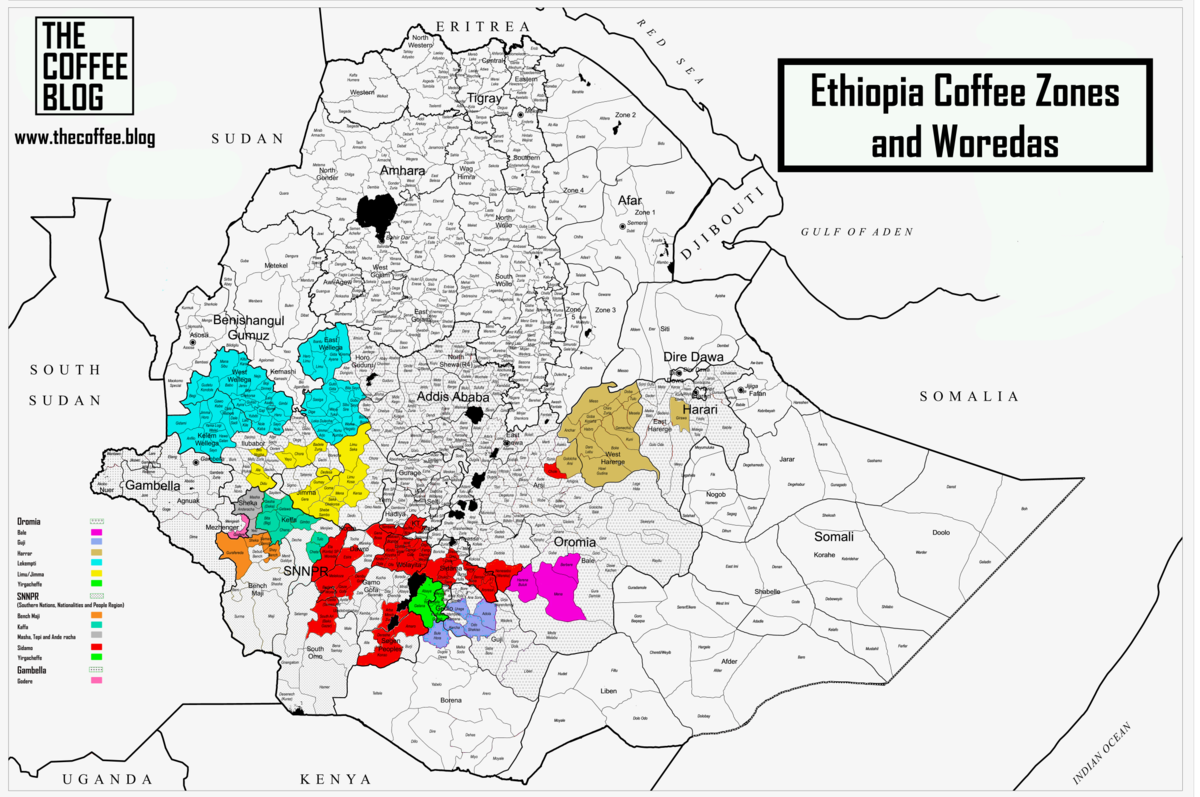
Ethiopia’s coffee growing region system is quite intricate and diverse, and many industry newcomers often find it confusing to distinguish between the different areas. Yirgacheffe was initially just part of the Sidamo province, but due to its highly distinctive and expressive coffee flavors, it was officially designated as its own unique producing region in 2002. Nearby smaller regions such as Wenago, Kochere, and Gelena Abaya, which share similar flavor profiles, were also officially recognized under the ECX system after its implementation in 2009, becoming important sources in the specialty market.
A key driving force behind Yirgacheffe’s rise to prominence is the Yirgacheffe Coffee Farmers Cooperative Union (YCFCU). Established in 2002, the organization initially consisted of 13 small cooperatives and has since grown into a vast network encompassing 28 member cooperatives and over 45,100 coffee farmers. One of the union’s most notable features is its ability to bypass the national ECX trading mechanism and directly participate in international market auctions, thereby securing higher incomes and better quality certifications for farmers, including Fair Trade and Organic certifications.
When it comes to the unique flavors of Yirgacheffe coffee, high altitude is definitely one of the key factors. As one of the highest-altitude coffee-growing regions in southern Ethiopia, Yirgacheffe has an average elevation of about 1800 to 2100 meters, with some micro-regions even higher. In such high-altitude environments, lower temperatures and thinner oxygen levels slow down the ripening process of coffee cherries, allowing them to accumulate richer flavor compounds. Additionally, the tropical climate and average annual temperature of around 18°C in the region provide ideal growing conditions for coffee trees.
Among the many cooperatives in Yirgacheffe, the Konga Cooperative stands out as a shining star. Established in 1994 and joining the YCFCU in 2002, Konga functions not only as a washing station but also coordinates production and post-harvest processing for surrounding smallholder farmers. The cooperative currently has 1,556 smallholder farmers, with an average farming area of just about 1.25 acres per household, making it a typical micro-region. The local altitude is around 2000 meters, with abundant annual rainfall ranging between 1400 to 1800 millimeters, and the red-brown soil structure provides ample nutrients and good drainage for the coffee trees.
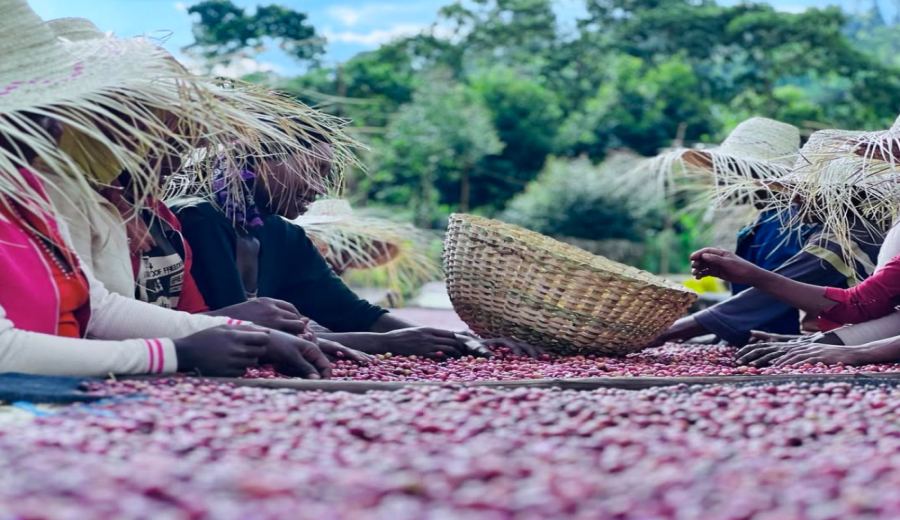
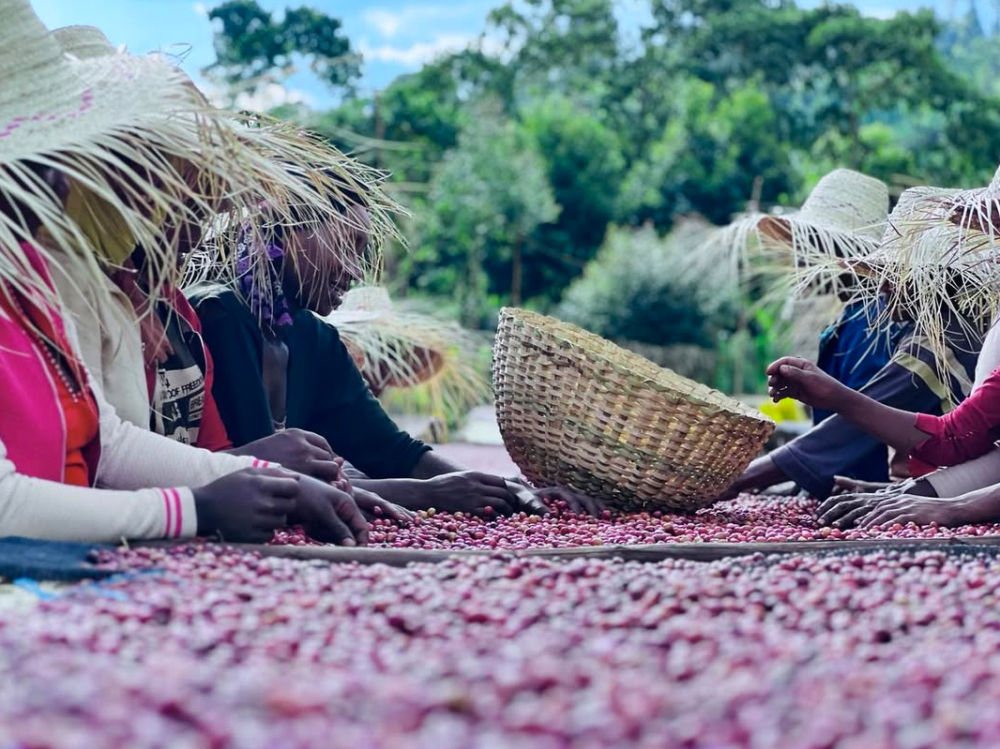
The main coffee varieties planted by the Konga Cooperative are Typica and Heirloom. The term Heirloom refers to the diverse and commercially unselected ancient cultivars native to Ethiopia, which often possess richer genetic expression and flavor potential. The coffee we’re introducing today is the Grade 1 natural Yirgacheffe produced by the Konga Cooperative. Using the traditional natural processing method, the coffee beans fully absorb the sugars and aromas from the fruit pulp during the natural drying process, resulting in a complex flavor profile that includes intense tropical fruits, blueberries, honey, and floral notes.
The dry fragrance of this natural Yirgacheffe often carries distinct notes of blueberry and citrus. Upon brewing, the first sip reveals a vibrant lemon acidity, followed by a mid-palate sweetness of peach and honey, with a lingering finish of delicate floral notes and soft caramel undertones. The overall style is fresh, bright, and layered, making it a beloved classic among many pour over enthusiasts.
Compared to the much more expensive Geisha variety also from Ethiopia, Yirgacheffe Grade 1 natural offers exceptional value for money. Taking the commonly available 100g pack as an example, Yirgacheffe typically costs only around 25 RMB, while Panamanian Geisha often starts at over 100 RMB. Although Geisha may surpass in aromatic complexity and aftertaste length, Yirgacheffe, with its clear fruit acidity, rich fruitiness, and affordable price, is undoubtedly an excellent choice for daily drinking or pour over practice.
If you’d like to try brewing this Konga natural Yirgacheffe at home, it is recommended to use beans with a medium-light roast level, ground to a medium-fine consistency (similar to the size of fine sugar grains), with a brew ratio of 1:15 to 1:16. Use hot water at approximately 90-92°C, starting with a 30-second bloom using 30 grams of water, followed by a segmented pour to complete the total brew volume of 225 to 240 milliliters. Maintaining a steady water flow and consistent pouring rhythm will help fully highlight its fruity notes and bright acidity.
In summary, Ethiopian Grade 1 natural Yirgacheffe, especially the version from the Konga Cooperative, is a classic coffee that combines regional character, the essence of its processing method, and practical drinkability. Whether you’re a beginner or a seasoned enthusiast seeking a high-value everyday specialty bean, this coffee is sure to deliver plenty of surprises and a delightful tasting experience.
The above content is compiled by CoffeeHunters, a coffee news website.


