







Introduction:The brew ratio is one of the key variables that influence the flavor expression of pour over coffee. From the classic golden ratio of 1:18 to flexible adjustments tailored for beans from different regions, this article delves into how brew ratio affects both concentration and extraction yield, and provides recommendations for a three-stage pouring technique to help beginners find the brewing parameters that suit their taste.
Among the many factors that affect the flavor of pour over coffee,brew ratiocan be considered the first essential lesson for beginners and a key variable that determines the final concentration and flavor complexity of a cup of coffee. Early on, the Specialty Coffee Association of America conducted extensive experiments and proposed the 1:18 ratio, often referred to as the "golden ratio" — that is, 1 gram of coffee grounds to 18 milliliters of water. However, as coffee bean origins, varieties, and processing methods have evolved, this standard is no longer a one-size-fits-all formula.
In reality, coffee beans from different regions and processed differently each have distinct characteristics. For example, Jamaican Blue Mountain beans and the Red Label beans from Finca El Injerto in Central and South America each suit noticeably different brew ratios. Understanding how brew ratio influences coffee extraction efficiency and overall performance is a foundational skill every pour over enthusiast should master.
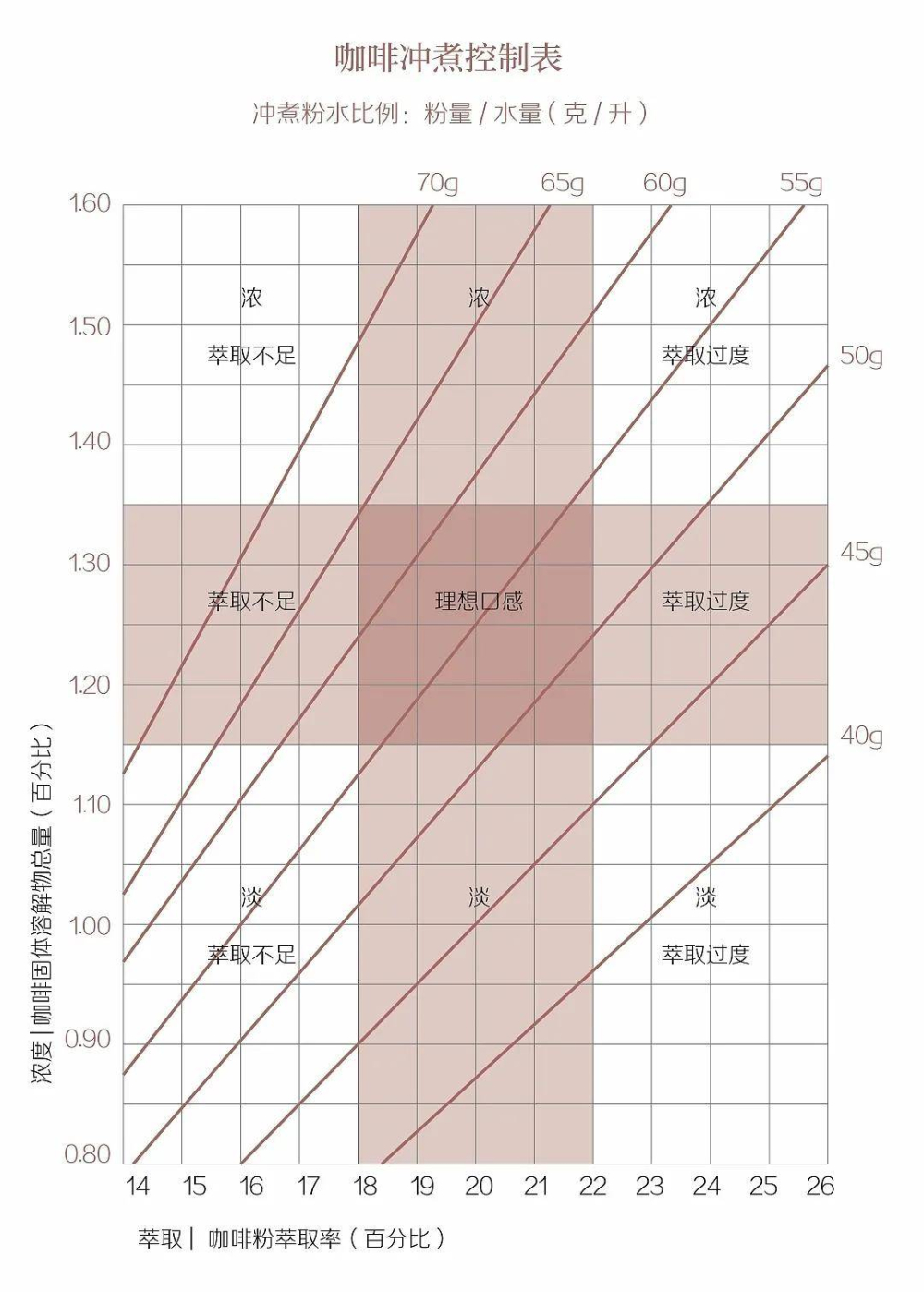
The so-called brew ratio refers to the proportion between the weight of coffee grounds used and the total volume of water poured. This value directly affects thestrength or concentrationof the coffee. For instance, using 15 grams of coffee grounds with 225 milliliters of water (a 1:15 ratio) typically results in a brew that tastes richer and more concentrated; if the water is increased to 270 milliliters (1:18), the coffee will be comparatively weaker, offering a cleaner but potentially thinner flavor profile.
When other variables are held constant, the more water you pour, the more the soluble substances in the coffee are diluted, resulting in a more dispersed flavor. However, an excessively high brew ratio may also lead to under-extraction, leaving the coffee lacking in depth and complexity. Conversely, a lower water volume may produce stronger, fuller flavors, but also risks over-extraction, bringing out excessive bitterness and impurities — especially noticeable in the later stages of pouring when extraction efficiency declines.
It’s worth noting that the brew ratio is not fixed, nor is there only one standard. Many pour over enthusiasts and professional baristas dynamically adjust this parameter based on the beans’ characteristics, roast level, and personal preference. For instance, for beans like Jamaican Blue Mountain, which are known for their delicate aromas and balanced acidity and sweetness, a 1:15 ratio helps to highlight their full body. Meanwhile, for Red Label natural-process beans from Finca El Injerto, a 1:16 ratio often better showcases their bright, vibrant acidity and clear fruit flavors.
For those new to pour over, it’s recommended to start with abrew ratio range of 1:15 to 1:18,which translates to 15 grams of coffee grounds with a total water volume of 225–270 milliliters, then fine-tuning according to personal taste. At the same time, don’t forget that other parameters such as water temperature, grind size, pouring technique, and filter type also interactively impact the final extraction outcome — these variables together determine the coffee’s aroma, body, and aftertaste.
In practical operation, many experienced coffee lovers recommend using thethree-stage pouring method,which not only aids in even extraction but also prevents over-extraction caused by prolonged contact time, which can result in undesirable off-flavors. The core of the three-stage pour lies in dividing the process into phases, controlling flow rate and water volume, allowing the coffee grounds to release different layers of soluble compounds at each stage, thereby achieving balanced flavor and clear layering.
Taking the common example of 15 grams of coffee grounds with a 1:15 brew ratio, the total water volume is 225 milliliters, which can be divided into three stages: the first stage uses about 30 milliliters for blooming to activate the coffee’s aroma; the second stage pours around 95 milliliters, primarily to expand the coffee bed and begin formal extraction; the final stage adds approximately 100 milliliters to ensure all flavor compounds are evenly extracted. For the entire brew, it is recommended to use a medium-fine grind (similar in coarseness to superfine sugar, with about 78% passing through a Chinese standard 20-mesh sieve), with water temperature controlled between 92°C and 93°C, particularly suitable for light to medium roast beans such as Yirgacheffe, which exhibit pronounced floral and fruity notes.
To begin, place the filter paper snugly inside the dripper, add the ground coffee, then tare the scale. Start the timer. For the first stage, pour a small circle of about 30 milliliters of water to bloom, maintaining this for about 30 seconds to ensure all coffee grounds are evenly saturated. Then move to the second stage, pouring about 95 milliliters of water at a slightly higher flow rate, keeping the water stream vertical and even to avoid disturbing the coffee bed structure, aiming to finish around the 55-second mark. Finally, when the liquid level drops to about half, switch to an even finer stream and pour the remaining 100 milliliters in small circles, controlling the flow rate to avoid excessive agitation of the coffee bed. The entire extraction process should take about two minutes. After completion, gently lift the dripper, give the coffee a gentle swirl to mix the layers, and then taste to fully appreciate its complete flavor profile.
In summary, brew ratio is just one of many factors influencing the flavor of pour over coffee. To truly brew a great cup, one must comprehensively consider variables such as water temperature, grind size, pouring technique, and dripper characteristics. By continuously experimenting and fine-tuning, finding your own optimal combination will allow you to truly enjoy the pleasure and endless variety that pour over coffee has to offer.
The above content is compiled by CoffeeHunters, a coffee news website.


