







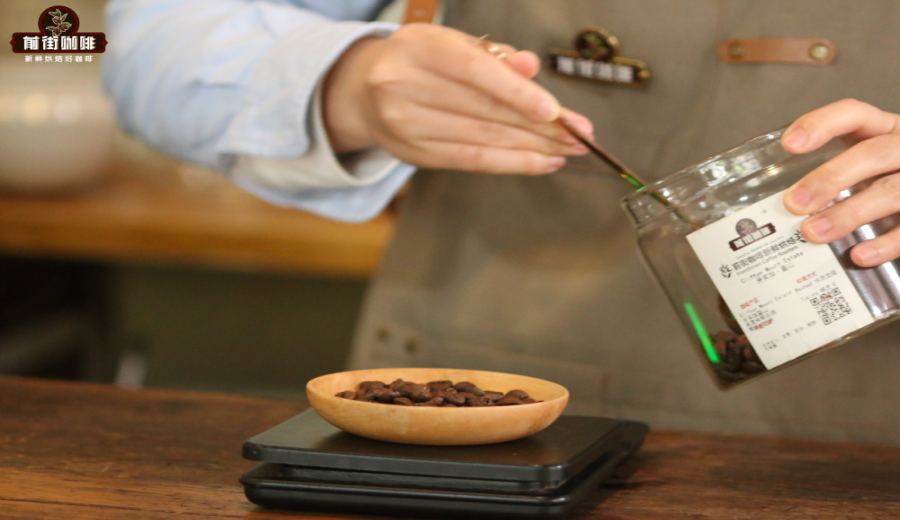
Introduction:Jamaica Blue Mountain coffee is world-renowned for its top-tier quality, but its rigorous grading system remains little known. This article delves into the grade differences between Blue Mountain No. 1 to No. 3 and peaberry, analyzing key metrics such as the 17-mesh specification, defect rate, and moisture content. It also explains the unique significance of barrel packaging. Finally, it provides professional pour over parameters and flavor profiles to help you fully experience the richness and delicacy of Blue Mountain coffee.
Blue Mountain coffee is truly a legend in the specialty coffee world, yet many still have only a partial understanding of its grading system. From the core growing regions defined by the Jamaica Coffee Industry Association (CIB) to stringent controls on green bean size, defect rate, color, and cupping performance, Blue Mountain coffee is subdivided into four grades: Blue Mountain No. 1, No. 2, No. 3, and Blue Mountain Peaberry. Among them, Blue Mountain No. 1 represents the pinnacle, with strict regulations on bean size of 17 mesh and above, a defect rate below 3%, and a moisture content of around 13%. This article will break down this grading system in detail, explaining why Blue Mountain No. 1 stands at the top of the pyramid, and offering practical pour over brewing suggestions along with flavor descriptions.
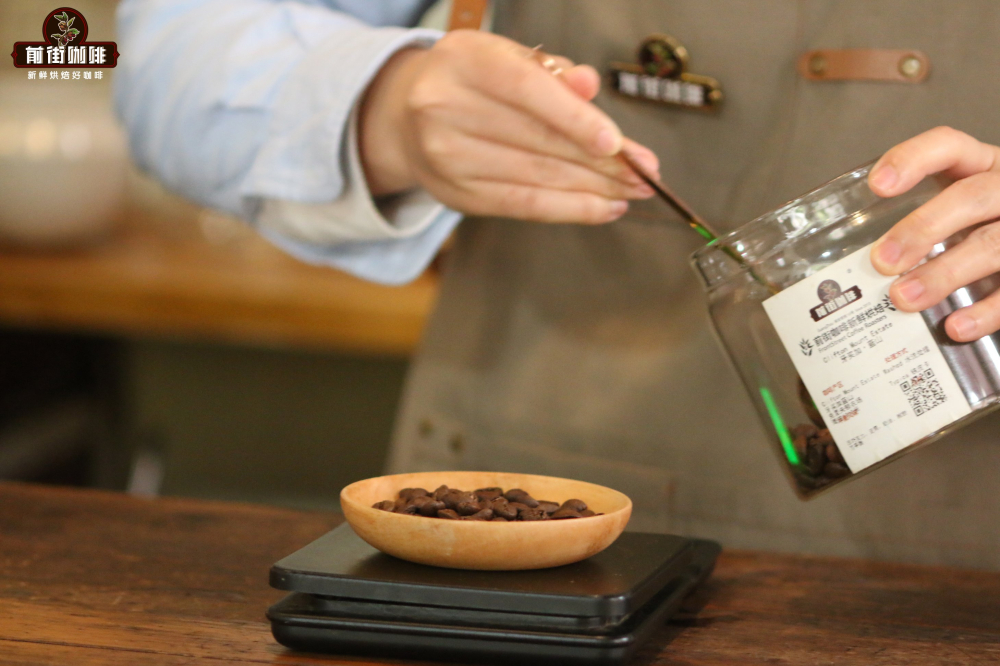
When discussing the most well-known items in global specialty coffee, Blue Mountain coffee is undoubtedly near the top. Even in times when coffee culture was not yet widespread, many elders had heard of its name. Today, in many coffee shops, you can still taste Jamaica Blue Mountain No. 1, a classic bean that has long been revered by coffee enthusiasts. This piece will take you through how the Jamaican authorities establish grading standards for Blue Mountain coffee and clarify the positioning of Blue Mountain No. 1 within the overall grading system.
When it comes to the grading of Blue Mountain coffee, one must first understand the Jamaica Coffee Industry Board (commonly abbreviated as CIB). Established by the Jamaican government in 1952, this institution’s primary mission is to supervise, enhance, and maintain the quality and international reputation of Jamaican coffee. Shortly after its establishment, the CIB clearly designated approximately 6,000 hectares of legal growing regions within the Blue Mountains and stipulated that only Typica variety coffee grown within this area could be rightfully called ‘Blue Mountain coffee.’ Coffee grown outside these regions can only be classified as high mountain coffee—not only is its production limited, but it is mainly supplied to the local market and tourism needs, and its market recognition and price also differ significantly from those of Blue Mountain coffee.
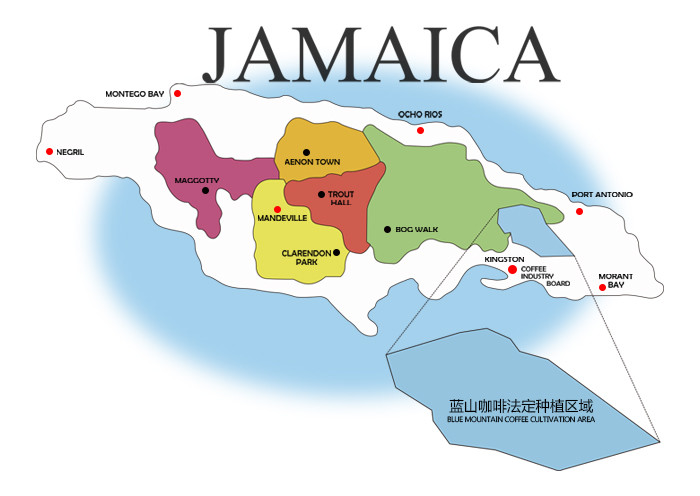
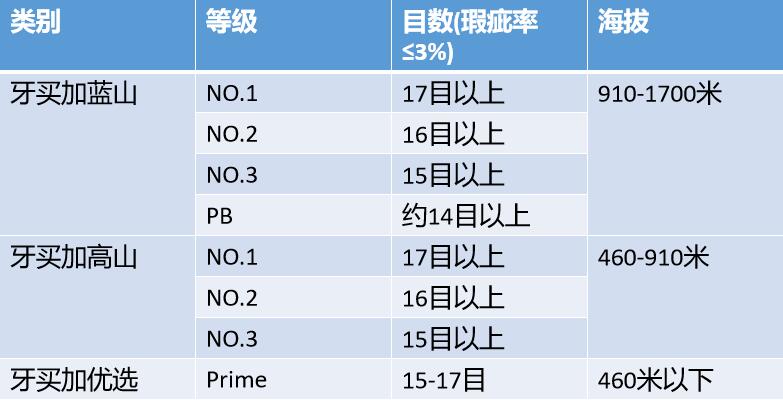
According to CIB regulations, Blue Mountain coffee is grown at elevations between 910 and 1,700 meters, primarily distributed across the districts of St. Thomas, St. Mary, St. Andrew, and Portland. The high-altitude environment contributes to the unique flavor potential of Blue Mountain coffee, but the rugged terrain also makes harvesting more challenging. Each harvest season, local farmers hire experienced female pickers to manually select coffee cherries at optimal ripeness. It’s worth noting that coffee truly originating from the core area of the Blue Mountains accounts for less than 15% of global supply, which is also a major reason for its rarity and high price.
In terms of quality control, the CIB sets strict standards for every stage of Blue Mountain coffee—from planting, harvesting, processing, to exporting—to ensure product consistency and high standards. The grading and quality inspection of coffee within the region are entirely managed by the CIB, and all exported Blue Mountain coffee must pass its certification and receive an official label. Before export, green beans undergo a series of tests to determine their grade based on bean size, defect ratio, color, and cupping results. These grades, ranked from highest to lowest, are: Blue Mountain No. 1, No. 2, No. 3, and Blue Mountain Peaberry. Bean size is determined using sieves of different mesh sizes—only beans that cannot pass through specified mesh are considered to meet the size requirements for each grade. Jamaica is also the first country in the world to introduce a cupping scoring system and the only producing region to include green bean color as an official quality evaluation criterion.
The CIB believes that the color of green beans not only relates to appearance but also reflects freshness and storage potential. Through a combination of visual observation and colorimeter data, a bluish-green hue is deemed the most ideal grade. To qualify as top-tier Blue Mountain No. 1, green beans must meet the 17-mesh size specification, have a defect rate below 3%, and maintain a moisture content of around 13%. In terms of cupping performance, Blue Mountain No. 1 must exhibit rich layers of aroma, a full and balanced body, gentle acidity, and a sweet, lingering aftertaste—all key factors that set it apart.
After passing rigorous evaluation, Blue Mountain coffee beans of different grades are exported in different packaging. Blue Mountain No. 1, No. 2, No. 3, and Blue Mountain Peaberry are all packed in wooden barrels, available in three capacity specifications: 70 kg, 30 kg, and 15 kg. They are among the few premium coffees globally transported in wooden barrels. Compared to standard jute sacks, wooden barrels more effectively regulate internal and external humidity, prevent aroma loss, help maintain bean moisture stability, and are more favorable for subsequent roasting control. Over time, wooden barrels have become a prominent hallmark for identifying authentic Blue Mountain coffee. Additionally, some premium Blue Mountain No. 1 products are accompanied by official Jamaican certificates of quality, production unit authorization letters, and certificates of origin to ensure consumers are purchasing genuine products.
If you’ve purchased high-quality Blue Mountain No. 1 coffee beans, how you brew them to best represent their flavors is key. Below are professional pour over recommendations: the freshness of the coffee beans is extremely important—opt for beans roasted within 5 days to fully experience their optimal flavor window. For medium-dark roasted Blue Mountain No. 1, it is recommended to use a KONO filter, whose smooth upper curve allows the filter paper to adhere better, combined with immersion-style extraction to enhance overall richness and body. Alternatively, a Kalita wave dripper or fabric drip (like a flannel) with slower flow rates are also good choices.
As medium-dark roasted beans have a looser internal structure and better water absorption, it is recommended to use a medium-coarse grind similar in size to coarse sugar (with a 20-mesh sieve passing rate of about 75%), paired with a water temperature of 88°C, and using a three-stage pouring method. Specific pour over parameters are as follows: water temperature 88°C, grind size resembling coarse sugar (20-mesh sieve passing rate 75%), 15 grams of coffee grounds, a 1:15 coffee-to-water ratio, and a three-stage extraction process—first pour 30 grams of water for a 30-second bloom; second, slowly pour up to 125 grams, maintaining an even flow; once the water level drops halfway, continue pouring to a total of 225 grams, with a total extraction time of about 2 minutes.
The flavor profile of Blue Mountain No. 1 varies distinctly with temperature: at higher temperatures, you’ll perceive intense dark chocolate notes with a distinct almond aftertaste; as it cools slightly, it reveals smooth sweetness reminiscent of roasted hazelnuts and cream, accompanied by soft acidity and caramel sweetness. The overall flavor lingers long, leaving an unforgettable impression.
The above content is compiled by CoffeeHunters, a coffee news website.


