







Introduction:Jamaican Blue Mountain coffee is hailed as the "King of Coffees," but the market is rife with impostors and extreme price variations, making it difficult for consumers to discern authenticity. This article delves into the official grading system, altitude standards, and authentic certification process of Blue Mountain coffee, detailing the differences between the No.1 to PB grades, and explaining the distinction between high mountain and prime washed coffees. It helps you identify genuine Blue Mountain beans through key characteristics, while also exploring their unique balanced flavor and sweet-acidic profile.
When it comes to the "King of Coffees," the vast majority of coffee enthusiasts immediately think of Jamaican Blue Mountain coffee. However, products on the market labeled as Blue Mountain vary wildly in price—from affordable options to sky-high luxury items—making it hard for consumers to judge what’s real. In fact, not all coffee grown in the Blue Mountains can be called "Blue Mountain coffee." According to strict regulations by the Jamaica Coffee Industry Board (CIB), only coffee grown within specific altitude ranges and designated regions can bear this prestigious name. This article will take you deep into the grading, certification standards, and flavor characteristics of Jamaican Blue Mountain coffee, while retaining image placeholders to aid understanding and help you make more confident purchasing decisions.
I. The Growing Regions and Altitude Classification of Jamaican Blue Mountain Coffee
What makes Jamaican Blue Mountain coffee unique is not just its origin, but also its growing environment. The CIB clearly divides the region into three major categories based on altitude: Blue Mountain coffee, high mountain coffee, and Jamaican Prime Washed coffee. Among them, only coffee beans grown at an altitude of666 meters or abovequalify to be called "Jamaican Blue Mountain coffee." Notably, coffee grown in the area between910 to 1700 metersin the Blue Mountains, due to its steep terrain resulting in scarce yields, boasts extremely balanced flavors, plump beans, and a perfect harmony of acidity, sweetness, bitterness, body, and aroma. It is widely regarded as the top-tier choice, among which the "National Treasure Blue Mountain No.1" is the most expensive Blue Mountain coffee.
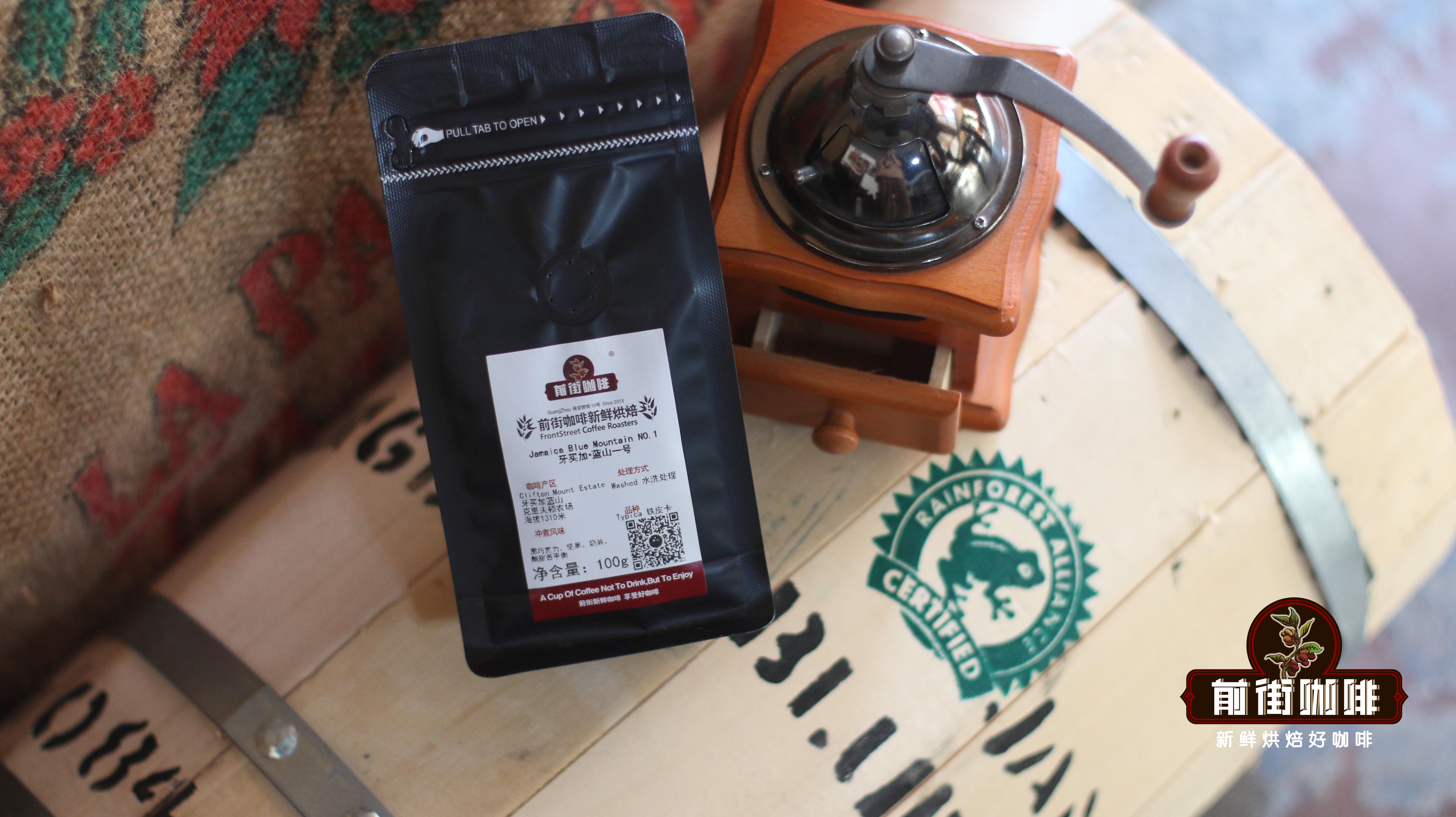
Within Blue Mountain coffee and high mountain coffee, there are further subdivisions into four grades each, ranked from highest to lowest quality: NO.1, NO.2, NO.3, and PB (peaberry). Among these, NO.1 typically represents the top-grade batches with the most intact beans and the fewest defects, making it the target sought after by seasoned coffee enthusiasts.
II. The Positioning of High Mountain Coffee and Jamaican Prime Washed Coffee
In the Blue Mountain region, coffee produced at altitudesbelow 910 metersis classified as high mountain coffee. Although it cannot carry the Blue Mountain name, its flavor and quality still rank just below authentic Blue Mountain coffee and is often seen as the “sibling variety” of Blue Mountain. It’s an ideal choice for consumers who want to experience a Blue Mountain-style coffee but have a limited budget.
As for coffee produced in areasbelow 460 metersin altitude, it can only be sold under the name of Jamaican Prime Washed coffee. Though geographically adjacent to the Blue Mountains, these coffees still show clear differences in flavor complexity and overall quality compared to the Blue Mountain series.
III. The Authentic Certification System of Blue Mountain Coffee
It is worth mentioning that in the past, the Jamaican government required all Blue Mountain coffee to be roasted locally to ensure stable quality. However, due to the need for specialized equipment and experience in roasting, and the fact that freshly roasted coffee is best consumed shortly after roasting, the policy has now been adjusted to allow the export of Blue Mountain green beans. All exported Blue Mountain coffee can obtain relevant certificates issued by the Jamaica Coffee Board.
Currently, there are three main types of certification documents:
- Quality Certification issued by the Jamaica Coffee Board
- Authorization to Sell certificate issued by Blue Mountain coffee producers (currently limited to 4 government-licensed processing producers for distribution, and 16 licensed exporters)
- Certificate of Origin for Jamaican Blue Mountain Coffee
The Quality Certification includes detailed information about the inspection time and quantity. The CIB randomly selects packaged samples from the submitted batch for testing, and once it confirms the batch meets all Blue Mountain coffee standards, it issues the certification. These certifications are important evidence for identifying authentic Blue Mountain coffee and are key information that consumers should carefully verify when making purchases.
In summary, selecting genuine Jamaican Blue Mountain coffee requires consideration of the growing region’s altitude, grade classification, and official certification. By understanding the characteristics of the NO.1 to PB grades, as well as the positioning of high mountain and prime washed coffees, you’ll be able to more accurately assess the true value of a product. Also, remember to refer to the regional distribution guide shown in the image placeholders to help you make a wise buying decision.
The above content is compiled by CoffeeHunters, a coffee news website.


