







Introduction:Jamaica Blue Mountain coffee is hailed as a legend in the coffee world, yet few enthusiasts truly understand its origin, grading system, or proper brewing methods. This article delves into the history, natural environment, and Typica variety characteristics of Blue Mountain coffee, offering an in-depth analysis of the strict certification standards and four export grades established by the CIB. Paired with a practical pour over brewing guide, it helps you grasp the essence and charm of this top-tier coffee.
Jamaica Blue Mountain coffee has long been a classic in the specialty coffee community, its name almost synonymous with high quality and refined flavor. But for many consumers, where does Blue Mountain coffee come from? What kind of flavor profile does it have? How is it graded? These questions may not have clear answers. This article starts with the cultivation history of Blue Mountain coffee, taking you through its unique terroir, the classic Typica variety, and detailing the certification and grading system set by Jamaica’s official body, the CIB. It also provides useful pour over parameters to help you better understand the true nature of this world-renowned coffee.
 When it comes to Blue Mountain coffee, many seasoned coffee enthusiasts or elders often speak fondly of it. In an era when diverse fruity and floral flavors were not yet popular, Blue Mountain won the title of "King of Coffee" with its steady and elegant performance. Even with its consistently high price, it still holds an irreplaceable status.
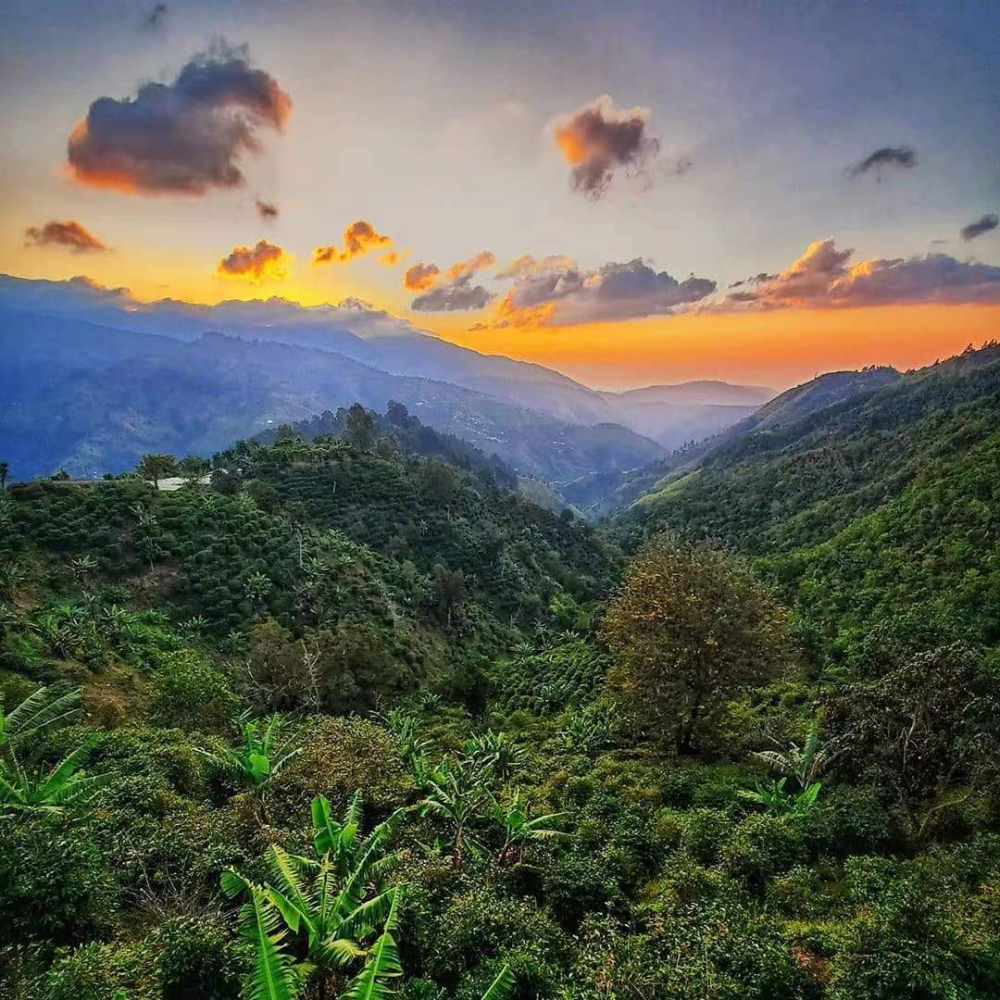
The cultivation history of Jamaica Blue Mountain coffee dates back to 1728, when the Governor of Jamaica introduced the first coffee plant from Martinique, thus beginning the country’s coffee cultivation journey. Thanks to the Blue Mountains' exceptional natural conditions, the coffee plants quickly took root and thrived locally, gradually developing into a renowned coffee-producing region. The Blue Mountains are located in eastern Jamaica, spanning the four parishes of Saint Andrew, Saint Thomas, Saint Mary, and Portland. They are not only the highest peaks in the Caribbean but also a famous tourist destination.
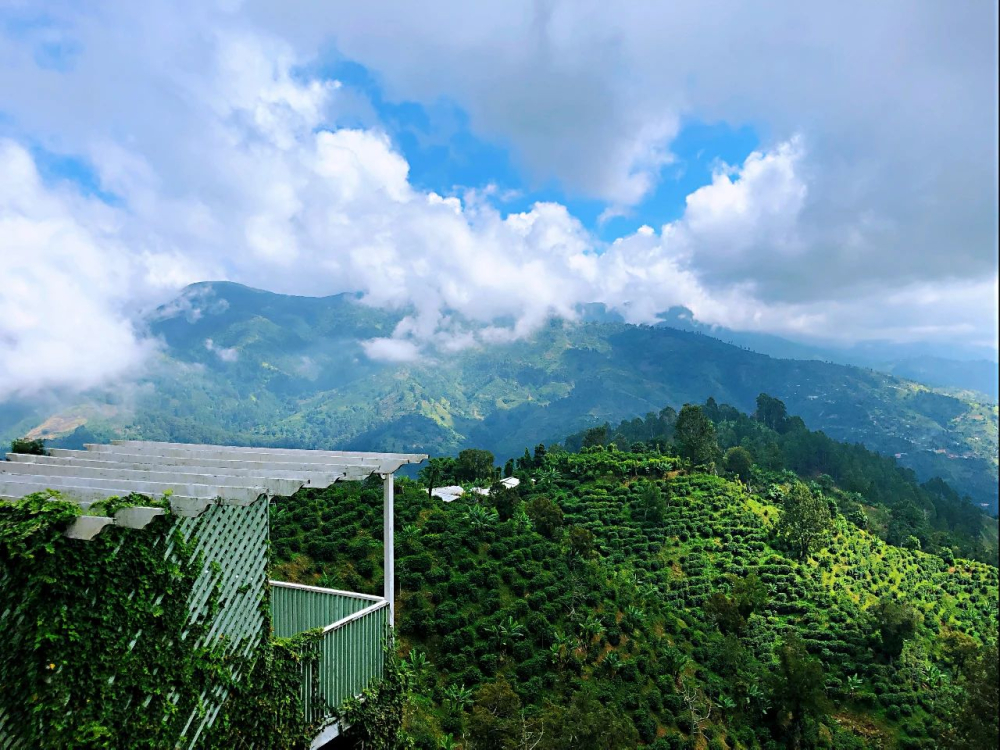
It is worth noting that the government has designated areas above 1,700 meters in elevation as nature reserves, where all crop cultivation—including coffee—is strictly prohibited. As a result, the main cultivation area for Blue Mountain coffee is concentrated between 910 and 1,700 meters above sea level. This region not only enjoys fresh air and virtually no chemical pollution, but also benefits from a mild climate and mineral-rich volcanic soil, providing an almost perfect growing environment for Arabica coffee.
Currently, the coffee-growing area of the Blue Mountains is approximately 6,000 hectares, but not all coffee produced in the region can be called Blue Mountain coffee. To ensure quality, the Jamaican government established the Coffee Industry Board (CIB), which clearly stipulates that only Arabica coffee beans grown at elevations between 910 and 1,700 meters qualify to be labeled as "Jamaica Blue Mountain Coffee." In contrast, coffee grown at lower altitudes is categorized as Jamaica High Mountain Coffee or Jamaica Prime Coffee.
In terms of grading, the CIB has established extremely strict export standards based on multiple criteria of green beans, including size, appearance, defect rate, and cupping performance. Blue Mountain coffee is divided into four grades: Blue Mountain No. 1, Blue Mountain No. 2, Blue Mountain No. 3, and Blue Mountain Peaberry. Among them, Blue Mountain No. 1 is the highest grade, requiring green bean size to be 17 mesh or larger, defect rate not exceeding 2%, moisture content controlled between 10% and 12.5%, and flavor that exhibits an excellent balance of acidity, sweetness, bitterness, body, and aroma. Due to these stringent standards, the production of Blue Mountain No. 1 is extremely limited.
To maintain the quality and moisture content of green beans, Blue Mountain No. 1, No. 2, and No. 3 are exported in wooden barrel packaging, with capacities of 70 kg, 30 kg, and 15 kg respectively. Other grades are transported in common 60 kg jute sacks.
The Blue Mountain No. 1 coffee beans introduced here come from the Clifton Estate and are processed using the washed method. During washing, coffee cherries first undergo flotation to remove unripe fruits, then mature fruits are conveyed by water flow into a pulper to remove the outer skin. The depulped beans still retain mucilage and parchment, requiring fermentation in water tanks until the mucilage breaks down. Residues are then removed by water flow, and the clean parchment-covered beans are sent to drying patios until they reach the target moisture content before being stored.
The washed process not only effectively reduces the defect rate but also makes the flavor of Blue Mountain coffee clearer and brighter, while enhancing overall quality stability. This is why many coffee lovers often perceive its delicate and layered taste when sipping Blue Mountain.
So, how can you brew to fully bring out the classic flavors of Blue Mountain coffee? First, it is recommended to choose coffee beans within their optimal flavor window—typically, beans roasted within one month can present the most complete aromas and flavors. If more than a month has passed, some aromas may gradually fade, and even undesirable woody notes may emerge.
The typical flavor profile of Blue Mountain No. 1 centers around rich chocolate and roasted nut aromas, with gentle acidity and a full-bodied mouthfeel. To recreate such a flavor profile, the roast level is usually chosen as medium to dark, enhancing aroma expression while retaining moderate acidity. Through cupping, Blue Mountain No. 1 demonstrates good balance across various flavor dimensions such as acidity, sweetness, bitterness, body, and aroma. Therefore, the brewing parameters are designed based on this foundation.
The recommended brewing parameters are as follows: use a KONO filter cone, with coffee grounds ground to approximately 75% passing through a 20-mesh sieve, equivalent to a medium-coarse grind. Water temperature is suggested at 88°C, with a coffee-to-water ratio of 1:15, using 15 grams of coffee. Employ a three-stage pouring method: the first stage involves pouring 30 grams of water for blooming for about 30 seconds; the second stage uses 95 grams of water poured in a uniform circular motion from the inside out; when the water level drops to about two-thirds of the coffee bed, proceed to the third stage by pouring 100 grams of water with a fine stream. The entire process takes about 2 minutes to complete the drip, and the coffee liquid can be gently swirled before enjoyment.
The above content is compiled by CoffeeHunters, a coffee news website.


