







Introduction:Did you know that coffee grounds discarded after daily brewing can be transformed into artistic materials beyond just being used as deodorizers? Filipino nursing student Levah Branda turns her father’s leftover coffee grounds into whimsical two-dimensional and three-dimensional artworks through unique techniques. This article takes an in-depth look at how she uses bamboo skewers, natural materials, and glue to fix the grounds, revealing her complete creative process—from sketch design to detail handling—and uncovering the hidden value of wasted coffee grounds.
Coffee grounds produced after daily brewing are commonly either washed down the drain or used as garden deodorizers, but in the Philippines, one nursing student, Levah Branda, sees artistic potential in these brown-black residues.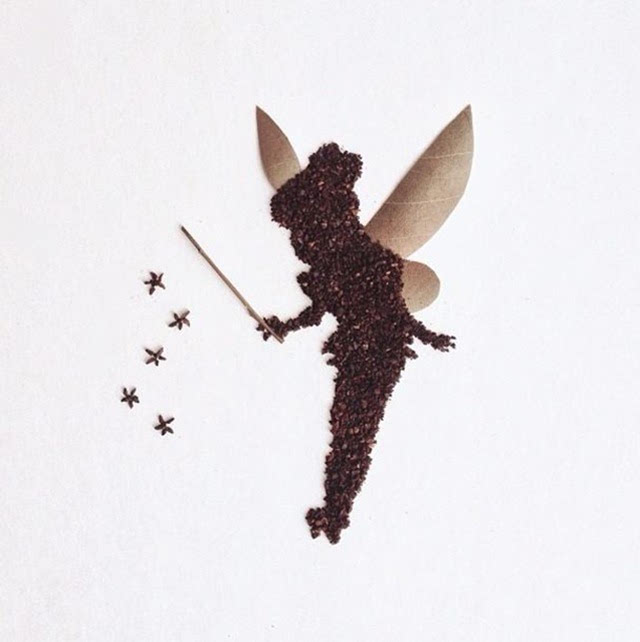 Inspired by her father’s daily coffee-drinking habit, she reuses the spent coffee grounds and, through special techniques, creates artworks with both flat and three-dimensional layers, giving new life to what would otherwise be discarded.
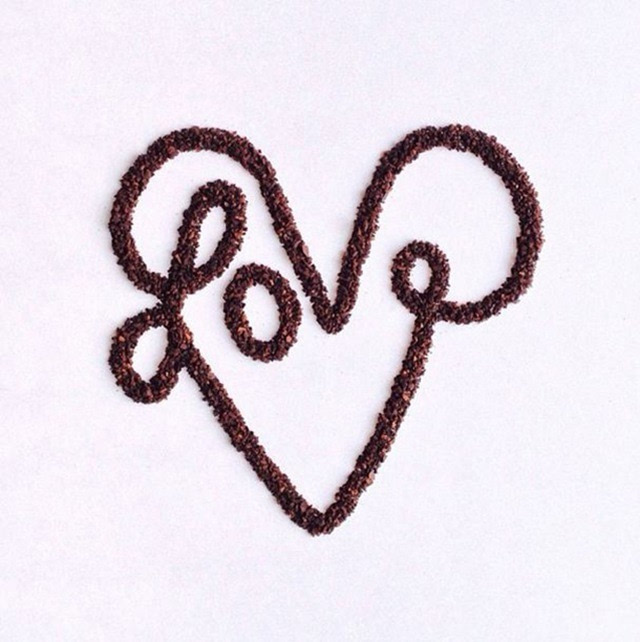
Levah’s creative inspiration comes from observing family life.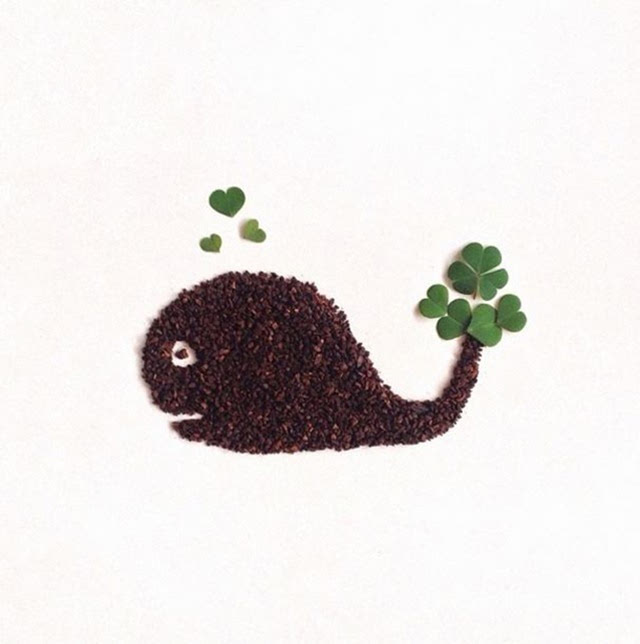 She mentions that her father is a heavy coffee drinker who often discards large amounts of coffee grounds after brewing. Being a coffee culture enthusiast herself, she began to wonder if these dark particles could be turned into a medium for creation. After many trials, she developed a unique method of stacking coffee grounds to form compositions, with some pieces even achieving astonishing 3D visual effects through layered stacking.
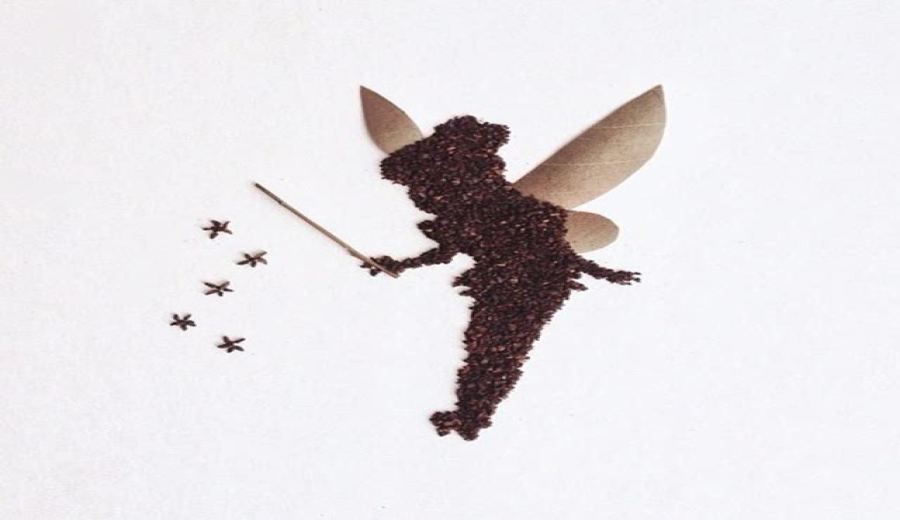
If a piece is composed solely of a single shade of coffee grounds, it can easily appear monotonous and dull. Levah cleverly incorporates natural materials from her surroundings into her creations: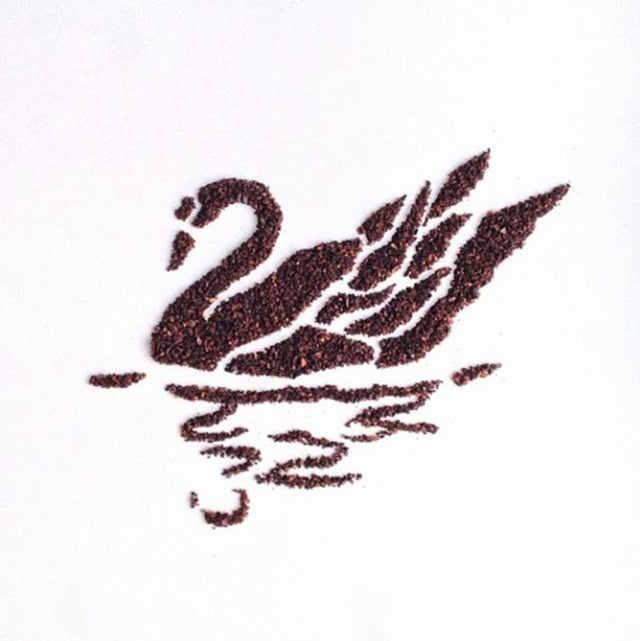 Such as twigs collected from the garden, fallen leaves, or seasonal petals. These elements not only enhance the narrative quality of the artwork but also create a tactile sense of depth and dimensionality through material differences, elevating the overall piece from a flat image to an art form with spatial tension.
The key to creating a coffee grounds painting lies in“patience and attention to detail”and“precise control of materials.”These are the two core principles. Levah shares her standard workflow: first, she sketches the basic outline with a pencil on paper, then selects coffee grounds particles of suitable shades from her pre-collected stash, and finally uses thin bamboo skewers to carefully move the coffee grounds to their designated positions—this is the most challenging part requiring steady hand control. Too much pressure can cause the carefully arranged coffee ground structure to collapse, often requiring re-adjustment.
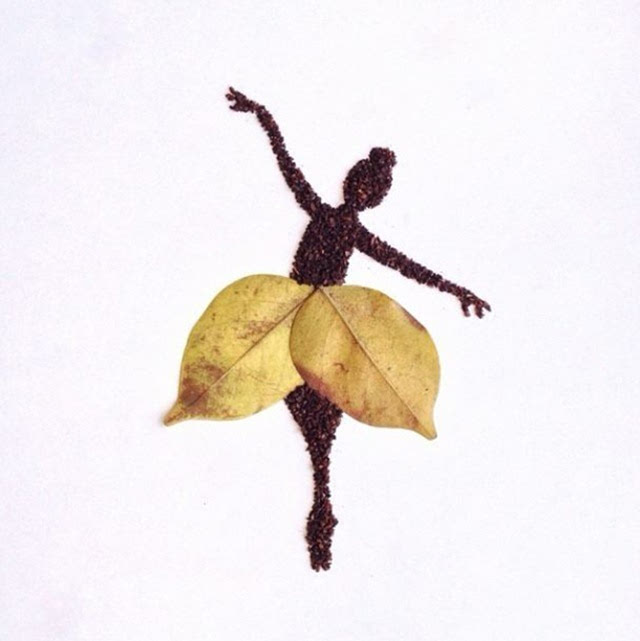 The final step is placing physical materials such as twigs, leaves, or petals. This stage requires particular attention to the coordination between the materials and the color of the coffee grounds; even a slight misstep can disrupt the overall visual balance.

To overcome the physical tendency of coffee grounds to scatter, Levah later introduced“clear, colorless glue fixation technique.”.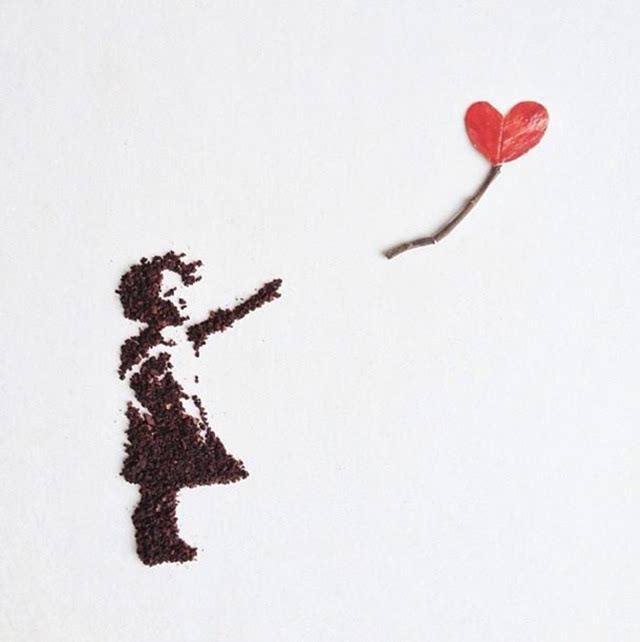 Although using glue adds complexity to the process (such as drying time affecting the fluidity of painting), it significantly improves the artwork’s longevity and structural stability—especially suitable for pieces intended for long-term display or gifting as collectibles. This improvement elevates her coffee grounds art from a temporary experiment to a sustainable creative form.
Levah’s practical experience reveals an important life philosophy:“Creativity is often hidden in everyday details.”. Even if not every reader can replicate her 3D coffee grounds paintings, by observing “wasted resources” around us (like coffee grounds, fruit peels, fallen leaves, etc.) and combining simple tools with basic aesthetic concepts, anyone can transform ordinary materials into personalized works of art. This approach of merging utility with aesthetics is a core value of contemporary creative living.
The above content is compiled by CoffeeHunters, a coffee news website.


