







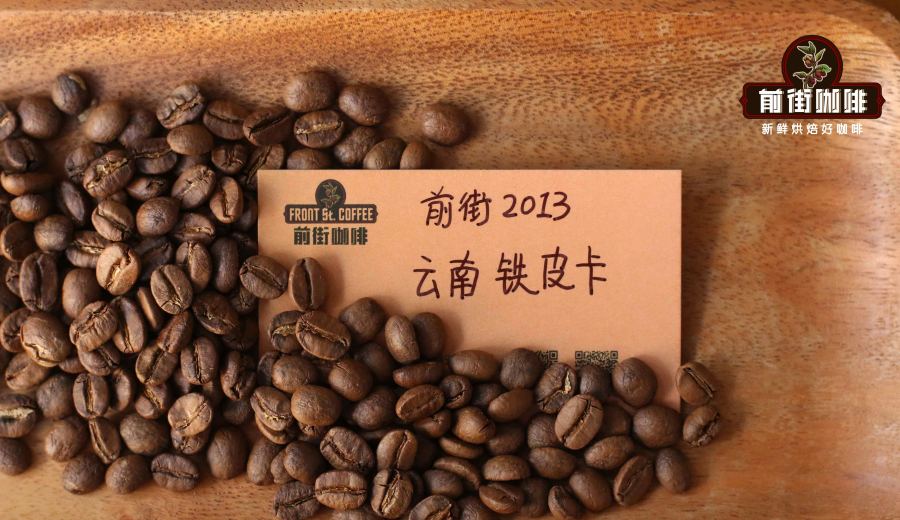
Introduction:Explore the development history and variety evolution of Yunnan small-grain coffee, delve into the differences between Catimor and Typica, and their performance in pour over brewing. This article provides practical extraction parameter suggestions and flavor profile analyses to help coffee enthusiasts choose suitable Yunnan single-origin beans and enhance their brewing experience.
As China’s primary coffee-producing region, Yunnan contributes about 98% of the country’s total coffee bean output. Since French missionaries introduced the first batch of coffee plants from Myanmar in 1904, after more than a century of development—especially after Nestlé promoted the rust-resistant Catimor variety in 1989—Yunnan coffee has gradually transitioned from fringe experiments to large-scale commercial cultivation. High-altitude areas such as Pu’er, Baoshan, Lincang, and Xishuangbanna (approximately 800 to 1,850 meters above sea level), with their significant diurnal temperature variations and abundant rainfall, have nurtured coffee with distinctive regional flavors. Among them, the Typica variety '2013' planted by the industry locally, when processed with natural drying and medium roasted, presents sweetness and juiciness, forming a clear contrast with the commonly seen Catimor on the market. This article will guide you through the historical background, main variety characteristics, pour over recommendation parameters, and flavor profiles of Yunnan coffee, and objectively evaluate its pros and cons, providing practical references for readers seeking high-quality Yunnan pour over beans.
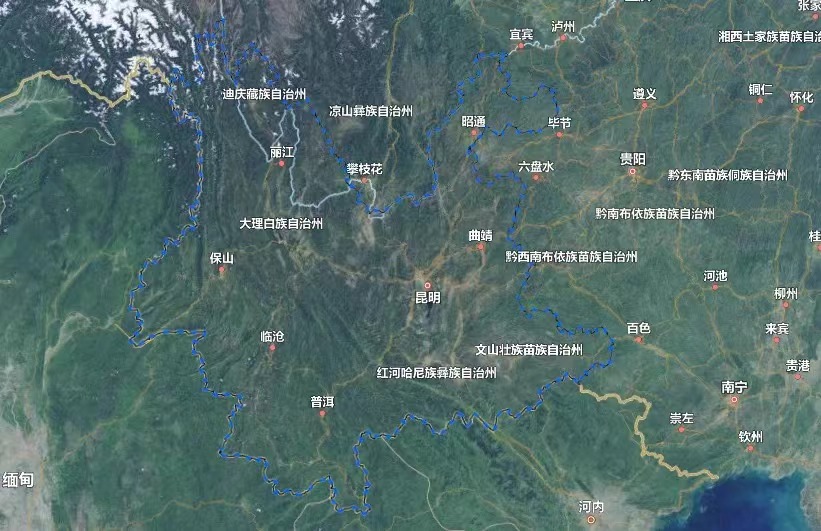
 Over 90% of China’s coffee is produced in Yunnan, a region bordering coffee-producing countries such as Myanmar, Laos, and Vietnam, with uniquely advantageous geographical conditions. As early as 1904, French missionary Térence Desgranges introduced coffee plants from Myanmar to meet daily coffee needs, which was only a small-scale trial planting at the time. It wasn’t until 1989, when Nestlé promoted the rust-resistant Catimor variety in Yunnan, that coffee became an important cash crop. Currently, about 98% of the national coffee output is concentrated in Yunnan, with a planted area of 90,000 hectares and an annual output of about 100,000 metric tons, almost equivalent to China’s total coffee production. In comparison, coffee in places like Fujian and Hainan, due to altitude limitations, is mostly Robusta, with strong flavors that do not align with the trends of the specialty coffee market and are difficult to meet the needs of pour over single-origin brewing. Therefore, Yunnan, capable of growing high-quality Arabica beans, naturally becomes the core area for the development of China’s specialty coffee.
The altitudes of Yunnan producing areas generally range between 800 and 1,850 meters, with around 1,000 meters being the main planting height. This region features significant diurnal temperature variations and ample rainfall, providing a solid foundation for coffee green beans. The main planting areas are concentrated in the southwestern regions of Pu’er, Baoshan, Lincang, and Xishuangbanna. Currently, Yunnan mainly grows Catimor and Typica, but last year, the Baoshan area launched the highly representative Geisha variety—In 2016, the owner of Zuoyuan Estate, Old Fan, planted Yunnan’s first batch of Geisha in the shaded valleys at altitudes of 1,400 to 1,600 meters. Although not yet widespread, it has laid the groundwork for future varietal diversity. This article will focus on the more common Catimor and Typica, analyzing their characteristics based on practical experience.
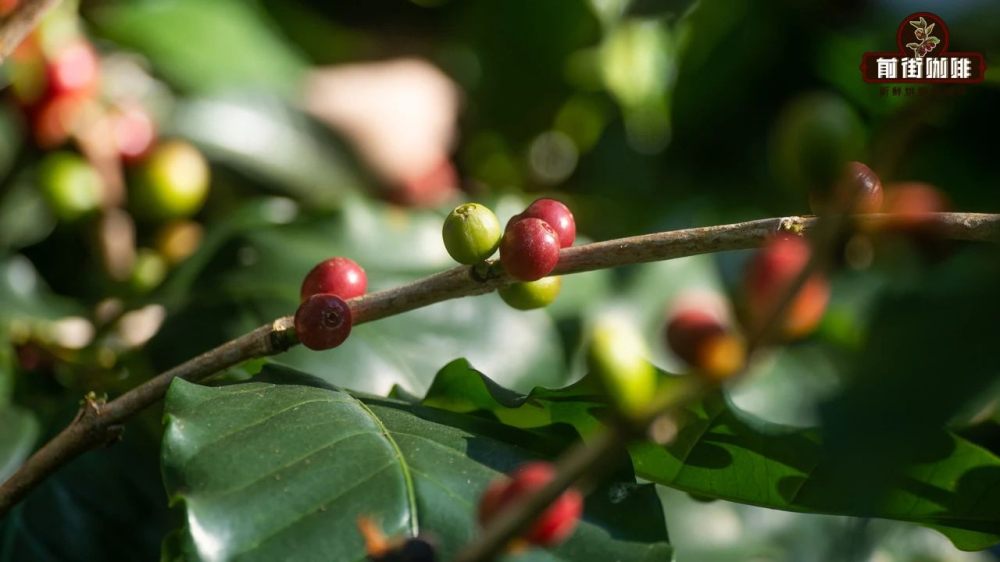 The industry began planting coffee in Yunnan even before opening physical stores. Initially, trial plantings in Guangzhou were limited by conditions, so the focus shifted to Yunnan. In May 2016, the first batch of Typica was planted in the mountainous areas of Yunnan, and it also led to a deeper understanding of why the region prefers Catimor—the key lies in cost-effectiveness. Catimor is a hybrid of the Timor variety and Caturra, carrying Robusta genes, and was successfully cultivated in Portugal in 1959. Its trees are short and densely branched, suitable for high-density planting, and it has relatively low altitude requirements, making it highly commercially valuable. However, due to its Robusta genes, it is often considered to have stronger flavors and is less delicate compared to typical Arabica. The early-imported Typica beans were smaller, hence the name 'small-grain coffee,' but as market demand shifted toward commercialization, Catimor gradually became mainstream due to its high-yield characteristics—that is, what is now referred to as 'Yunnan small-grain coffee.'
To balance yield and flavor, the choice was made to plant the better-flavored Typica and name it '2013.' This coffee is processed using natural drying to preserve sweetness and compensate for the impact of altitude on flavor. After processing, it is sent to a roasting factory in Guangdong, where it is medium roasted to present a balanced taste of chocolate, nuts, and dried apricots, along with a soft plum acidity, and has received widespread market acclaim.
Currently, the term 'Yunnan small-grain coffee' on the market mostly refers to the Catimor variety. Also offers Catimor beans from Baoshan. Below, through an actual pour over comparison, we analyze the differences between it, the 2013 Typica, and typical Yunnan farm Catimor:
Industry (Front Street Coffee) extraction parameters:
- V60 dripper
- Water temperature 91°C
- Coffee-to-water ratio 1:15
- Coffee dosage 15g
- Grind size (75% passing rate through a Chinese No. 20 standard sieve)
Industry (Front Street Coffee) extraction technique:
Bloom with twice the amount of water as the coffee dose, then pour water in small streams in a circular motion from the center outward until reaching 125g. When the water level drops and is about to expose the coffee bed, continue pouring to the target volume. Remove the dripper once the dripping finishes, with the overall extraction time being approximately 2 minutes.
Flavor characteristics of Yunnan coffee beans:
• Natural-dried Catimor: Flavors are mainly nuts and chocolate, with high body, overall balance, and not prominent acidity.
• 2013: The cup has rich juiciness and herbal aromas, smooth mouthfeel with distinct layers, lively and bright plum acidity, and an aftertaste transitioning from apricot to citrus, with sweetness resembling brown sugar.
• Typical Yunnan farm Catimor: Flavor profile is similar to natural-dried Catimor, but may vary slightly due to processing and altitude differences.
The Yunnan producing area has favorable geographical and climatic conditions, and the overall coffee quality is commendable. However, there are still pros and cons in its development process worth noting:
Advantages:
• High freshness, short arrival cycle, beneficial for maintaining bean vitality.
• Overall good balance, suitable for blending.
• Some specialty washed beans can exhibit berry flavors, with unique processing methods bringing distinctive tonalities, suitable for single-origin enjoyment.
• Commercial-grade Yunnan beans are more price-competitive compared to imported beans.
Disadvantages:
• Variety limitations lead to relatively monotonous flavors, and high-quality production costs are higher, making it difficult to compete with imported high-quality beans in pricing.
• Low usage proportion in domestic roasting markets, with limited market share and regional brand influence.
• Consumers have preconceived biases about Yunnan coffee, coupled with insufficient awareness, resulting in still-limited actual consumption.
• Quality consistency needs improvement, and the standardization of planting, processing, and manufacturing processes still requires enhancement.
The above content is compiled by CoffeeHunters, a coffee news website.


