







Introduction:The moka pot is a classic brewing device found in many coffee enthusiasts’ homes. It’s simple to use yet capable of producing rich, strong coffee. But do you know the origin of its name or how it works? This article takes an in-depth look at the three main components of a moka pot, its pressurized extraction mechanism, compares the differences between single and double valve designs, and explains in detail each step of the process—from adding water, selecting beans, grinding, to heating. It also analyzes the pros and cons to help you decide whether it's suitable for daily use, offering practical guidance for both beginners and advanced users.
The moka pot is a classic and widely popular home coffee brewing device. Thanks to its ease of use and affordable price, it has become a top choice for many coffee lovers. But do you know why it’s called a “moka pot”? What makes its structure unique? And how does it fundamentally differ from traditional espresso machines? This article will introduce the basic structure and pressurized extraction principle of the moka pot in detail, compare the differences between single and double valve designs, and walk you through the complete process—from adding water, choosing coffee beans, adjusting grind size, filling the coffee grounds, to heating and extraction—helping you gain a deeper understanding of this classic tool.
The moka pot has a simple and sleek design, consisting mainly of three parts: the upper chamber holds the brewed coffee, the middle filter basket holds the coffee grounds, and the lower chamber holds the water and is used for heating. When the water in the lower chamber is heated to boiling point, it turns into steam, gradually building up pressure. This pressure pushes the hot water through the coffee grounds in the middle filter basket, extracting the flavors and sending the resulting coffee up into the upper chamber, ultimately producing a strong cup of coffee.
This extraction method is similar to the pressurized principle used in commercial espresso machines. As the water in the lower chamber boils, the steam builds pressure, forcing the hot water through a finely ground layer of coffee, releasing rich coffee aromas and flavors, and pushing the brewed liquid up into the upper chamber. Generally, a moka pot can generate about 1.2 to 3 atmospheres of pressure. While this is far less than the 9+ atmospheres in commercial espresso machines, it is sufficient to produce a strong flavor and rich crema.
Currently, moka pots on the market are mainly divided into single-valve and double-valve types. The single-valve design is the basic model, relying solely on steam pressure for extraction; whereas the double-valve moka pot is equipped with an additional pressure valve that further increases the brewing pressure, resulting in a more concentrated extraction, richer crema, and overall more intense flavor. However, regardless of whether it’s single or double valve, the pressure in a moka pot is still much lower than that of a professional espresso machine. Therefore, the brewed coffee is relatively lighter but still retains a distinct coffee strength and character.
Using a moka pot has many advantages, including ease of operation, no need for complex equipment, relatively affordable price, and being portable and easy to store. However, it also has some clear limitations. For example, during the heating process, the water temperature in the lower chamber often reaches the boiling point of 100°C, which is higher than the recommended 90–94°C for standard espresso brewing. This can easily lead to over-extraction, releasing too many bitter substances and making the coffee taste burnt, harsh, and unbalanced in flavor.
Additionally, it’s worth noting that while the coffee produced by a moka pot is strong, it is fundamentally different from commercial espresso. True espresso requires high-pressure extraction of at least 9 atmospheres to produce a thick, dense, and velvety coffee liquid. Even with a double valve, the maximum pressure a moka pot can achieve is only about 2–3 atmospheres. Therefore, the coffee it produces is relatively thinner, with less complexity and body compared to authentic espresso. But for everyday home use, if you’re looking for a quick, convenient way to enjoy strong coffee, the moka pot is still a worthwhile option.
If you want to brew a good cup of coffee using a moka pot, you can follow these steps: First, fill the lower chamber with an appropriate amount of warm water. It’s recommended to keep the water level below the safety valve (pressure relief valve). This not only shortens the heating time but also helps avoid channel blockage caused by overly high water temperature or too fine a grind, which could lead to excessive pressure and potential danger. The safety valve functions to release excess steam when the pressure gets too high. If the water level covers the safety valve, a blocked channel may cause the pot to explode, so be especially careful.
Next, choose suitable coffee beans and grind size. To extract a strong coffee, it’s recommended to use a medium-fine grind, somewhere between pour over and espresso grind levels. For example, if you’re using a professional grinder like the EK-43s, you can adjust the setting to around 0.5. This grind size helps the water evenly penetrate the coffee bed under appropriate pressure. Place the ground coffee into the middle filter basket, gently level it, and smooth the surface with your finger—but do not tamp it down. Overly compacted coffee can obstruct water flow, leading to uneven extraction or spraying.
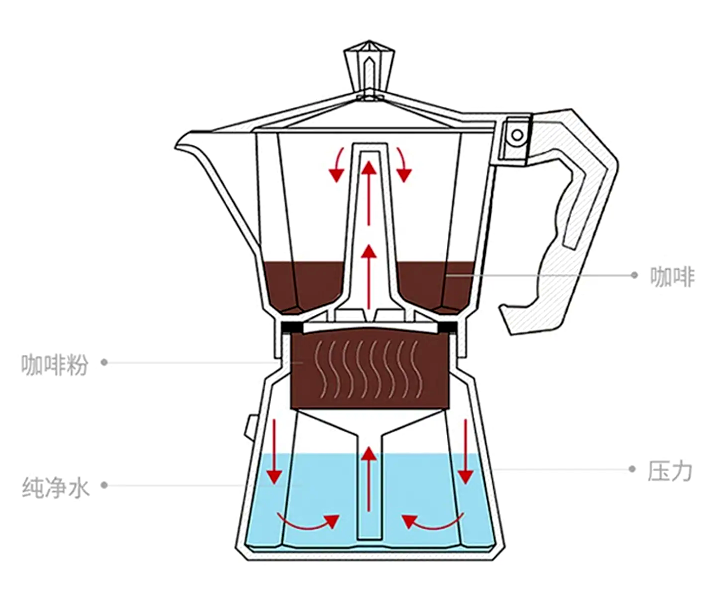
After filling the coffee, tightly screw the upper and lower chambers together, ensuring the threads are fully sealed to prevent air leakage or pressure loss during heating. Then place the moka pot on a stable heat source, such as a gas stove or induction cooker. If using an open flame, be sure to concentrate the fire at the base of the pot and avoid letting the flames extend beyond the base, as this can cause localized overheating, affecting extraction quality or even damaging the pot.
During the heating process, there’s no need for strict timing. The key is to observe and listen. When the moka pot starts heating, you’ll soon hear a hissing sound, indicating that the water is beginning to boil and build pressure. At this point, it’s recommended to reduce the heat to stabilize the pressure and avoid over-extraction. As the pressure rises, the coffee will slowly be pushed up into the upper chamber. Once you see that the coffee in the upper chamber has reached about half its capacity, you can turn off the heat. The remaining heat and pressure inside the pot will complete the final stage of extraction.

After turning off the heat, you can use a damp towel to help cool the moka pot down, then carefully move it to a stable surface. Finally, pour the coffee from the upper chamber into your cup and enjoy. This coffee usually has a strong aroma, potentially featuring notes reminiscent of whiskey-like booziness, vanilla, cream, fruity acidity, and roasted nuts. If you prefer a lighter taste, you can dilute it with a bit of hot water. When paired with milk, it can exhibit chocolatey, sweet characteristics, making it very suitable for making lattes or other milk-based coffee drinks.
The above content is compiled by CoffeeHunters, a coffee news website.


