







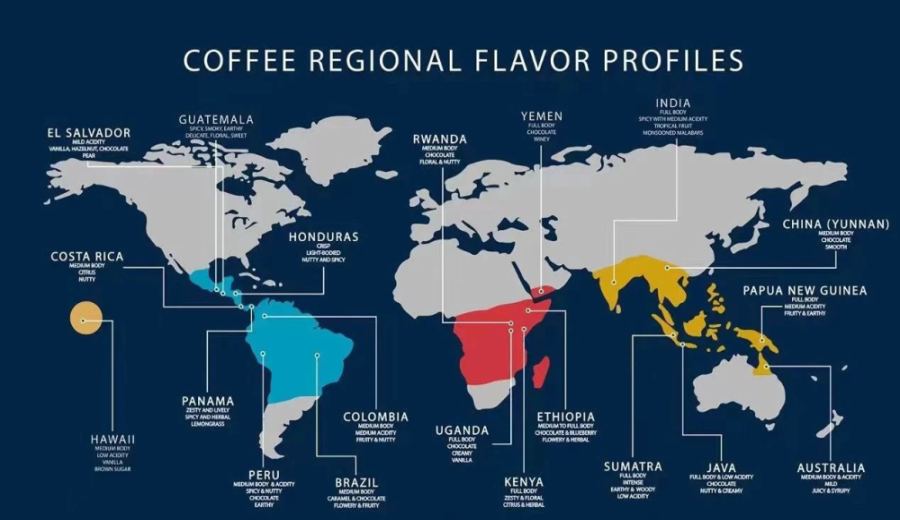
Introduction:The world’s major coffee-growing regions can be divided into three main areas: Africa, Central and South America, and Asia. Each region, with its distinct terrain, altitude, climate, and soil conditions, produces coffee with vastly different flavor profiles. Understanding the characteristics of these regions can help you choose beans that suit your personal taste preferences and also enhance the enjoyment of brewing and tasting. This article will delve into the flavor profiles of each region and use representative beans as examples to help you grasp the key flavor characteristics and differences.
The so-called Coffee Belt refers to tropical and subtropical regions where the average annual temperature remains above 20°C, featuring warm seasons year-round, no frost in winter, abundant sunshine, and plentiful rainfall. Such an environment is extremely suitable for coffee tree growth and is the primary source of the world’s specialty coffee. However, even if the same coffee variety is planted, beans from different regions can exhibit vastly different flavor expressions. For example, the Geisha variety grown in Panama and Costa Rica will showcase different aroma and taste profiles due to variations in altitude, microclimate, and processing methods.
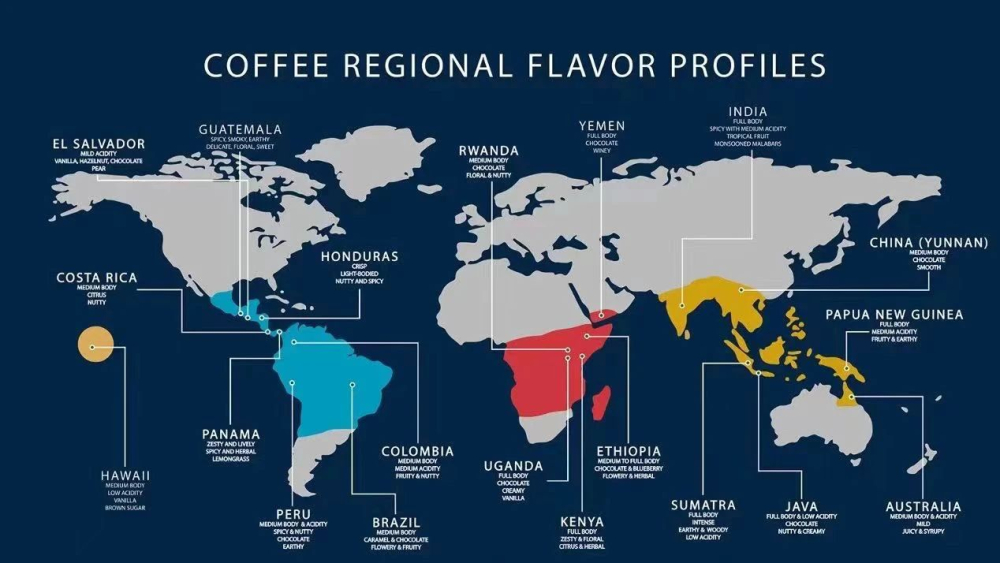
The differences in coffee flavors are not solely determined by variety but are also deeply influenced by altitude, climatic conditions, and soil composition. High-altitude regions typically experience significant day-night temperature variations, causing coffee cherries to ripen more slowly and accumulate richer flavor compounds. This results in more delicate acidity, sweetness, and aroma in the coffee. Additionally, the mineral composition of the soil directly affects the balance of acidity and sweetness as well as the complexity of the flavor. These factors combined allow us to roughly identify a coffee’s origin based on a single cup.
Based on long-term cupping observations, coffee beans from African regions generally exhibit bright acidity, often showcasing refreshing citrus and berry flavors accompanied by natural sweetness and tea-like undertones. Coffee from Central and South America is known for its layered complexity and soft acidity, often accompanied by compound aromas of nuts, chocolate, and fruit. As for Asian regions, coffee flavors tend to be rich, full-bodied, and lower in acidity, often with pronounced herbal, spicy, or caramel notes, making them suitable for drinkers who prefer bold and robust profiles.
African coffee is represented by Ethiopia and Kenya. The former, such as beans from the Yirgacheffe region, are often processed using the washed method to highlight highly distinctive citrus acidity and berry sweetness. The latter, such as coffee from the Sidama region, features a unique 72-hour washed process that results in pronounced tomato and dark plum acidity, with a sweet profile reminiscent of brown sugar. These characteristics make African beans a popular choice for many pour over enthusiasts looking to explore new flavors.
Central and South American regions are exemplified by Panama and Costa Rica. Panama’s Geisha coffee from Hacienda La Esmeralda, grown at high altitudes and processed with sun-drying, showcases intense complex fruit aromas paired with citrus acidity and an black tea-like finish, offering a rich and layered taste experience. Costa Rica’s Strawberry Chocolate coffee employs raisin honey processing, delivering strawberry hard candy-like aromas and fermented fruit notes, with balanced acidity and sweetness and a hint of rose fragrance—ideal for those who favor fruity profiles.
Coffee beans from Asian regions are generally grown at lower altitudes, coupled with a more stable climate and smaller day-night temperature differences, resulting in flavors that lean toward being full-bodied, low in acidity, and rich in herbal, spicy, or caramel characteristics. For example, the Catimor variety from Yunnan, China, when processed with fully red fruit sun-drying, exhibits sweet and tangy red berry notes along with the richness of dark chocolate, suiting medium to dark roasts. It’s a flavor type that many coffee beginners find approachable. Indonesia’s Golden Mandheling, processed with the wet-hulled method, emphasizes strong herbal and spicy aromas, paired with dark chocolate and nutty notes, making it a classic representative of Southeast Asian coffee.
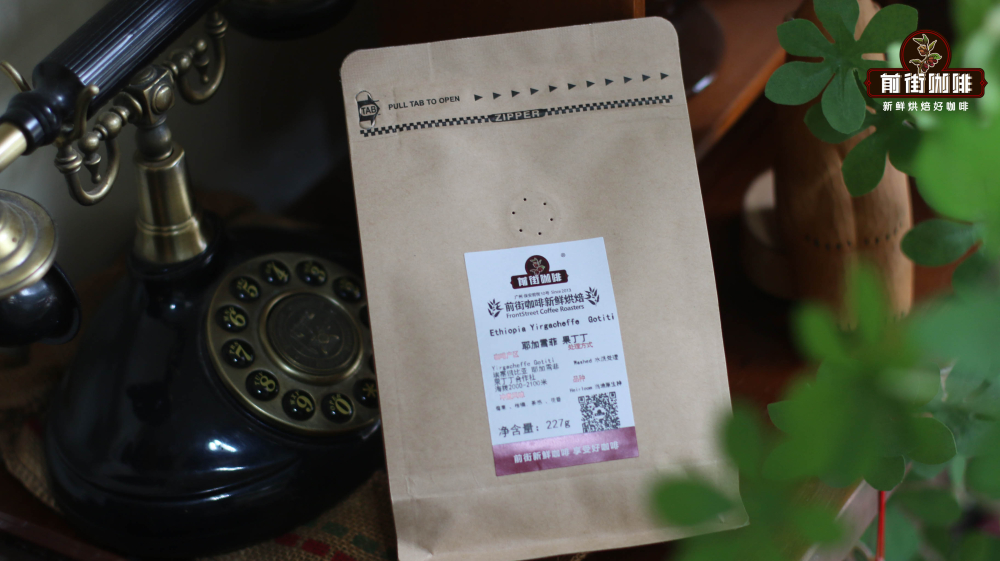
In summary, the coffees of the three major regions each have their own unique characteristics. Whether you prefer bright and refreshing high-acidity flavors, layered and balanced mid-range profiles, or rich and full-bodied low-acidity tastes, you can find your ideal choice among the representative beans of the corresponding regions. Familiarizing yourself with these basic flavor profiles not only helps in selecting beans that suit your taste but also allows you to adjust brewing parameters according to different characteristics, further enhancing your overall coffee experience.
The above content is compiled by CoffeeHunters, a coffee news website.


