







Introduction:As China’s primary coffee-growing region, Yunnan’s small-bean Arabica coffee has gradually garnered attention in recent years. This article delves into the evolution of Yunnan’s coffee cultivation, the characteristics of its varieties, and its current grading standards, while also explaining the differences between washed and natural processing methods. Through real-world examples, it introduces the flavor profiles and roasting recommendations of Yunnan coffee, offering practical insights for exploring the region’s unique coffee flavors.
Yunnan is the core domestic coffee-producing area in China, primarily cultivating small-bean Arabica coffee beans, which are distinctly different from the medium-bean Robusta grown in places like Hainan. Since the first coffee tree was introduced by French missionaries in Zhugula Village, Binchuan, in 1904, Yunnan’s coffee cultivation history has spanned over a century. In 1937, overseas Chinese Liang Jinshan brought seeds from Myanmar and cultivated them in the Luxi Dam area of Baoshan, laying the foundation for early coffee planting. In 1952, under the guidance of experts from the Agricultural Science Academy, Yunnan began large-scale coffee planting, initially supplying the Soviet market.
The year 1988 marked a significant turning point for Yunnan’s coffee industry. With the establishment of a Nestlé branch in the region, the disease-resistant and high-yield Catimor variety was introduced, and farmers were promised purchase at international futures prices, which greatly expanded the planted area. Subsequently, brands such as Starbucks and Maxwell House also entered the market, further increasing production and farmers’ income. However, the Catimor variety, containing one-quarter Robusta genetics, though disease-resistant and stable in yield, often falls short in flavor compared to purebred Arabica.
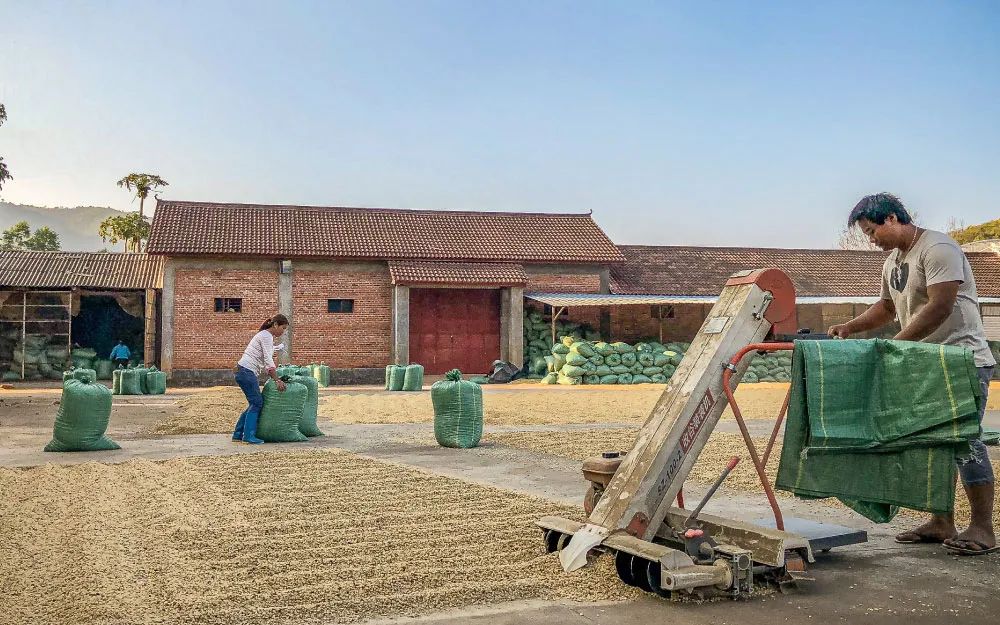
Currently, most coffee beans grown in Yunnan are of the Catimor variety, with relatively simple processing methods leading to inconsistent overall quality. These beans are mostly used for instant coffee or low-cost blends. Nevertheless, a small number of farmers employ refined processing methods to produce specialty coffee with regional characteristics. Compared to mature production regions like Ethiopia and Panama, Yunnan’s coffee does indeed have gaps, but some small-batch productions have already shown potential.
Yunnan’s coffee grading system is not yet fully internationalized. The current standards mainly rely on indicators such as screen size, color, cleanliness, aroma, and moisture content. Traditional grading divides beans into five levels based on mesh aperture in millimeters: Grade 1 requires beans larger than 6.5 mm, with full and intact shapes; Grade 2 ranges from 6.0–6.4 mm with relatively uniform shapes; Grade 3 is 5.3–5.9 mm, with slightly less fullness; Grade 4 spans 5.0–5.4 mm, with intact beans accounting for over 75%; Grade 5 consists of beans smaller than 5.0 mm, with intact beans making up just over 30%. In terms of color, bright hues like light blue and light green are preferred, while dark brown or dull orange are considered inferior. Cleanliness demands a high rate of silver skin removal and no obvious impurities, the aroma must be free from fermented off-notes, and moisture content should be controlled below 12%.
To enhance international competitiveness, the Yunnan International Coffee Exchange (YCE), established in Pu’er City, integrated standards from the Specialty Coffee Association (SCA) and Coffee Quality Institute (CQI) in 2019. They developed a new grading system specifically for washed Yunnan small-bean coffee. This standard has become an important reference for local farmers and enterprises when quoting prices, helping to improve market transparency and value.
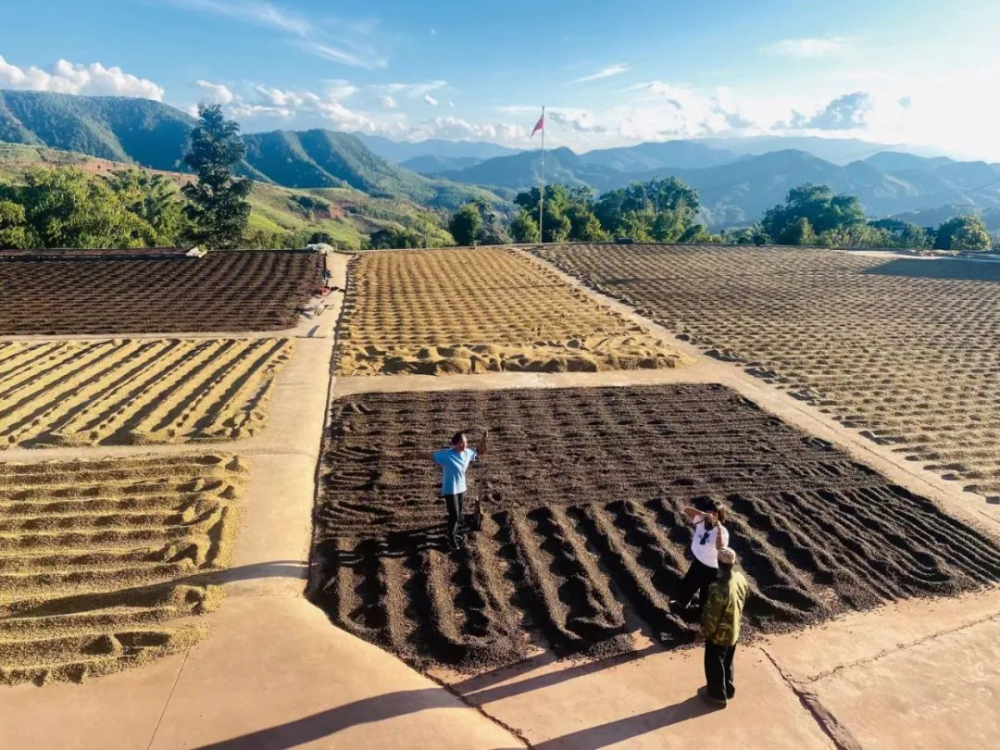
The flavor potential of Yunnan small-bean coffee can be highlighted through appropriate processing methods. Take washed processing as an example: removing the fruit pulp layer before drying enhances the intrinsic aromatic characteristics of the coffee, resulting in what is referred to as the “Yunnan flavor”—a neutral tone with pronounced acidity and a rich, bitter body. A certain brand’s “2013” natural batch, for instance, uses the ancient Typica variety, carefully managed and harvested in the Lincang region. Due to Typica’s weak disease resistance, its cultivation requires more effort. After its first harvest in 2020, the beans were processed naturally, ultimately yielding a complex flavor profile of plum, dried fruit, chocolate, and nuts.
In terms of roasting recommendations, a medium roast can balance the acidity, sweetness, and bitterness of Yunnan coffee, making it suitable for most drinkers. For pour over, consider the following parameters: use a Hario V60 dripper, 15 grams of coffee, a water temperature of 90°C, and a grind size with a 75% extraction rate through a 20-mesh sieve. Water is added in three stages: first, use twice the amount of coffee (about 30 grams) for a 30-second bloom, then pour in a small stream in a circular motion from the inside out until reaching 125 grams. Once the coffee bed descends to the middle of the dripper, continue pouring to 225 grams to complete extraction, with a total time of about 2 minutes. These parameters help highlight the coffee’s layered profile and regional characteristics.
In summary, although Yunnan coffee still has room for improvement, its unique geographical environment and varietal traits have given rise to a distinctive and recognizable flavor profile. By understanding the grading standards, differences in processing methods, and key roasting points, consumers can more accurately select Yunnan-grown beans that suit their personal tastes, experiencing the charm of coffee from this land.
The above content is compiled by CoffeeHunters, a coffee news website.


