







Introduction:The coffee flavor wheel is an important tool to help identify flavors, but many beginners mistakenly believe it can directly tell you what you’re tasting in your cup. Based on the new version of the flavor wheel released by the SCAA in 2016, this article explains in detail the logic behind its three-ring structure—from the inner ring’s major categories, to the middle ring’s subdivisions, and finally the outer ring’s concrete flavors. It will guide you step-by-step on how to use this system to narrow down your flavor judgment. Along with practical pour over experience, we’ll share how to improve your sensory acuity through comparison and training, point out common misconceptions, and help you build your own coffee flavor memory bank.
The coffee flavor wheel has long been recognized as a sensory aid in the industry, but it is not a magical answer machine that lets you pinpoint specific flavors in coffee with one sip. On the contrary, it is a systematic reference framework that helps you sort through and distinguish complex layers of flavor. This article will focus on the new coffee flavor wheel introduced by the SCAA (Specialty Coffee Association of America) in 2016, breaking down its three-ring structure—the inner, middle, and outer rings—in an easy-to-understand way, explaining their relationships and application logic. Through real-world pour over coffee tasting examples, such as comparing Ethiopia Yirgacheffe Guji Dingding with Panama Boquete Geisha, it will guide you on how to use the flavor wheel to gradually narrow down the flavor scope and build your own sensory memory.
This widely used flavor wheel was created through collaboration between the SCAA, the World Coffee Research institute, the University of Agriculture in Germany, Kansas State University, and several industry experts. It involved flavor analysis of over 105 samples from 13 major coffee producing regions. The wheel also references research by a team at the University of California, Davis, where 72 experts scientifically ranked flavor attributes, culminating in the authoritative wheel system we have today. However, before you begin learning, there is an important concept to clarify: although the flavor wheel is authoritative, do not rely on it blindly—doing so may cause you to unnecessarily doubt your own senses.

I. The Flavor Wheel Is Not a Panacea: Don’t Blindly Trust the Options on the Wheel
Many people, when first encountering the flavor wheel, often have a mistaken expectation: believing that as long as they follow the names on the wheel, they can accurately name every flavor in their coffee. However, that’s not the case. The flavors hidden in coffee number in the hundreds or even thousands, and the flavor wheel is arranged based on research samples—it cannot possibly cover all possible taste and aroma experiences. For example, some coffees may have a distinct lychee aroma, but you won’t find that option on the wheel. This doesn’t mean you’re tasting it wrong; it’s simply because the sample library is limited, and some genuinely present and easily perceptible flavors were not included.
Therefore, when you’re sipping coffee and you sense a unique aroma or taste that you can’t find on the flavor wheel, don’t immediately doubt your taste buds. You’ve likely just encountered an individual flavor not included in the wheel, which is actually quite common in the world of specialty coffee.
II. Three-Ring Structure Analysis: The Logic of Judgment from Major Categories to Concrete Flavors
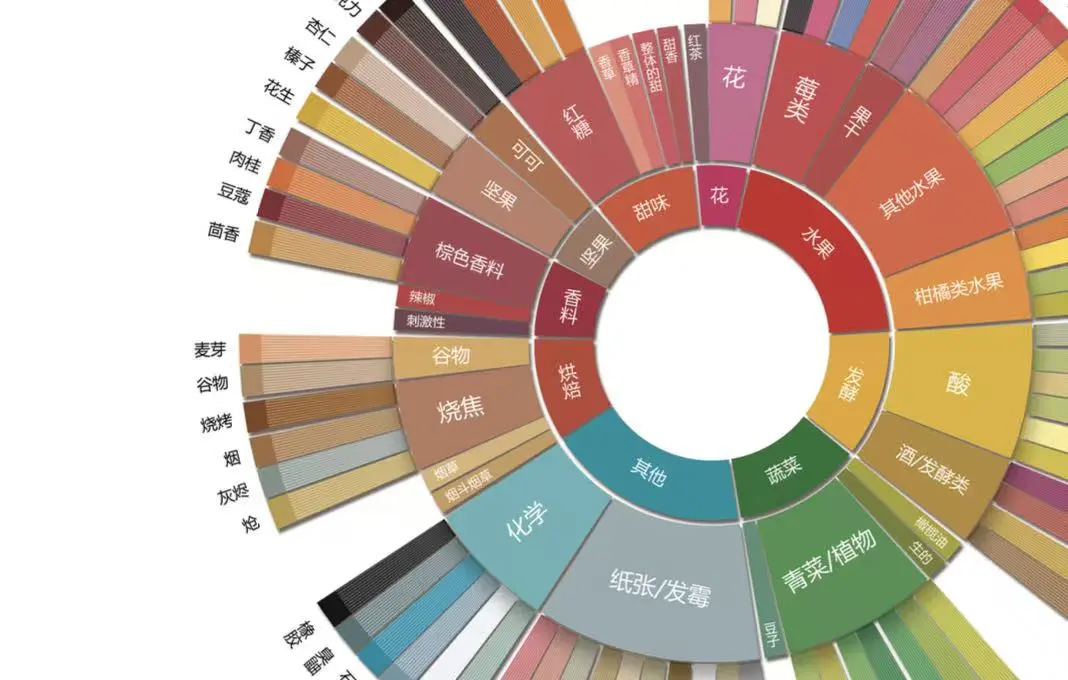
The current SCAA flavor wheel uses a three-layer design, consisting of the inner ring, middle ring, and outer ring from the inside out. The inner ring represents the major flavor categories, such as “Fruity,” “Floral,” “Sweet,” “Roasty,” “Herbal,” etc., providing a broad classification of overall flavors. The middle ring is a subdivision of the inner ring—for example, under “Fruity,” you can further distinguish between “Citrus,” “Berry,” “Stone Fruit,” “Other Fruits,” and “Dried Fruit.” The outermost ring further refines these into specific, imaginable food flavors—for instance, under “Citrus,” you can find common fruit tastes like “Lemon,” “Orange,” “Grapefruit,” and “Lime.”
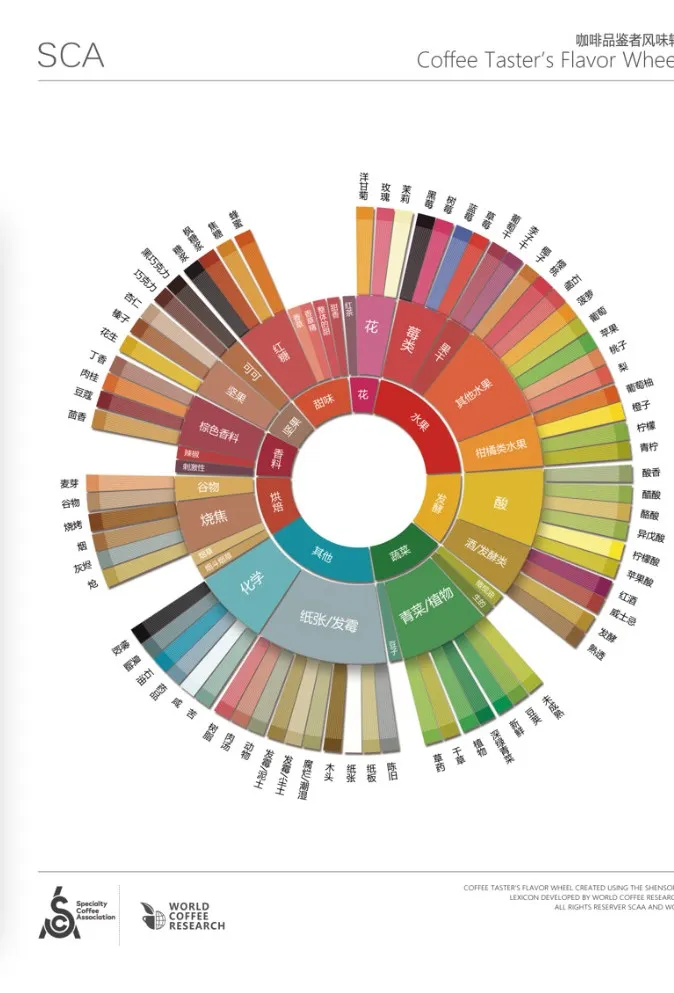
Once you understand the logic of these three layers, you can gradually narrow down the flavor range while tasting coffee. When you smell or taste an unfamiliar aroma, first determine which inner ring major category it belongs to—is it more fruity, floral, sweet, or roasty? If you initially classify it as a fruit aroma, the next step is to focus on the middle ring’s subdivisions, such as whether it’s citrus, berry, or stone fruit. Finally, based on specific acidity, sweetness, or aroma characteristics, compare with the outer ring to find the closest actual flavor, such as “Lemon,” “Grapefruit,” or “Orange.”
During actual tasting, it’s recommended to start with two classic pour over beans—for example, Yirgacheffe Guji Dingding and Boquete Geisha. Both have distinct citrus notes, but differ greatly in detail. The former has a fresher flavor, with bright acidity and a light body, often described as close to a “Lemon” flavor; the latter emits a richer, sweeter citrus aroma, similar to the flavor profile of a “Sweet Orange” or regular “Orange.” Comparing and sipping both can help you more intuitively understand the subtle differences among various citrus flavors.
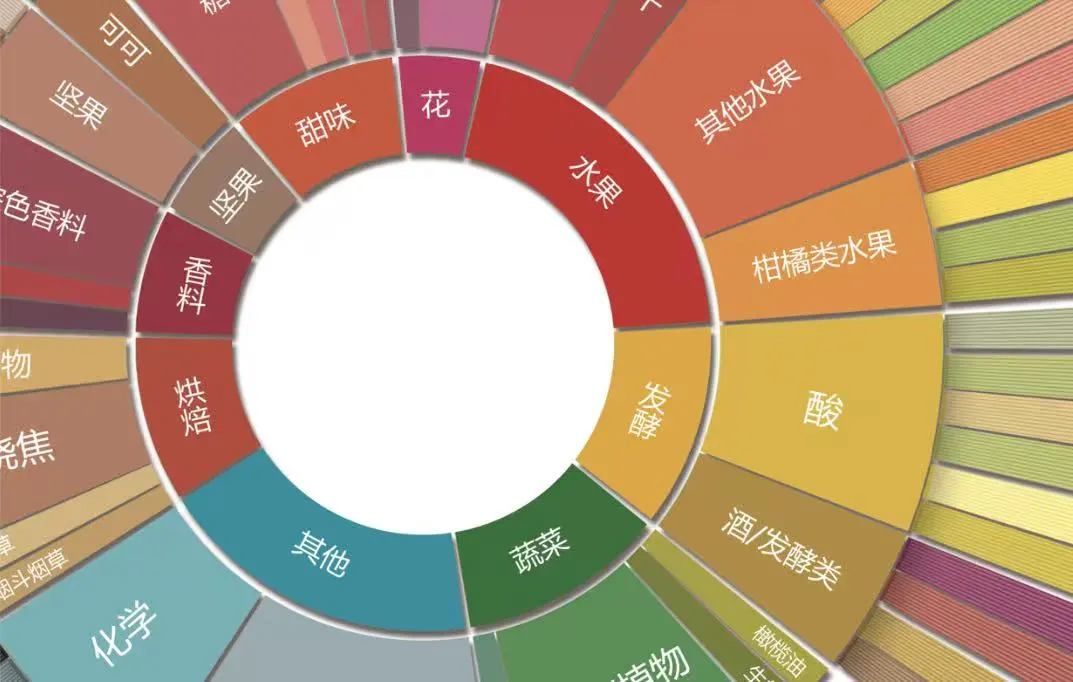
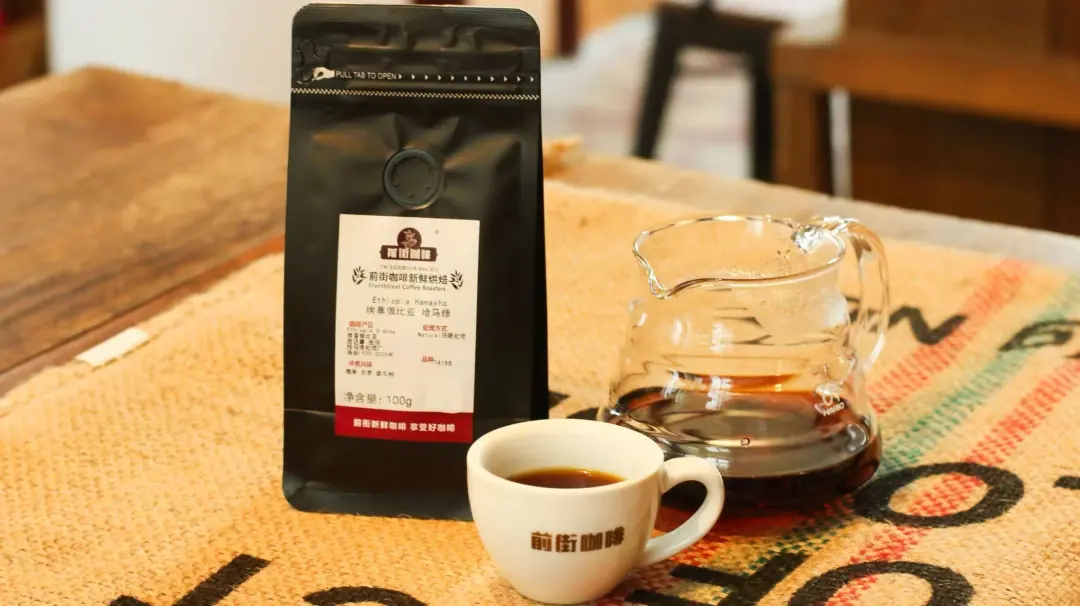
Even if you can’t immediately pinpoint the exact concrete flavor, don’t be discouraged. You can start by using the middle ring category as the basis for description—for example, simply judging it as “Citrus.” That’s already a great starting point. As your tasting experience accumulates, along with continuous comparison and memory training, you’ll gradually build a more detailed flavor database.
III. Key Details in Color Association and Sensory Training
Lastly, it’s worth noting the visual design ingenuity of this version of the flavor wheel. Its color scheme was handled by the renowned creative agency One Darnley Road in London, with each color carefully selected to create an intuitive connection with its corresponding flavor. For example, “Jasmine” corresponds to a soft cream-white tone, “Blueberry” to a vivid blue, “Orange” naturally to a warm orange, and “Lemon” to a refreshing golden yellow. This color-flavor correspondence helps you establish quicker associations between visual, olfactory, and taste perceptions, further reinforcing memory points.
In addition, many flavors are also categorized into more contextual descriptions such as “White Floral,” “Dark Berry,” or “Caramel Sweet,” which help you approach the overall flavor profile rather than being confined to a single word. Through such systematic training, supplemented by actual pour over processes involving sniffing, sipping, and recording, you’ll be able to more effectively grasp the layers and variations of coffee flavors.
In summary, the new SCAA coffee flavor wheel is an extremely valuable reference tool that helps you more systematically understand and describe the various flavor elements in coffee. However, it is not a cure-all—it cannot directly tell you what’s in your cup, nor does it guarantee to include every possible aroma present in coffee. True flavor recognition ability still relies on continuous tasting practice, sensory training, and the accumulation of personal flavor memories. Use the flavor wheel wisely, combined with systematic learning and comparison, and you’ll be able to more confidently explore the unique flavor stories behind each cup of beans in the world of pour over coffee.
The above content is compiled by CoffeeHunters, a coffee news website.


