








Introduction:Do you think coffee beans that have been stored for more than a month can only produce bitter and off-flavored brews? As long as you understand proper storage and brewing techniques, the flavor can still maintain a decent standard. This article delves into how the loss of gases in aged beans affects extraction, and teaches you how to achieve a bright sweetness and clear flavors—even with beans nearly two months old—by lowering the water temperature, adjusting grind size, shortening brew time, and controlling the coffee-to-water ratio, all while avoiding common issues of over-extraction.
Do aged coffee beans really only yield a bunch of off-flavors? The answer is no. When stored properly, coffee beans within two months of roasting can still produce satisfying coffee with appropriate adjustments to brewing methods. The key lies in understanding how the loss of gases during storage changes extraction efficiency, which in turn affects the final flavor profile.

Many people have had similar experiences: after storing coffee beans for over a month, the brewed coffee not only has a weaker aroma but also exhibits noticeable bitterness and unpleasantness, sometimes even astringency. Many therefore assume that this is an inevitable outcome of keeping coffee beans for too long. But in reality, the issue often isn’t with the beans themselves, but rather with our brewing methods not being adjusted accordingly.
As long as the storage environment is suitable, coffee beans can still showcase a certain level of flavor potential within two months of roasting. However, as time goes on, the layers of aroma gradually become less distinct, because most volatile aromatic compounds continue to dissipate into the air. But don’t worry—the non-volatile compounds responsible for acidity and sweetness still remain in the beans.

However, as the aroma fades, extraction efficiency may quietly increase. This is because fresh coffee beans contain a large amount of carbon dioxide, which creates a certain resistance to extraction. We usually need a higher water temperature, finer grind, and appropriate blooming time to balance this resistance in order to bring out the desired flavors. Yet when the beans are older, both the carbon dioxide and some of the volatile compounds are lost, reducing extraction resistance and making it easier for various components—including those that can produce negative sensations such as bitterness, off-flavors, and astringency—to be released.
If you don’t adjust your original brewing parameters, you can easily, without realizing it, allow these undesirable flavors to dissolve excessively into the coffee liquid, resulting in an imbalanced cup. To avoid this, the focus should be on "reducing extraction efficiency" to minimize the proportion of negative substances being released.
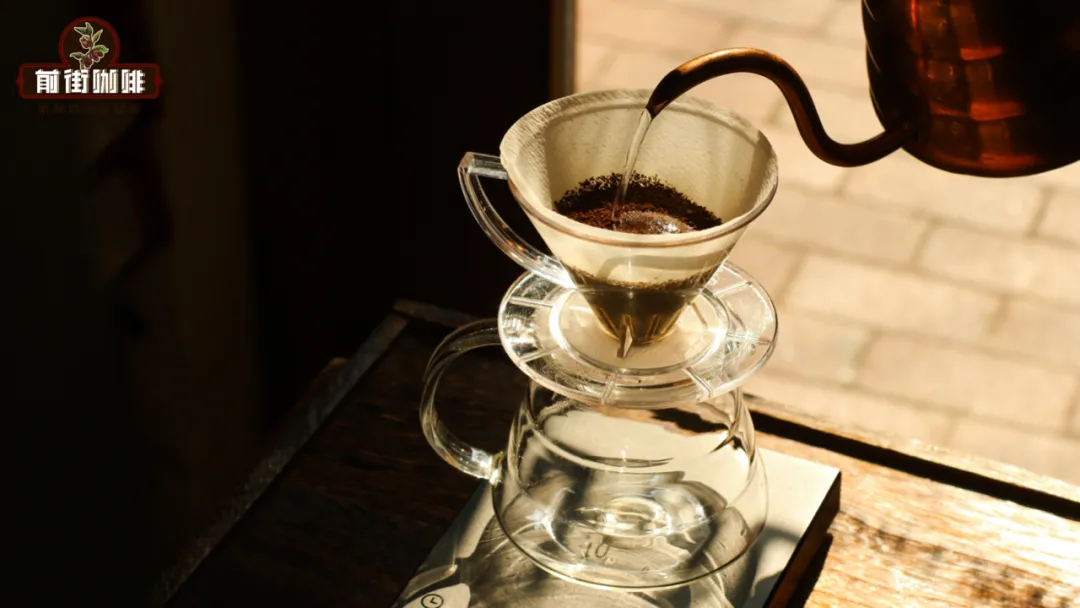
In practice, you can make adjustments in the following ways: firstlowering the water temperature—it’s recommended to reduce from the commonly used 93–94°C to about 90–92°C, fine-tuning based on the bean variety; secondadjusting to a coarser grind—set the grind setting slightly coarser than usual, for example using a 20-mesh sieve with about 75%–80% passing rate, to reduce over-extraction caused by fine particles; thirdshortening the brew time—keep the total time within 2 minutes to help avoid excessive release of impurities in the later stages; fourthadjusting the coffee-to-water ratio—it’s recommended to use 1:14, or if you prefer a lighter taste, you can go with 1:15, which helps focus the flavor expression and enhance aroma perception.
Here’s a special reminder:the coffee-to-water ratiois an aspect many people tend to overlook. Simply put, the larger the ratio (e.g., 1:12–1:13), the stronger the coffee; conversely, the lighter it will be. When the coffee beans’ flavors are relatively muted, moderately increasing the ratio can make the taste more concentrated and also aid in aroma expression.
To illustrate more concretely, let’s take a pack of coffee beans roasted at the end of October as an example—nearly two months after roasting. These beans were originally for experimental purposes but weren’t used in time due to busyness, and were only recently taken out. We decided to use them for a practical demonstration to see how, by adjusting pour over parameters, we could still achieve good results with these “off-peak” beans.

The beans used this time were the Emerald Estate Green Label Geisha, brewed using a V60 filter. The specific parameters were: 15 grams of coffee, water temperature set to 92°C, grind size at 20-mesh sieve with 75%–80% passing rate, and a coffee-to-water ratio of 1:14 (if you prefer a lighter taste, you can adjust to 1:15). This adjustment mainly focused on time control and blooming.
Generally speaking, this Green Label Geisha, due to its higher bean density, usually has a total brew time of around 2 minutes 15 seconds to 2 minutes 20 seconds. But to prevent aged beans from releasing too many impurities due to reduced extraction resistance, we shortened the total time to 1 minute 52 seconds, effectively suppressing the extraction of negative flavors.
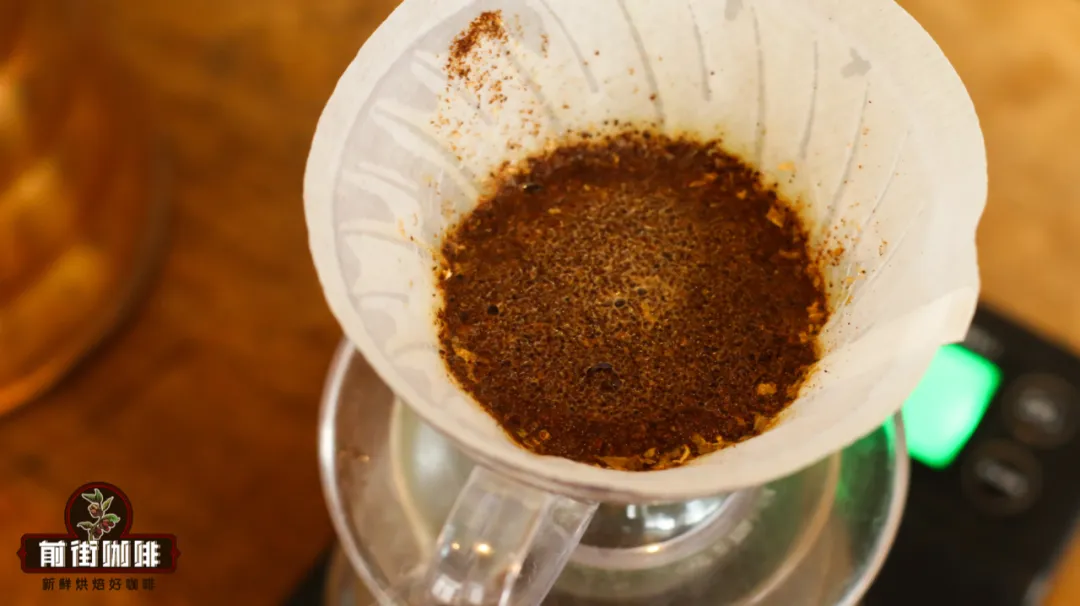
During the blooming phase, since most of the carbon dioxide inside the beans has already dissipated, we don’t need to perform prolonged degassing as with fresh beans. Therefore, just use twice the amount of hot water (about 30 grams) for a 20-second bloom—enough to awaken the coffee grounds without causing premature release of impurities due to over-blooming.
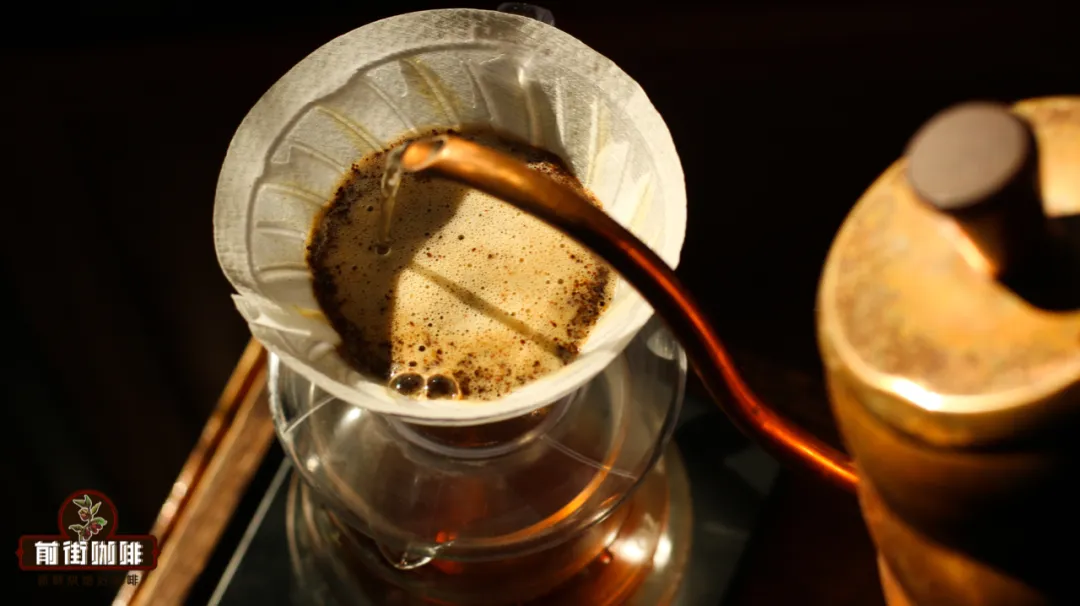
After blooming, move on to the main extraction phase. First, pour about 110 milliliters of hot water using a medium flow rate in a wide circular motion, allowing the water to evenly saturate the entire coffee bed. Wait until most of the liquid has dripped through before proceeding to the third pour.
The third pour involves about 70 milliliters of hot water, this time using a larger flow rate and focusing the pour in a small circle at the center of the coffee bed. The goal is to further compress the extraction time, avoiding the bitterness and off-flavors caused by over-extraction, while ensuring that the main flavor compounds are effectively extracted.
Once all the liquid has completely dripped through, remove the filter. The final cup of Geisha produced has a pronounced sweetness, resembling the gentle richness of honey, with a clear flavor profile showcasing citrus, berries, oolong tea, and subtle floral notes. Though not as vibrant as during its prime, it still demonstrates considerable drinking value and is completely free from negative off-flavors.
In summary, coffee beans stored for over a month can still produce delicious coffee with reasonable adjustments to water temperature, grind size, brew time, and coffee-to-water ratio. Of course, for the best aroma and layered experience, drinking them fresh is ideal. When it comes to coffee, freshness is still king.
The above content is compiled by CoffeeHunters, a coffee news website.


