







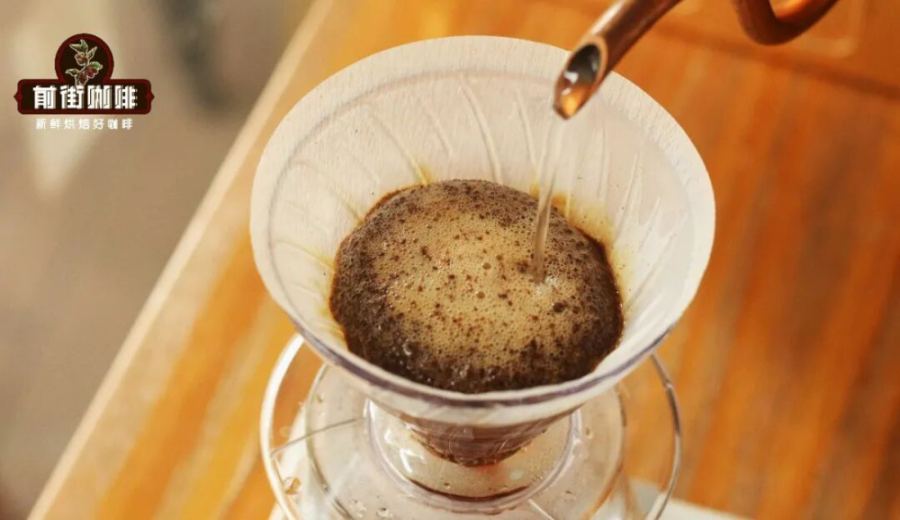
Introduction:During the pour over process, if you notice the coffee grounds sinking to the bottom while water floats on top, and by the end only a flat bed of grounds remains, this is the commonly encountered issue known as "grounds-water separation." This not only affects extraction efficiency but may also lead to imbalanced coffee flavors. This article delves into the four main causes—high-density beans, overly fine grind size, bean freshness, and pouring technique—and provides practical diagnosis and adjustment suggestions to help you identify the root problem and optimize your extraction rhythm.
During the pour over brewing process, after the bloom phase, ideally the water flow will evenly agitate the coffee grounds, with a layer of golden foam covering the surface and a neat “coffee wall” gradually forming along the edge of the filter. This state indicates a stable extraction process, where flavor release is also more balanced. However, many coffee enthusiasts notice in the mid-to-late stages of brewing that all the coffee grounds have sunk to the bottom while hot water floats on top, and by the end only a completely flat bed of grounds remains in the filter. This is what is commonly referred to as the “grounds-water separation” phenomenon.
This situation not only makes the brewing process look abnormal, but may also result in incomplete coffee flavors, or even issues like over-extraction or under-extraction. What exactly causes grounds-water separation? And how can adjustments be made to improve it? Below, we will explore this from four main aspects: the density of the coffee beans themselves, the fineness of the grind and the proportion of fines, the freshness of the coffee beans, and whether the pouring technique is correct. We will also provide specific observational and adjustment methods.
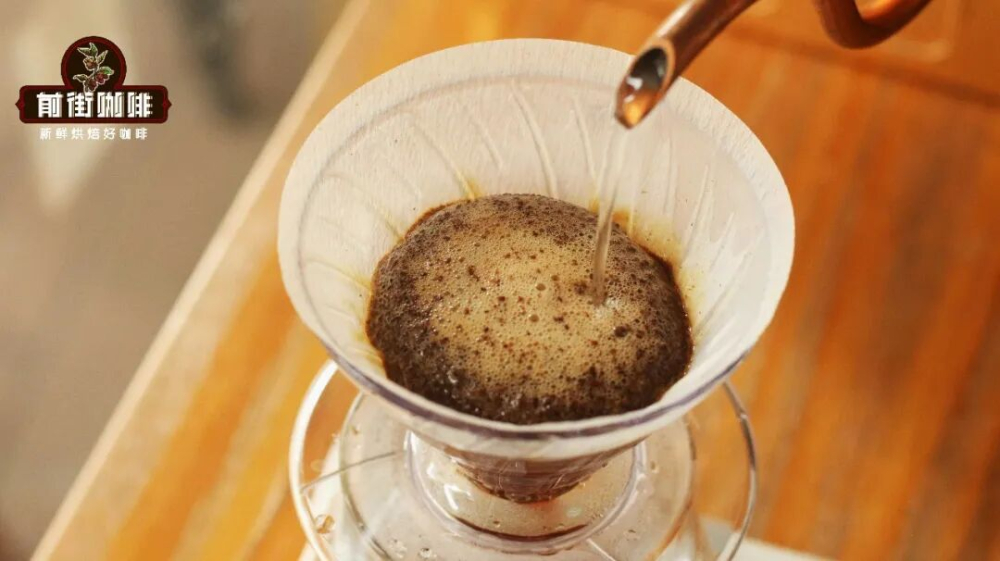
Under normal circumstances, after the bloom, as the water begins to stir the coffee grounds, a rich layer of golden foam will gradually form on the surface, while a neat ring of coffee “wall” will slowly build up along the inner wall of the filter. This visual indication actually tells you that the current extraction process is proceeding at the expected rhythm, with even coffee-water contact and good fluidity.
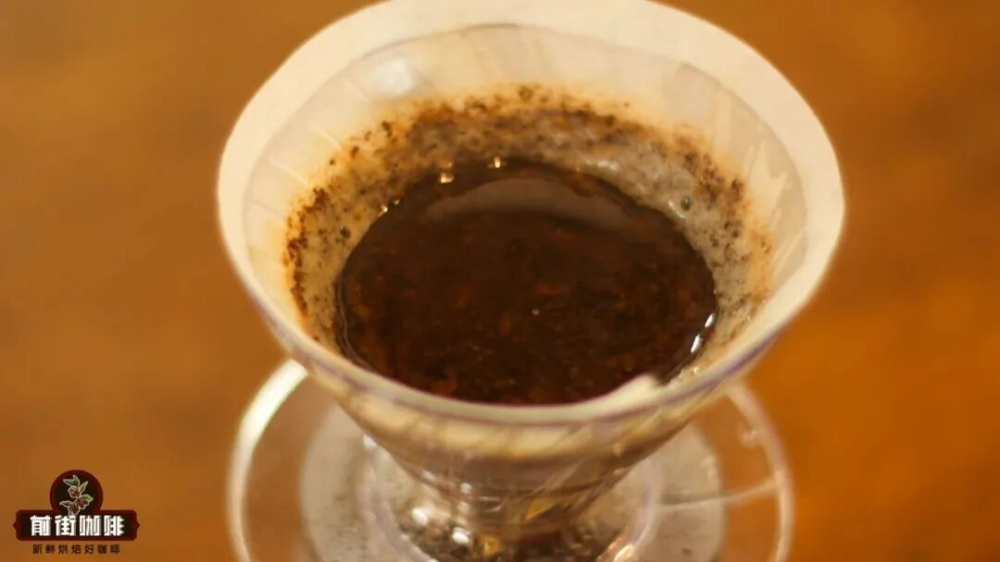
However, many enthusiasts observe a completely different scene in the mid-to-late stages of brewing: all the coffee grounds continue to settle at the bottom of the filter, while hot water visibly floats on top, with only scattered bubbles on the surface. By the time all the coffee liquid has dripped through, only a flat, undisturbed bed of grounds remains in the filter. This “grounds-water separation” issue, which many users have reported, is not just an external anomaly—it can also impact the final taste and flavor profile of the coffee.
So, when is grounds-water separation most likely to occur? Typically, to keep the total brew time within a reasonable range (about two minutes), the pouring speed needs to match the rate at which coffee flows into the server. Once a clear layering occurs between coffee grounds and hot water—especially with grounds at the bottom and water on top—it means the downward pathway for water is blocked. This leads to the amount of water poured in far exceeding the actual amount that drains, causing water to accumulate inside the filter and ultimately extending the overall brew time.
The causes of grounds-water separation can be summarized into the following four main factors: first, the relatively high density of the coffee beans; second, an overly fine grind or excessive proportion of fines; third, insufficient freshness of the coffee beans; and finally, improper pouring technique. We will analyze each of these factors in turn and offer practical diagnostic and adjustment advice.
1. High Coffee Bean Density
High-density coffee beans typically have a compact structure and firm texture. These beans mostly come from high-altitude growing regions and are usually lightly roasted. Due to their higher density, during brewing, these beans are more likely to sink to the bottom, thereby blocking the pathway for water to flow downward, making grounds-water separation more likely to occur.
2. Overly Fine Grind or Excessive Fines
When brewing light-roasted coffee beans, to highlight delicate flavors such as floral and fruity notes, a relatively higher extraction rate is usually desired, so a finer grind size is recommended. Naturally, these grind particles will be finer than those used for medium to dark roasts. However, when dealing with high-altitude light roast beans, due to the inherently harder nature of the beans, the proportion of fines produced during grinding is also relatively higher.
For example, some high-altitude light roast beans, such as certain sundried beans with strawberry or berry notes, or beans with magnolia and guava aromas, tend to produce a higher proportion of fines due to their hard bean texture. These fines can easily clog the fiber gaps of the filter paper first, leading to water pooling issues and subsequently causing grounds-water separation. In addition, the precision of the grinder directly affects the proportion of fines produced. Grinders with lower precision are more likely to produce excessive fine particles.
If you frequently encounter this issue, it is recommended to prioritize grinder precision when selecting equipment, and to observe the coffee grounds after brewing. If you find both coarse particles and muddy fines in the spent grounds, it indicates that your current grinder may not deliver consistent grind quality. Upgrading your equipment can be an effective way to improve this.
3. Insufficient Coffee Bean Freshness
The freshness of coffee beans has a direct impact on the expansion and degassing performance during the bloom phase. The fresher the beans—especially shortly after roasting—the more pronounced the bloom expansion will be, which helps with even expansion of the coffee grounds and better water penetration. Conversely, when coffee beans are stored for too long and are no longer fresh, there is almost no noticeable reaction during the bloom or subsequent extraction, as most of the gases in the beans have dissipated. The water struggles to move the coffee bed, leaving it stagnant at the surface, resulting in uneven extraction and noticeably weaker flavors.
A simple reference for judging coffee bean freshness is the roast date. Generally speaking, beans roasted more than 50 days ago may have already lost their optimal extraction condition, and flavor performance will be significantly compromised.
4. Improper Pouring Technique
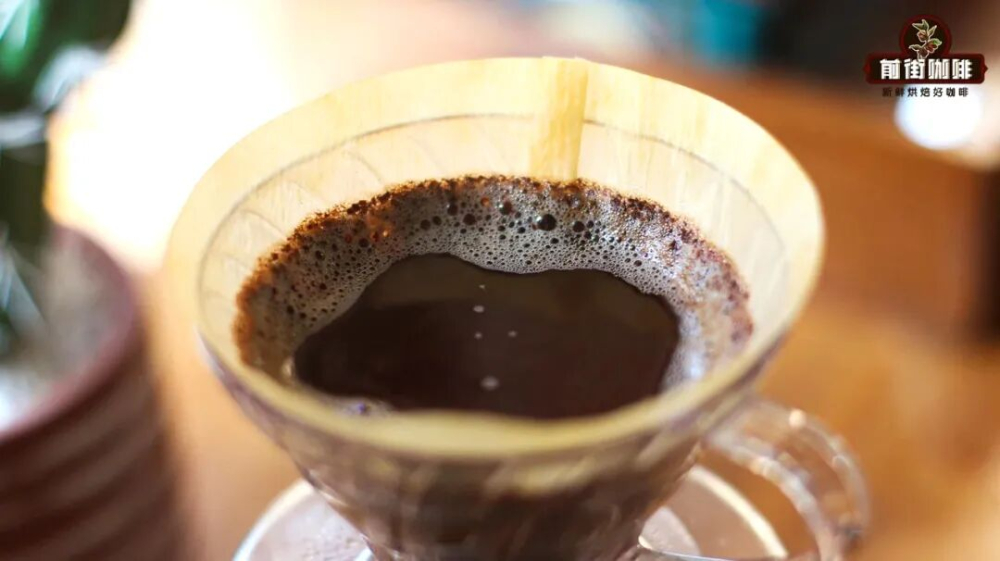
If during brewing you notice that the flow rate is smooth in the early stages but gradually slows down in the later stages, eventually causing the total brew time to exceed two minutes, this is often because the initial pour had too low a flow rate—especially when brewing light roast beans. If the coffee bed was not effectively lifted during the bloom, it can cause the coffee grounds to clog at the bottom of the filter later on. Even if you increase the pouring strength afterward, it is difficult to recover the flow rate issue.
To address this, it is recommended that when brewing light roast beans, the first pour after the bloom should use a relatively stronger flow rate, poured in a circular motion, ensuring the water penetrates the entire coffee bed until the liquid level reaches two-thirds of the height of the filter. This pouring method can effectively agitate all the coffee particles, promote even coffee-water contact, reduce the chance of fines settling at the bottom, lower the risk of clogging the coffee bed, and maintain a stable extraction rhythm.
The above content is compiled by CoffeeHunters, a coffee news website.


