







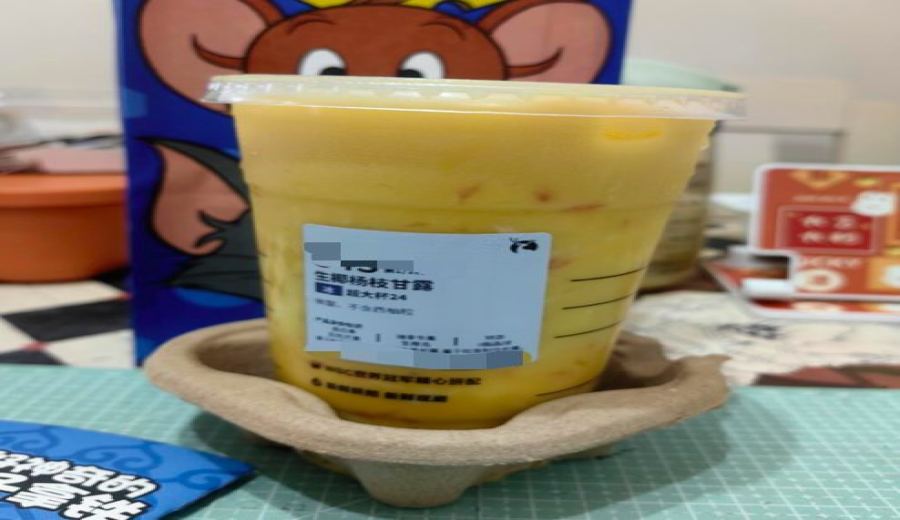
Introduction:Although Luckin’s recently launched upgraded version of the “Coconut Mango Pomelo Sago” has been warmly received by consumers and has become a top choice for many repeat purchases, it has caused quite a headache for store staff. The complicated preparation process, hard-to-control ingredient properties, and even potential equipment clogging have turned this seemingly popular drink into a “nightmare item” in the eyes of employees. This article will delve into the actual challenges of its production process to help readers understand the difficulties behind making the beverage.
Entering October, Luckin Coffee has significantly accelerated its new product launch pace, with several innovative drinks being introduced in just two weeks. Among them, the reformulated “Coconut Mango Pomelo Sago,” after recipe adjustments, quickly won praise in the market for its rich tropical flavors and complex texture, becoming a popular repeat purchase option for many customers.
However, in stark contrast to customer enthusiasm, this drink has sparked numerous complaints from store employees. From ingredient preparation to final assembly, the entire process is not only highly intricate but also demands meticulous operational details, putting significant pressure on many staff members during peak hours.
According to feedback from multiple frontline employees, making a single “Coconut Mango Pomelo Sago” involves taking out multiple ingredients such as coconut milk jelly, mango puree, coconut cream, and jasmine tea from the chiller, each requiring precise weighing, before sequentially adding them to a shaker and shaking thoroughly, before finally pouring into a cup for service. As a result, not only is the operation time extended, but it also poses a great test to the baristas’ proficiency and coordination skills.
Some staff have bluntly stated that this drink is one of the “most troublesome” products they’ve encountered so far—not only is it time-consuming to prepare, but it’s also prone to various unexpected issues that affect service efficiency. Especially during high-order periods, if a dozen or more “Coconut Mango Pomelo Sago” orders come in at once, it feels like a major test for the on-duty staff, with some even breaking down emotionally under the pressure of customer and delivery rider demands.
Not only is the preparation process complicated, but the “Coconut Mango Pomelo Sago” also poses significant challenges to equipment and cleaning.Particularly the mango puree, due to its extremely thick consistency, often sticks to the interior walls of the shaker and the filter mesh, not only increasing cleaning difficulty but also potentially clogging the strainer in the drainage system. A staff member revealed that even if utensils are rinsed immediately after use, residual mango puree can gradually accumulate in the drainage system, eventually leading to pipe blockages and even sewage backflow.

Such issues are especially evident during end-of-day cleaning. Staff found that the strainer frequently gets clogged due to the sticky mango puree, necessitating extra time to clean the filter mesh and unclog the drain pipes; otherwise, overflowing sewage can contaminate the entire work area. Many employees noted that although the “Coconut Mango Pomelo Sago” is loved by customers, for them, it is truly a “staff nemesis.”
Based on comprehensive feedback, not only is the preparation process tedious and time-consuming, but cleaning and maintenance are also relatively tricky, posing several practical challenges for the stores. Many employees have voiced their concerns on social media platforms, hoping that this “troublesome drink” will be taken off the menu soon, allowing daily operations to return to normal.
For consumers, the “Coconut Mango Pomelo Sago” may be a uniquely flavorful star product, but for the staff busy working in the stores every day, the actual preparation pressures and logistical challenges behind it are often a truer reflection of daily life. Understanding the entire process of making a drink from preparation to serving might allow us to better appreciate the hard work of those behind the scenes while enjoying our beverages.

The above content is compiled by CoffeeHunters, a coffee news website.


