







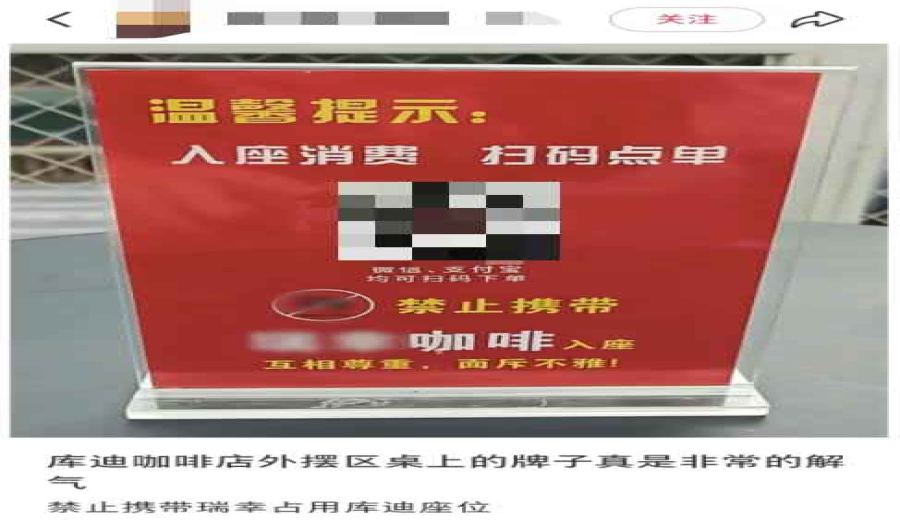
Introduction:Recently, a Cotti Coffee outlet sparked controversy by displaying a sign that read "No outside branded coffee allowed inside." Supporters argued that businesses have the right to set their own rules, while opponents questioned the exclusion of competitors. Cotti Coffee responded by stating it did not mandate such signs across its outlets. This article explores the balance between business autonomy and consumer rights behind the incident, along with real-world case references.
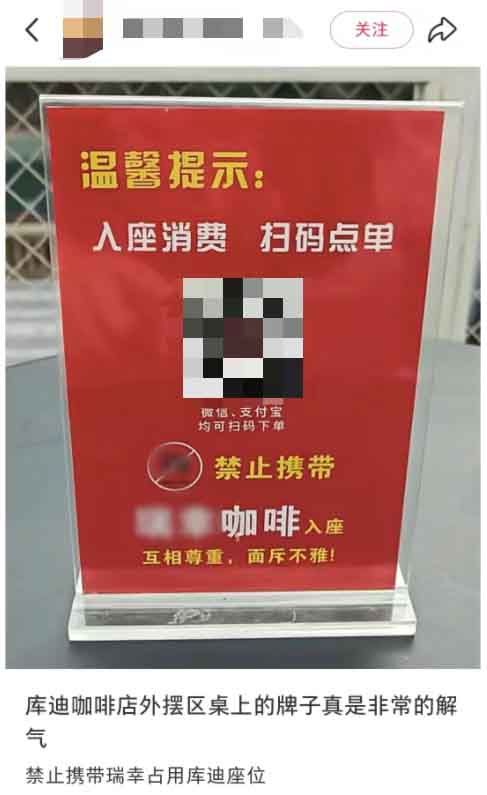
Recently, a netizen shared photos of a sign placed on outdoor tables at a Cotti Coffee outlet. In addition to guiding customers to scan a QR code to place orders, the sign explicitly prohibited bringing in coffee from other brands and featured a ban symbol over logos of competing brands. The move quickly ignited heated discussion online, with voices both for and against it.
Some believe that outright banning customers from bringing in beverages from competitors can easily be seen as discriminatory, even reminiscent of "unreasonable clauses." Such practices may harm the brand image and, in the long run, undermine customer relations. From a legal standpoint, overly restrictive policies on bringing specific goods into commercial premises could conflict with provisions in the Consumer Rights Protection Law that prohibit excluding or limiting consumer rights.
However, many netizens expressed understanding for the store’s approach. They argued that businesses have the right to establish seating rules—such as requiring customers to make a purchase before sitting down—and that forbidding competitor-branded drinks falls within reasonable limits. After all, both buyers and sellers should retain the right to choose: "Businesses can choose whom to serve, and consumers can choose whether to patronize them."
Some further pointed out that when individuals occupy seats for extended periods while bringing in takeaway drinks, it not only affects other paying customers but also adds to the staff's cleaning burden. Therefore, many supporters view the sign as a practical business measure intended to ensure resources are used reasonably.
As the incident gained traction, the topic briefly trended on social media, drawing increased attention. On December 5, a media outlet attempted to contact the original poster to learn the exact location of the involved outlet but received no response.
On December 6, Cotti Coffee issued an official response, stating that the company did not uniformly require its outlets to use such signs, nor had it distributed any related materials, nor mandated that customers are barred from bringing in other brands’ drinks. Relevant staff noted that the matter had been forwarded to the appropriate department for verification and advised consumers who encountered similar situations to call the official service hotline.
This incident highlights the boundary issues that businesses face when setting store policies. While merchants have the right to formulate reasonable operational strategies, they must also remain mindful not to violate consumer protection laws. In practice, many coffee shops openly display rules such as "For dine-in use only" or "Please take a seat after making a purchase," but directly targeting specific competing brands remains relatively uncommon.
For consumers, while understanding their own rights, they may also choose suitable consumption venues based on their actual needs. For business operators, while maintaining store ambiance and customer experience, it is important to strike a balance between operational autonomy and consumer sentiment, in order to avoid unnecessary disputes.
The above content is compiled by CoffeeHunters, a coffee news website.


