







Introduction:Many coffee enthusiasts often encounter issues such as thin flavors and unclear layers when brewing washed beans at home. In fact, the clean and delicate characteristics brought by the washed processing method can be fully revealed through appropriate brewing strategies. This article delves into the craftsmanship of washed processing, compares the acidity differences with natural beans, and uses Kenyan double-washed beans as an example to guide you step-by-step in mastering the V60 four-pour extraction technique, helping you brew a cup of washed coffee with distinct layers and a juicy mouthfeel.
Always feel like your home-brewed washed coffee lacks depth? You’ve bought high-quality washed beans but can’t seem to extract the expected layers and details—this is a common struggle among many coffee lovers. In reality, the washed processing method inherently offers clean and refreshing qualities, but it requires precise extraction techniques to unlock its full flavor profile. Starting from a real-world question posed by a seasoned coffee enthusiast, we’ll explore the craftsmanship of washed processing, the core differences in acidity expression, and use a classic Kenyan double-washed bean as an example to practically break down a set of V60 four-pour extraction parameters, helping you easily brew a washed coffee rich in layers and solid fruitiness.
Recently, at our store, a customer who has long favored washed flavors came in for advice. They have a collection of washed beans but always find their home brews lacking in complexity and depth. To address their concerns, we explored the fundamental techniques and key extraction points of washed processing and would like to share this with anyone looking to enhance the flavor performance of their washed coffee.
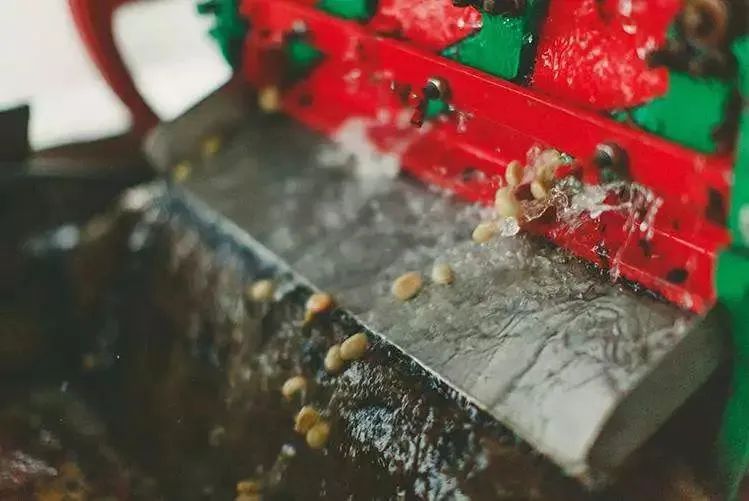
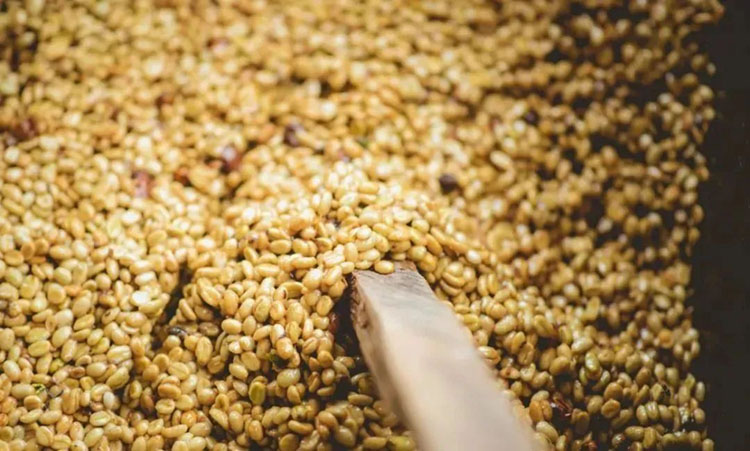
The so-called "washed processing method," known in English as the "Washed process" and often referred to as the "Wet process" in producing regions, follows roughly these steps: remove defective beans → mechanically strip the pulp and fruit skin → ferment in water tanks to remove the mucilage → rinse with clean water → dry → remove the parchment layer → bag. Additionally, some regions, such as Kenya, employ a "double wash," which involves multiple washing processes to further eliminate residual mucilage, resulting in even clearer coffee flavors.
The history of washed processing is quite long. It was initially developed to improve the consistency and stability of coffee quality, enabling each batch of green beans to reach an ideal state more efficiently during processing, thereby enhancing overall economic returns. As a result, it remains one of the most common and favored processing methods in many regions. You’ll see the term "washed" on many well-known beans, such as Fruit Ding Ding, Little Tomato, Jade Green Label, and Kilimanjaro, all of which use the washed process.
So, what are the unique flavor characteristics of washed coffee? Since the beans remain clean throughout the process and the fermentation environment is tightly controlled, washed coffee typically achieves higher cleanliness with minimal fermentation off-flavors. This method better highlights the intrinsic characteristics of the coffee seed, making floral and fruity notes more distinct. However, many beginners often have a misconception that "washed coffee is definitely more acidic than natural coffee"—this notion isn’t entirely accurate.
The acidity of coffee is primarily related to roast level, not solely determined by the processing method. For example, Golden Mandheling, known for its rich body, still exhibits noticeable acidity even when lightly roasted. In contrast, natural coffee, dried with the fruit skin and pulp, tends to absorb the complex fruit aromas produced during fermentation. These aromas penetrate the seed, bringing intense flavors like tropical fruits, wine, candied fruit, and even brown sugar. Practical tests have shown that when brewing both washed Panamanian Geisha and natural Colombian Geisha, the natural version may smell sweeter but often presents more pronounced acidity upon tasting.
Given that the strength of washed coffee lies in its clean, clear layers and bright floral-fruity notes under medium to light roasts, we should avoid overly high concentrations when brewing. A 1:16 coffee-to-water ratio is recommended to highlight its delicate flavors. Additionally, under the same conditions, the lighter the roast, the slower the coffee grounds dissolve. In such cases, besides choosing a finer grind size and slightly higher water temperature, you can also enhance overall extraction efficiency by increasing the number of pours, adjusting water flow speed, and modifying the swirling technique.
Although all categorized as washed processing, the acidity expression of washed coffee varies significantly depending on the region and variety. Broadly, it can be divided into two main types: one features deep berry acidity, rich and layered, represented by Kenya and Rwanda; the other showcases a fresh style dominated by white flowers and citrus notes, commonly found in washed beans from Ethiopia, Panama, Peru, and Colombia. Below, we’ll use Little Tomato—a Kenyan double-washed coffee—as an example, paired with a V60 filter, to demonstrate a four-pour extraction that highlights its bold fruit acidity and solid juice-like mouthfeel.
To fully release the rich berry acidity and layered profile of Little Tomato, it’s recommended to use a Hario V60 #01 filter, whose spiral ridges effectively guide water flow, ensuring more uniform expansion and drainage of the coffee grounds during brewing. Specific parameters are as follows:
Coffee beans: Kenya · Little Tomato
Dose: 15 grams
Coffee-to-water ratio: 1:16
Total water volume: 240 grams (divided into 40g + 70g + 70g + 60g)
Grind size: EK43 10 setting (80% passing rate through a 20-mesh sieve or 25 clicks on a C40 grinder)
Water temperature: 93°C
Filter: Hario V60 #01
Brewing method: Four-pour
First, place 15 grams of coffee grounds into the V60 filter and gently level them. The first pour uses a gentle stream, spiraling from the center outward, pouring 40 grams of water for the bloom phase, lasting about 30 seconds. Ensure all grounds are evenly wetted to facilitate degassing.
After 30 seconds, proceed to the second pour. Increase the water flow slightly, pouring 70 grams of hot water in a vertical circular motion, allowing the coffee bed to rise to the middle of the filter and promoting flavor development.
When the coffee liquid is about to uncover the coffee bed, around 1 minute and 09 seconds, begin the third pour. Add 70 grams of hot water with the same technique and volume as the previous pour. These two pours primarily help release the fruit acidity and caramel aromas of the washed beans. Be careful not to splash water onto the edge of the filter paper to avoid under-extraction.
Finally, when the liquid level drops to about half, around 1 minute and 41 seconds, perform the fourth pour. Add 60 grams of water, now using a slower, more focused pour in the center. This phase mainly extracts sweetness and body, with no need for excessive swirling.
The resulting Little Tomato coffee not only boasts a rich tomato aroma but also delivers the acidity of blueberries, black grapes, and other dark berries upon tasting, with a hint of caramel sweetness. As the temperature cools, subtle floral notes and a pear-like finish gradually emerge, creating a cup with clear layers and a solid juice-like mouthfeel—an impressive washed coffee experience.
The above content is compiled by CoffeeHunters, a coffee news website.


