







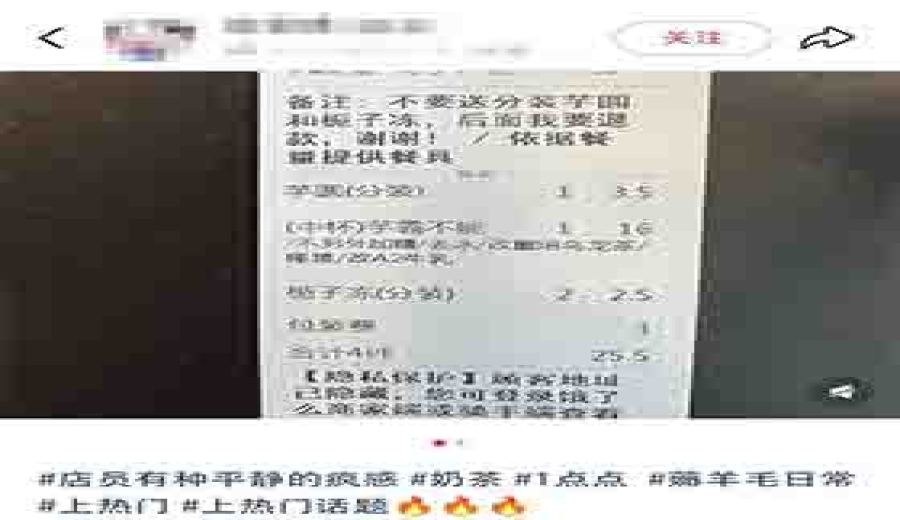
Introduction:During the Double Eleven shopping festival, a beverage shop employee shared a customer note in a delivery order requesting that toppings not be included and planning to request a refund afterward, sparking widespread discussion. This practice of applying e-commerce "order-padding and refund" tactics to beverage delivery not only puzzled industry professionals but also triggered discussions on platform policies and the operational challenges faced by merchants. This article will detail the incident, the platform mechanisms involved, and the potential impact of such behavior on the industry.
During major shopping events like Double Eleven, many consumers employ various discount strategies to purchase desired items at more favorable prices. Among these, the tactic of placing additional items to meet minimum spend thresholds for discounts and then selectively returning those items has long been a common practice on e-commerce platforms. Surprisingly, however, this culture of "order-padding and refunding" has quietly made its way into the beverage delivery market.
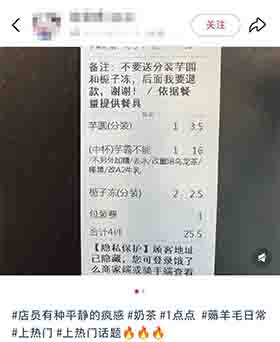
Recently, a beverage shop employee posted an online delivery order on social media. The order included a cup of milk tea along with three additional milk tea toppings. At first glance, there seemed to be nothing unusual, but a remark in the order notes caused an uproar: "Do not send the diced taro and gardenia jelly, I will request a refund for them later, thank you!" The note shocked the employee, who frankly stated, "I was stunned when I saw it."
This unusual order quickly sparked online discussion, with many netizens expressing surprise. Some speculated that the customer might have been trying to use platform coupons to meet the minimum spend requirement and then request a refund for the toppings afterward, achieving the goal of "enjoying the discount while avoiding the cost of the toppings."
Notably, the transplantation of this common e-commerce "order-padding and refund" tactic into the milk tea delivery space has opened the eyes of many consumers who usually feel compelled to "pad their orders" just to meet the minimum delivery threshold. Many are curious about whether such refund requests can actually succeed.Industry insiders pointed out that the key issue is that if the refund request is only for non-primary items such as toppings, the overall order and the applicable coupons usually remain valid.
However, such meticulous cost-saving has not garnered widespread approval from netizens. Many comments expressed sympathy for the plight of merchants, arguing that while customers may benefit from such actions, they also increase the operational costs and after-sales processing burdens for stores.Milk tea industry professionals noted that shops must balance meeting customers’ reasonable needs while also dealing with potential "coupon abuse" behaviors, putting them in a difficult position.
In addition, some employees expressed concern that if they prepare drinks according to the notes but are later hit with a refund, they would not only have worked for nothing but might also risk receiving negative reviews from customers. As a result, many in the industry, while shocked, have voiced hopes that "this kind of behavior does not become a trend."
Image source: Xiaohongshu
In summary, this milk tea delivery order-padding and refunding incident not only highlights the various "creative" approaches consumers take when facing discount strategies but also reflects the gap between current delivery platform rules and actual business operations.For beverage merchants, how to maintain service quality while responding to various non-standard order challenges will be a major challenge in future operations.
The above content is compiled by CoffeeHunters, a coffee news website.


