








Introduction:Recently, a video showing employees at a Xi’an branch of Mixue Ice Cream & Tea preparing beverages went viral on social media platforms, primarily because the staff were allegedly using “direct drinking water” to rinse ice cubes, raising concerns about hygiene. The footage revealed that the ice cubes were not stored properly and that the freezer door was left open for an extended period, prompting netizens to question food safety practices. What are the key considerations for storing ice cubes? What common operational mistakes does this incident reflect? This article will delve into the details of the event and examine commonly used contamination prevention measures in the industry.
Recently, a video filmed at a Mixue Ice Cream & Tea outlet in Xi’an, Shaanxi, spread widely on social media. In the clip, an employee wearing the brand’s uniform holds two drinks already containing ice and places them directly under a bucket labeled “direct drinking water” to refill. As the water streams onto the ice, it splashes around, with some liquid even running down the employee’s arm and dripping into an open ice cart below, sparking intense public concern over the hygiene of the ice.
As is well known, ice cubes in beverages are typically added directly to drinks and consumed, so hygiene must be strictly maintained during storage and retrieval. Standard professional practice involves promptly closing the ice machine or freezer door after taking ice to prevent dust, foreign objects, or liquids from falling in. However, in this incident, the freezer door was left open for a long time, and direct drinking water was carelessly used to rinse the ice, prompting many netizens to exclaim, “This kind of ice is simply unusable!”
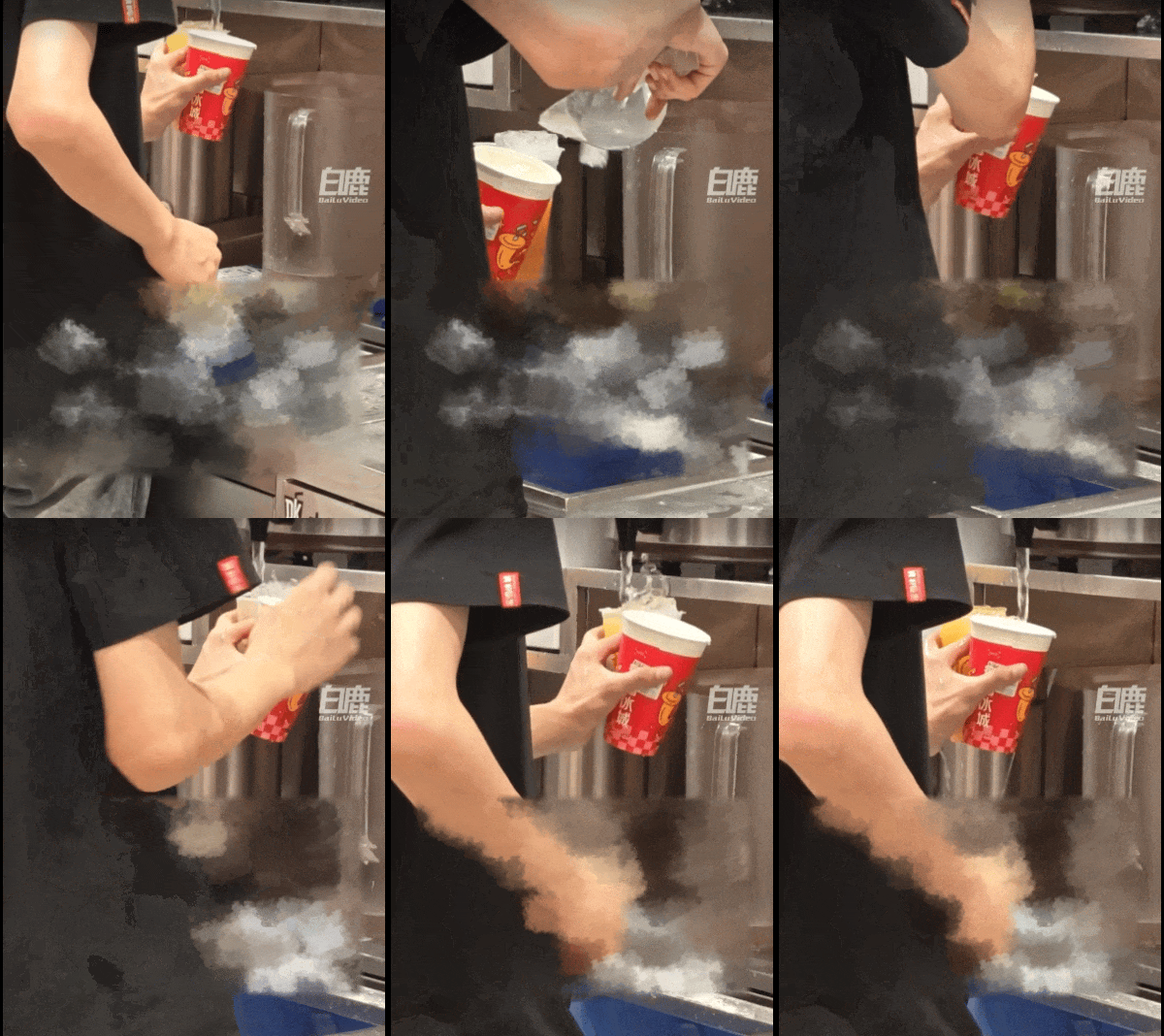
Industry experts point out that if the freezer door is not closed promptly, external contaminants can easily enter, especially in high-temperature and humid shop environments where the risk of bacterial growth is higher. Furthermore, if ice cubes become contaminated by liquids, even if not visible to the naked eye, they may still impact the overall hygiene and flavor of the beverages. The industry generally follows the principle of “close the freezer after each use” to ensure that ice is not compromised during retrieval.
The incident caused an uproar online, with many netizens believing that the employee’s actions clearly violated basic hygiene standards. Some professionals in the tea beverage industry emphasized that ice contamination could lead to the scrapping of entire batches of products. It is reported that if a freezer door remains open for too long, the upper layers of ice, which are at higher risk of contamination, usually need to be discarded directly. In severe cases, the entire ice bin may need to be emptied, disinfected, and then refilled with freshly made ice.
As the video continued to gain traction, the involved outlet responded by stating that the company had addressed the issue and immediately terminated the employment of the staff member involved. While this outcome aligns with public expectations, it does little to dispel consumers’ lingering concerns about Mixue’s past food safety issues.
In fact, over the past six months, Mixue has been cited multiple times by regulatory authorities for hygiene and operational issues. For example, a branch in Fortune Centre, Sha Tin, Hong Kong, was reported by media for having frozen desserts with excessive microbial counts, while another outlet was exposed for an employee improperly shutting off the direct drinking water tap with their foot. Although some consumers choose to overlook these issues due to the brand’s high cost-performance ratio, an increasing number of customers are calling on the brand to take food safety seriously and enhance both staff training and store management.
Food safety experts remind that in the preparation of tea beverages, every step—from the water source and ice cubes to the operating environment—can affect the final quality and safety of the product. Consumers are advised to not only consider taste and price when choosing drinks but also observe whether the outlet adheres to basic hygiene protocols, such as promptly closing the freezer after use and whether staff wear gloves or masks.
The incident at the Mixue Xi’an outlet once again highlights that as tea beverage brands expand, it is even more crucial to implement standardized operations and comprehensive staff training in order to truly earn long-term consumer trust.
The above content is compiled by CoffeeHunters, a coffee news website.


