








Introduction:Adjusting espresso extraction parameters is not just about refining the flavor of the shot itself, but more importantly, ensuring that the final drinks—Americano and Latte—achieve their ideal taste profiles. This article delves into the fundamentals of espresso extraction and common parameter settings, and provides practical suggestions on adjusting coffee-to-water ratios and extraction strategies based on the characteristics of different beverages, helping you easily pull flavorful shots as a solid foundation.
Many coffee enthusiasts who adjust the parameters of their espresso machines aren’t solely focused on the performance of the espresso itself, but are more concerned with whether the Americanos and Lattes made from it can deliver the best possible flavor. So, do we need to use different espresso extraction strategies for these two common types of coffee drinks? Starting from the basic logic of espresso extraction, this article outlines a reliable extraction formula, and then explains how to adjust the coffee-to-water ratio and extraction time according to the specific needs of Americanos and milk-based drinks, so that each cup of coffee can showcase the appropriate layers and taste.
For many people using an espresso machine, the main goal of adjusting parameters isn’t necessarily to pull a “perfect shot” of espresso, but rather to ensure that when water or milk is added, the result is an aromatic, balanced-tasting Americano or Latte. Therefore, the “compatibility” of the espresso is very important—it must be able to perform consistently under different pairings.
Through continuous experimentation, users usually gradually figure out extraction parameters that suit their personal flavor preferences. However, they often encounter various questions, among which the most frequently asked is: Do you need to use different espresso extraction parameters for making Americanos and Lattes? In fact, the answer is usually yes, because the fundamental requirements for espresso in these two drinks are inherently different.
During espresso extraction, the release of flavor compounds follows a certain sequence. When hot water comes into full contact with coffee grounds, what dissolves out first are substances such as caffeine, organic acids, and light oils—these mainly influence aroma, acidity, and initial brightness. As extraction time progresses, more lipids, carbohydrates, and melanoidins are gradually released, contributing to sweetness and body. But if over-extracted, they may also lead to increased bitterness or astringency.

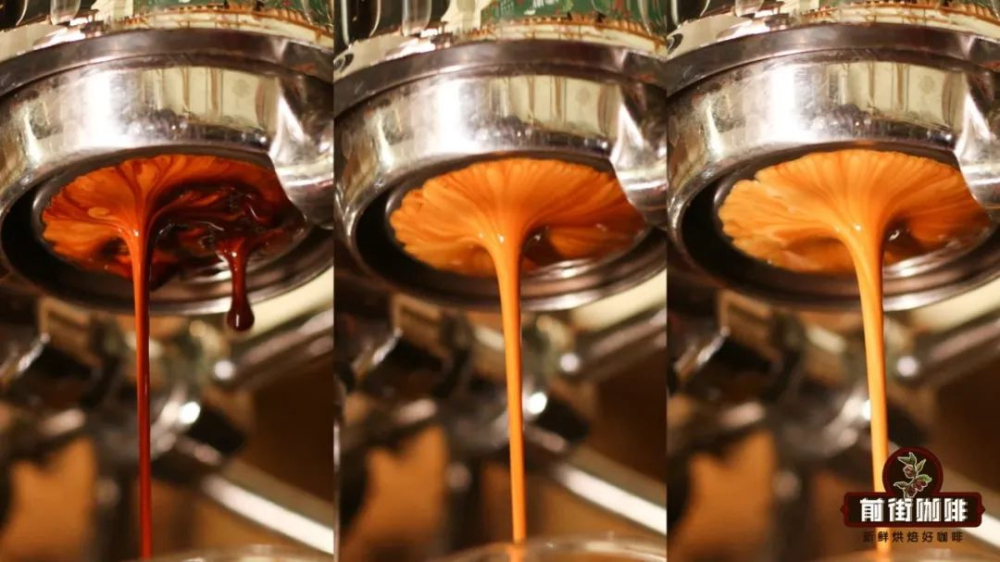
Observing changes in the liquid during extraction is also an important basis for judgment. The espresso flowing from the portafilter is initially dark and thick, indicating a rich presence of flavor compounds. Over time, the liquid gradually becomes lighter, signaling that the easily extracted desirable compounds have mostly been released. If the espresso starts to appear whitish or watery, it indicates the extraction has reached the tail end, and it’s best to stop to avoid over-extraction.
So, how do you determine the right espresso extraction parameters? Although there are many variables that affect extraction—including water temperature, pressure, grind size, dose, and extraction time—the core parameters that are most commonly adjusted in practice are grind size, dose, and the amount of extracted liquid. Among these, the ratio between the dose and the output liquid, known as the “coffee-to-water ratio,” is the item most frequently fine-tuned by baristas.
For daily users or beginners, there’s no need to experiment with complex variables one by one. It’s recommended to start directly with the industry-recognized, stable extraction formula. The Specialty Coffee Association (SCA) suggests an espresso coffee-to-water ratio range of 1:1.5 to 1:2.5. But for ease of operation, many professional shops generally recommend starting with acoffee-to-water ratio of 1:2, with extraction time controlled between 25–30 secondsas a baseline, then making adjustments as needed.
For example, if using 20 grams of coffee grounds, it’s suggested to first extract 40 grams of espresso, and observe whether the extraction time falls within the aforementioned range. If the time is too fast or too slow, and is accompanied by obvious extraction issues (such as lack of crema, overly pale color, pronounced sourness or astringency, spraying, unstable flow rate, etc.), and assuming the coffee beans are in good condition, the issue is likely due to improper grind setting—and in that case, adjusting the grind coarseness should be the first priority.
If the actual extraction time falls around 25–30 seconds, and the flow rate is stable with a moderate crema layer, it’s recommended to proceed directly to tasting: if the espresso exhibits positive aromas such as vanilla, cream, or berries, and lacks noticeable bitterness or astringency, then the parameter combination is considered reasonable and can be further used to make Americanos or Lattes to test the final flavor outcome.

However, since Americanos and Lattes involve different additives (water vs. milk), the desired characteristics of the espresso for each are actually not the same. As a result, there are often situations where different extraction parameters need to be applied to each in order to highlight their respective optimal flavors.
Taking the Americano as an example, since it is made by diluting the espresso with water, the flavor is primarily concentrated in those initial few dozen milliliters of espresso. An ideal Americano should have rich aroma, smooth mouthfeel, and a pleasant aftertaste, without being overly sharp, bitter, or astringent. Therefore, to ensure that the diluted Americano still retains sufficient flavor depth, it’s recommended to use an espresso with a higher extraction yield—that is, you might consider slightly increasing the coffee-to-water ratio, such as adjusting it to1:2.2, for example, 20 grams of coffee grounds yielding 44 grams of liquid, with the time possibly extending slightly to 26–29 seconds. Such an espresso, even after being diluted with water, can still retain full aroma and balanced sweetness.
As for the Latte, because a large amount of milk is added, the role of the espresso is more like a flavor catalyst. In addition to providing foundational aroma, it should also be able to bring out the lactose sweetness in the milk and blend with it to create a round, full-bodied mouthfeel. Since milk itself has a certain level of concentration, if using medium-roast beans, special care should also be taken to avoid the coffee flavor being overshadowed by the milk.
In this case, you might consider reducing the coffee-to-water ratio, such as adjusting it to1:1.5, for example, 20 grams of coffee grounds yielding 30 grams of liquid, with the time controlled around 25–28 seconds. This parameter can enhance the intensity and concentration of the espresso’s flavors, ensuring that the coffee still showcases clear fruity or nutty notes, even when surrounded by a lot of milk, achieving perfect balance with the milk.
The above content is compiled by CoffeeHunters, a coffee news website.


