







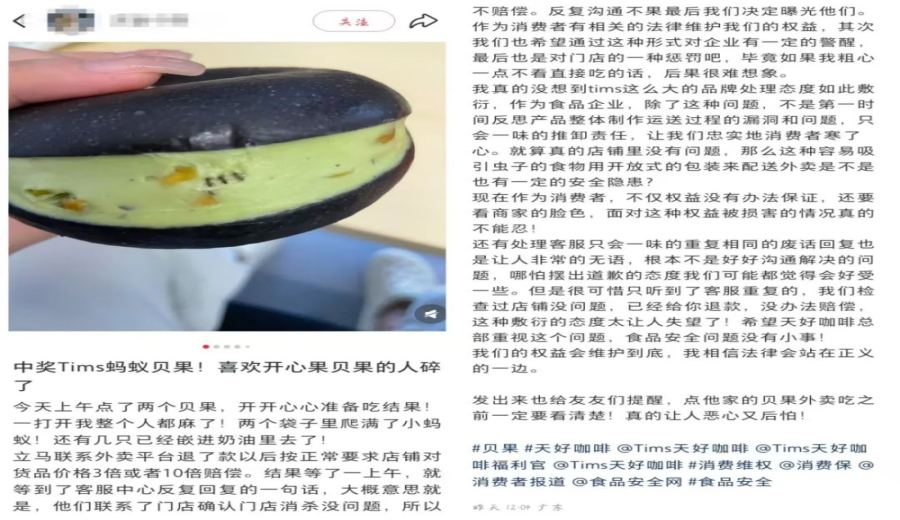
Introduction:Do food delivery snacks hide hygiene risks? Recently, a customer who received a Tims bagel discovered live ants crawling inside the packaging—even making their way into the cream filling. The incident has sparked discussions on packing procedures and the food safety of deliveries. What is the source of the ant infestation? How can consumers protect themselves and seek redress? This article delves into the details of the case and offers practical advice.
Recently, a customer ordering a Tims bagel through a food delivery platform encountered a shocking situation: upon opening the package, they found ants active in the paper bags of two bagels, with three ants even lodged inside the cream filling of the pistachio-flavored one. She immediately complained to both the platform and the store, and although she received a refund, her request for triple or tenfold compensation was rejected by Tims customer service, citing “no issues with pest control at the store.”
Photos provided by the customer show that not only were the bagels affected, but ants were also crawling all over the kraft paper bags holding them—a sight that was deeply embarrassing. Such incidents are not isolated, yet each time they come to light, they prompt scrutiny of food packaging and delivery processes.
Public opinion is divided: some believe that if the store indeed followed strict pest control measures, the ants may have entered during delivery through gaps in the packaging. Especially when the bagels contain sweet cream fillings, hot weather makes them more attractive to ants, and the risk increases if the delivery box or pickup shelf is left unattended for too long.
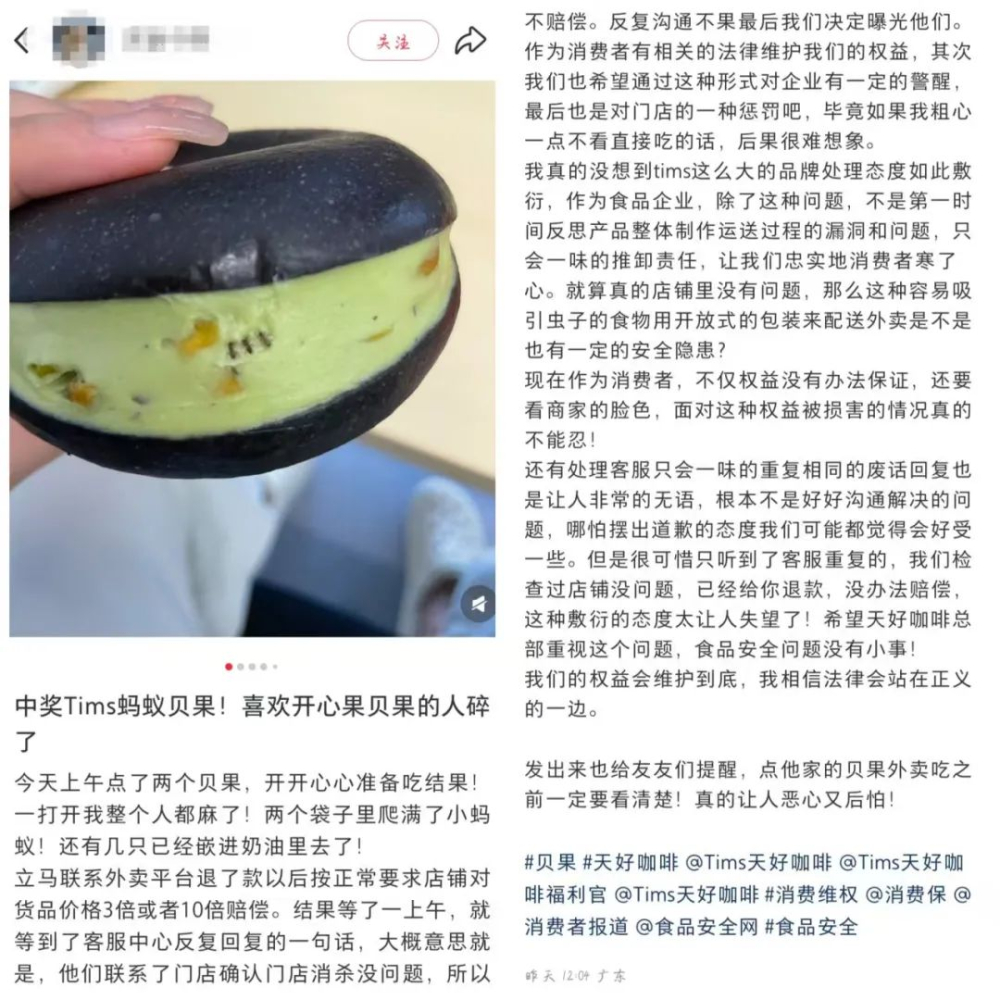
However, many consumers question the safety of Tims’ packaging method. Regular customers of the brand’s baked goods point out that stores typically place freshly made bagels into branded kraft paper bags, simply folding the opening and sealing it with a sticker. While convenient, poorly sealed bags can allow flies or small insects to sneak in.
Experts suggest that to reduce the likelihood of such incidents, stores could switch to more airtight packaging or add insect-repellent strips at the seal, especially in summer or high-temperature areas. Consumers receiving delivered food should also promptly inspect the integrity of the packaging and take photos as evidence if any abnormalities are found.
Although the case has been reported to the 12315 platform for handling, customers seeking higher compensation must provide a complete chain of evidence, such as photos of the outer packaging, images linking the ants to the food, and records of the order and communication. Legal experts remind that in food safety disputes, the principle of “he who asserts must prove” applies, and detailed documentation of each step will significantly improve the chances of a successful claim.
As of now, the customer and the store have yet to reach an agreement. This incident once again highlights the potential risks in the packaging design and transportation of delivery snacks, reminding both businesses and consumers to stay vigilant and jointly safeguard food safety.
The above content is compiled by CoffeeHunters, a coffee news website.


