







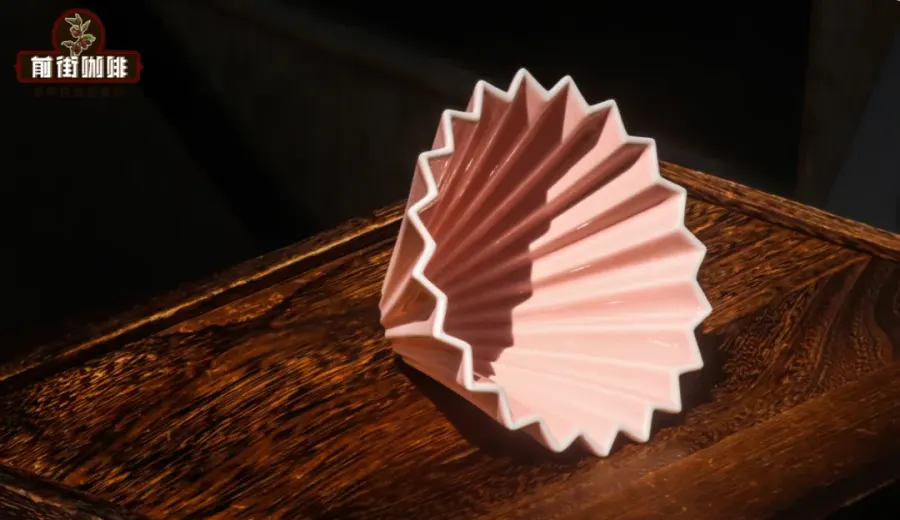
Introduction:The Origami folded filter is designed by Yasuo Suzuki, one of the founders of Japan’s TRUNK COFFEE BAR. Not only does it feature a unique shape, but it also accommodates both conical and flat-bottom filters, yielding two distinctly different brewing profiles. This article will take an in-depth look at the brewing differences between the two types of filters, analyzing their impact on mouthfeel and flavor complexity, and using Panamanian Geisha as an example to provide practical test parameters—helping you find your ideal brewing setup.
Among the many pour over coffee filters available, the Origami folded filter has gradually gained attention from coffee enthusiasts for its innovative design and high compatibility. Crafted by Yasuo Suzuki, founder of Japan’s TRUNK COFFEE BAR, this filter's standout feature is its ability to use two types of filters—conical and flat-bottom—thereby influencing water flow rate, coffee bed structure, and ultimately the flavor expression. What brewing needs do these two filter types suit respectively? And how can you choose the right one to highlight a coffee’s unique characteristics? Below, we’ll explore using Panamanian Boquete Geisha as an example to help you understand more deeply.
The name “Origami” originates from the Japanese word for paper folding, reflecting not just its folded design, but also drawing inspiration from the flexibility of paper—symbolizing the diverse possibilities during the brewing process. With a simple yet elegant appearance, its compatibility with both filter types makes it stand out among many other filters.Whether you're pursuing bright, distinct fruit acidity and layers,or prefer a rich, sweet-mouthfeel profile,
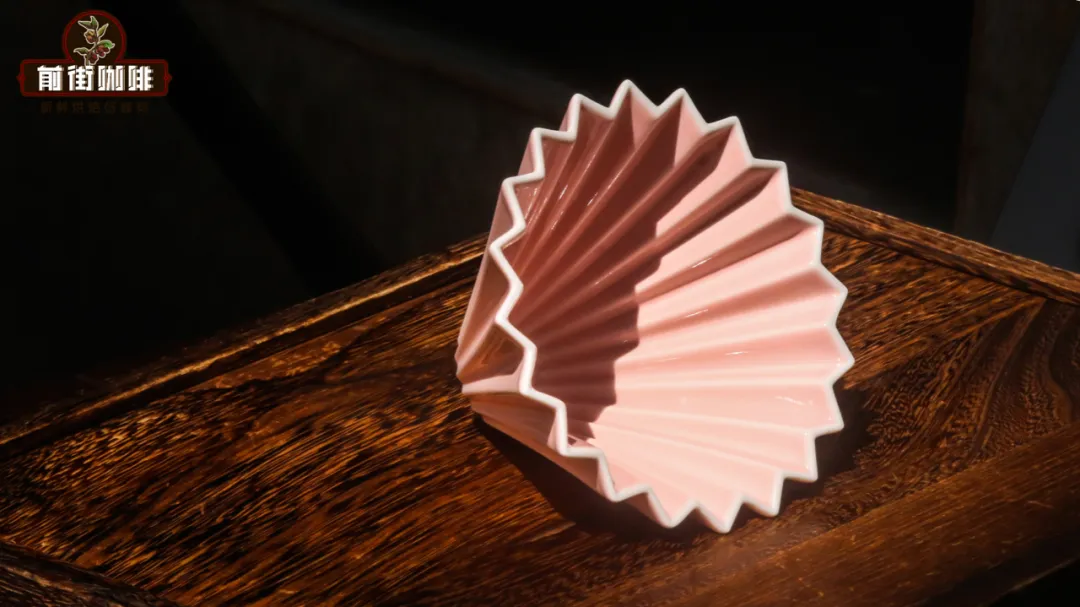
the Origami filter can achieve different extraction styles simply by switching the type of filter.
Let’s first examine how the Origami performs when paired with a conical filter. Since a conical filter doesn’t form a perfect seal with the walls of the filter cone, several deep grooves are created. These grooves effectively increase the space for air release, thereby accelerating the water drainage speed. Additionally, this structure causes the coffee grounds to form an inverted triangular bed in the filter—thicker toward the center and thinner around the edges—which leads to uneven extraction efficiency across different zones.Due to the faster flow rate and uneven coffee bed thickness, coffee brewed with a conical filter oftendelivers more complex flavor layers, brighter acidity, and a cleaner, crisper mouthfeel,
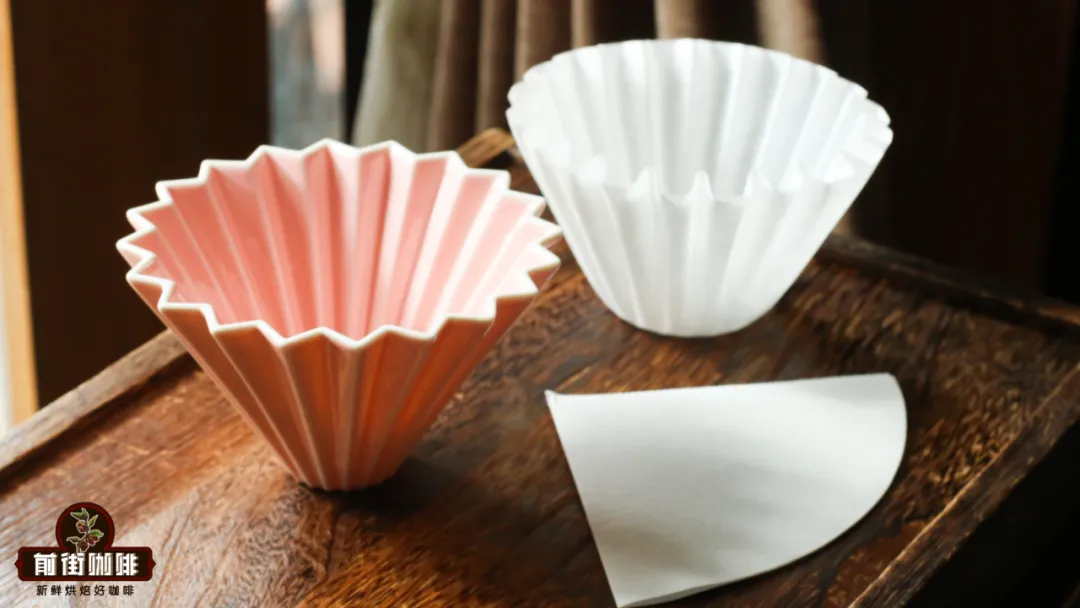
but with slightly lower overall extraction uniformity. This characteristic makes it especially well-suited for highlighting fruity, floral, and tea-like finish notes in coffee—ideal for users who enjoy vibrant and varied flavor profiles.
In contrast, when the Origami is used with a flat-bottom filter, the scenario changes significantly. The flat-bottom filter has a level base, and its folds align more closely with the twenty groove patterns on the inner wall of the filter cone, reducing gaps and thereby lowering exhaust efficiency. This slows down the water’s passage through the coffee bed. Moreover, the flat structure allows for a more even distribution of coffee grounds with consistent thickness, which benefits overall stability and consistency in extraction.This brewing environment tends to create an immersion-like effect, where water remains in contact with the coffee grounds for a longer time, therebyextracting a fuller body, more pronounced sweetness, and a smoother, more stable acidity.

The resulting coffee typically exhibits a more balanced flavor profile with a longer-lasting aftertaste—making it highly suitable for those who prefer a rich and mellow cup.
To more直观ly compare the differences between the two filter types, we conducted a side-by-side test using the same coffee bean. We selected a Panamanian Geisha from the Boquete region, using 15g of coffee, a 1:15 coffee-to-water ratio, an Ek43 grinder setting of 10 (approximately the fineness of fine sugar, with 75% of particles passing through a #20 sieve), a brewing temperature of 92°C, and a three-pour method with a total brew time controlled within 2 minutes.
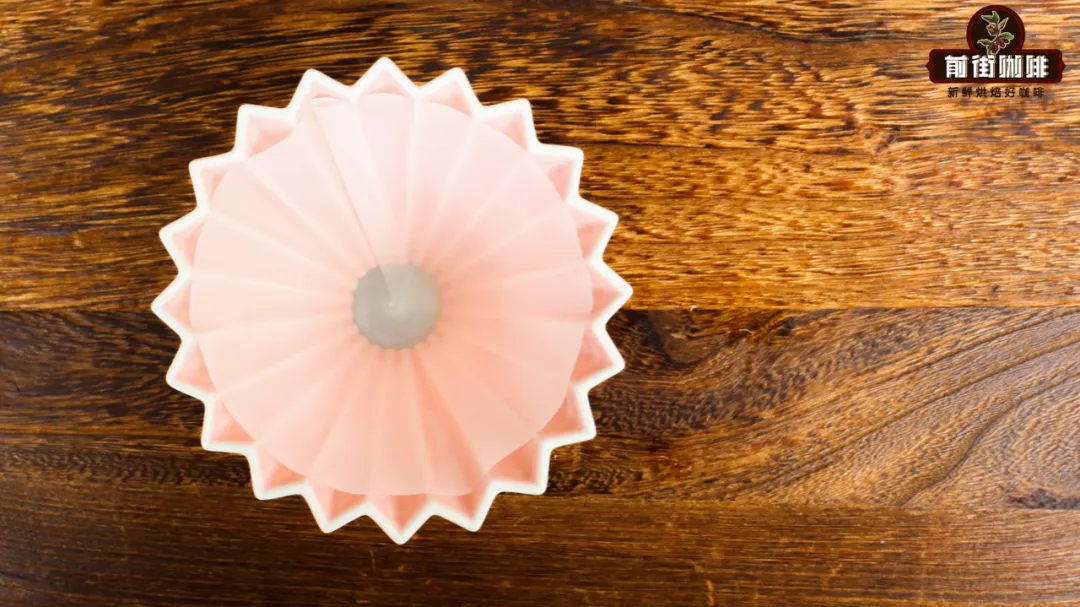
The results showed that with the conical filter, the coffee showcased bright jasmine and citrus acidity, honey-like sweetness, and a finish reminiscent of light oolong tea. The overall flavor profile was clear and layered, with a smooth mouthfeel and dynamic variation. In contrast, when using the flat-bottom filter, while the jasmine aroma was still present, it was more restrained and mellow; the citrus acidity became softer and rounder, the sweetness more prominent, and the oolong tea notes in the aftertaste lingered longer. The overall mouthfeel was richer and more substantial, with enhanced sweetness and balance.In a comprehensive comparison, if you prefer coffee with bright flavors, clear layering, and a refreshing mouthfeel,we recommend using a conical filter with the Origami filter cone.On the other hand, if you favor a coffee with a rich mouthfeel, ample sweetness, and balanced flavors,then the flat-bottom filter is the more suitable choice.
Additionally, for beginners new to pour over brewing, the flat-bottom filter—with its more stable coffee bed structure and higher margin for error—is also the more beginner-friendly option.
The above content is compiled by CoffeeHunters, a coffee news website.


