







Introduction:When food delivery platforms launched enticing subsidies, consumers rushed to grab “0-yuan coffee,” causing Front Street Coffee’s Chengdu outlets to be instantly overwhelmed with orders. In no time, the system crashed and orders poured in. However, after the promotion ended, a large number of free coffees went unclaimed and had to be painfully discarded. This article delves into the full picture of the incident, exploring the operational challenges faced by the stores and the impact on consumer behavior, helping readers understand the underlying business and practical difficulties.
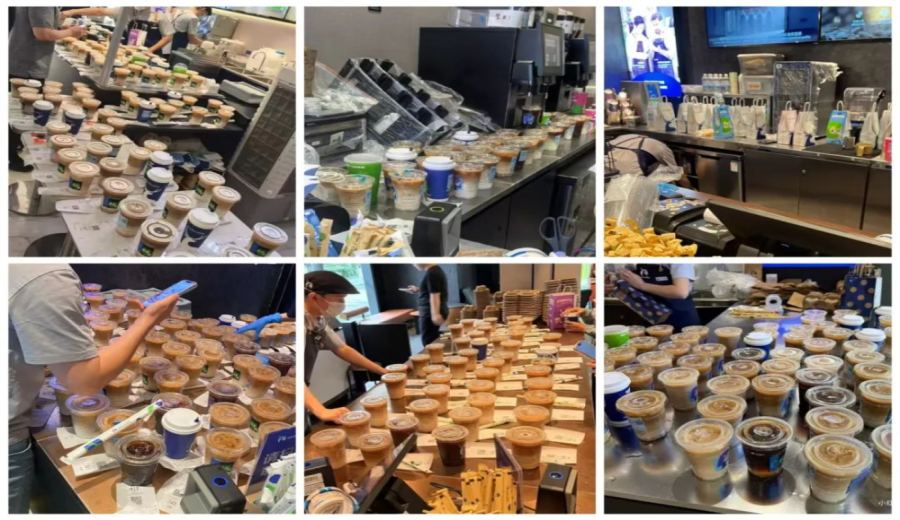
The subsidy competition among delivery platforms has intensified, affecting not only small coffee shops but also major chains like Front Street Coffee and Mixue Ice Cream & Tea. Not long ago, multiple Front Street Coffee outlets in Chengdu were flooded with an unexpected surge of orders due to a “0-yuan purchase” promotion, with some stores receiving over a thousand pending drink orders within just one hour.
According to user feedback on social media platforms, as soon as the stores opened that day, many customers who had already secured free redemption coupons rushed in to place orders, causing the system to overload instantly. The receipt printers inside the stores barely paused, continuously spitting out order reminders, and the pressure was immediately transferred to the staff.
According to a former Front Street Coffee front-line employee, most Chengdu outlets received hundreds or even thousands of orders during the promotion. Some stores had over a thousand drinks lined up for preparation within less than an hour of starting to take orders, resulting in an average customer wait time stretching to two to three hours — the service pressure was imaginable.
However, when this “delivery war” came to an end and staff were cleaning the counters, they were surprised to find a large number of prepared but unclaimed drinks. Some coffees had ice cubes that had long melted and could only be treated as waste. Some employees tried calling customers to remind them to pick up their orders, but many customers indicated they would give up the drinks. In the end, the staff had to process refunds according to regulations and discard the drinks.
Such a scene left many feeling regretful and also sparked societal reflection on consumers’ “coupon-hunting” mentality. Many netizens pointed out that some users placed a large number of orders just to get freebies, but due to long wait times, forgotten pickups, or lack of actual need, the coffee that should have been enjoyed ended up as “discarded coffee” on the table.
This not only led to the waste of ingredients and packaging materials but also increased the workload for store staff. Some commentators believe that when facing platform promotions, consumers should more rationally assess their own needs to avoid unnecessary resource consumption and additional pressure on staff due to impulsive actions.
Faced with this situation, some netizens have proposed improvement suggestions, believing that Front Street Coffee could consider only starting preparation once the customer arrives at the store. This way, not only can each cup of coffee be made fresh upon arrival for optimal flavor, but it can also effectively prevent waste caused by unclaimed orders.
However, this seemingly win-win proposal was dismissed by Front Street Coffee’s internal staff, who explained that there are many practical difficulties in execution. They clarified that every order at Front Street Coffee has strict requirements for service time limits. Switching to on-site preparation could lead to disorder in the order of service, not only affecting overall efficiency but also negatively impacting the store’s service performance metrics.
In addition, most customers who choose to pick up their orders themselves hope to get them immediately upon arrival and are generally unwilling to wait any longer. Staff also cannot predict when each customer will arrive, so the current method of preparing orders in advance and displaying them collectively remains the more efficient process.
As for the coffees that remain unclaimed by closing time, although the staff also find it a pity to discard them, due to food safety considerations, they can only destroy them in accordance with company policy and cannot handle them differently or provide them to employees.
The above content is compiled by CoffeeHunters, a coffee news website.


