







Introduction:Commercial fruit and vegetable beverages often attract consumers with terms like "slimming" or "light," but in reality, these may only refer to packaging design. Take Nayuki's "Slim Little Green Bottle" as an example: the official explanation states that "Slim" refers to the bottle’s shape, not the drink’s function, sparking public discussion on the clarity of nutrition labeling. This article delves into the calorie composition of common tea drinks and offers practical advice on identifying nutritional claims.
In recent years, the tea beverage market has seen a rise in the "health trend," with many brands launching drinks based on fruits and vegetables, paired with appealing names like "slimming" or "light." However, such claims sometimes refer only to packaging design rather than any actual weight-loss benefits. Nayuki’s popular "Slim Little Green Bottle" is one of the recent cases that has stirred debate.
According to official information, this drink is made by freshly juicing six ingredients—such as kale, apple, and pear—and blending it with freshly brewed tea. Thanks to its emphasis on natural ingredients, the product once ranked among the brand’s top three bestsellers, especially appealing to health-conscious consumers.
However, attentive customers noticed a small, inconspicuous line in the product details page stating: "'Slim' and 'Light' refer to the new square-shaped bottle being slimmer and more convenient, not to any functional benefits." This clarification surprised many consumers who had assumed the drink was designed for fat loss, when in fact "Slim" referred only to the more slender bottle shape, not weight management.
This mismatch between naming and actual function is not an isolated case. Similar tea drinks on the market—such as Guming’s "Light Body Fruit & Veg Bottle" and Luckin’s "Kale Light Body Fruit Tea"—also frequently use terms like "slimming" or "light body," often with fine print clarifying that these words do not imply actual weight-loss effects, but rather describe the feeling after drinking.
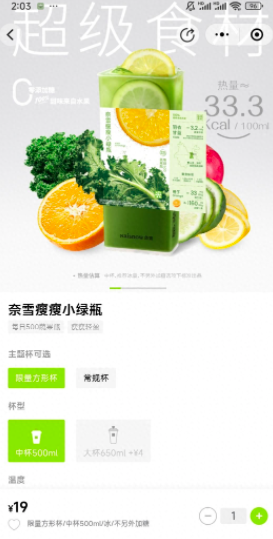
Many netizens have pointed out that terms like "Slim," "Slimming," and "Light Body" can easily be associated with weight loss or body management, leading people to mistakenly believe these drinks have special functions. Yet, a common kale drink can be surprisingly high in calories. For instance, Nayuki’s "Slim Little Green Bottle" lists approximately 33.3 kcal per 100 ml, meaning a 500 ml cup contains a total of 166.5 kcal—almost equivalent to a bowl of white rice.
Additionally, to enhance taste, some tea drinks add honey, syrups, or extra fruit, which further increases sugar and calorie content. Consumers often overlook these hidden sources of calories, assuming they’re choosing a "weight-loss drink," only to potentially consume excess sugar and inadvertently contribute to weight gain.
Legal experts note that when a product name or key promotional terms easily evoke specific benefits, even if there’s fine print clarification, it may still be considered misleading advertising if the text is not prominent or properly placed. Consumers should carefully read product labels, paying special attention to calorie count, sugar content, and ingredient lists, to avoid misunderstandings based on names alone.
In summary, when selecting tea drinks, it is advisable for consumers not to base their decisions solely on product names or packaging design, but to thoroughly understand the nutritional information and actual ingredients. By reading the calorie, sugar, and ingredient details on product labels, one can make wiser dietary choices and truly achieve health management goals.
The above content is compiled by CoffeeHunters, a coffee news website.


