







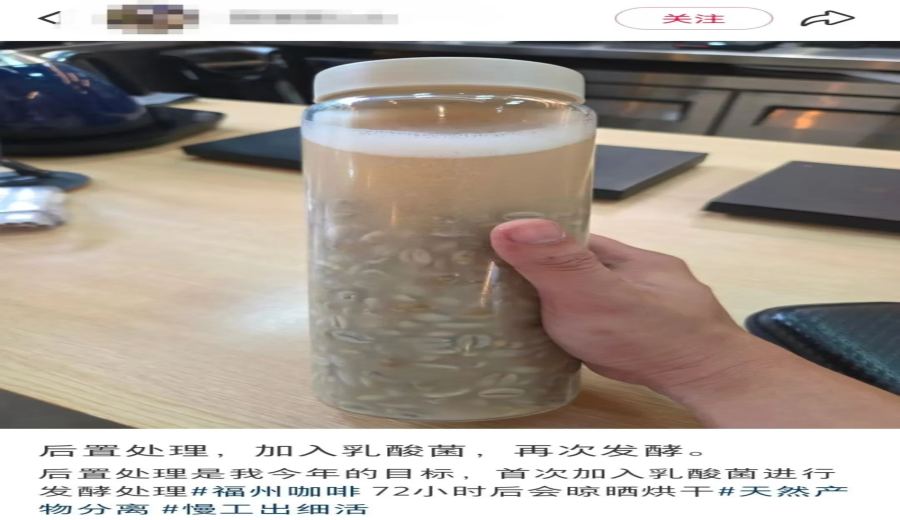
Introduction:A coffee shop in Fuzhou attempted to process green coffee beans with lactic acid bacteria fermentation, but unexpectedly triggered the sprouting of the beans. Can these sprouted beans be safely roasted and consumed? Will they bring unique flavors? Or could they even grow into coffee trees? This article delves into the scientific principles behind sprouted coffee beans, their potential flavor changes, microbial risks, and key considerations in post-harvest processing, helping coffee enthusiasts fully understand this unique experiment.
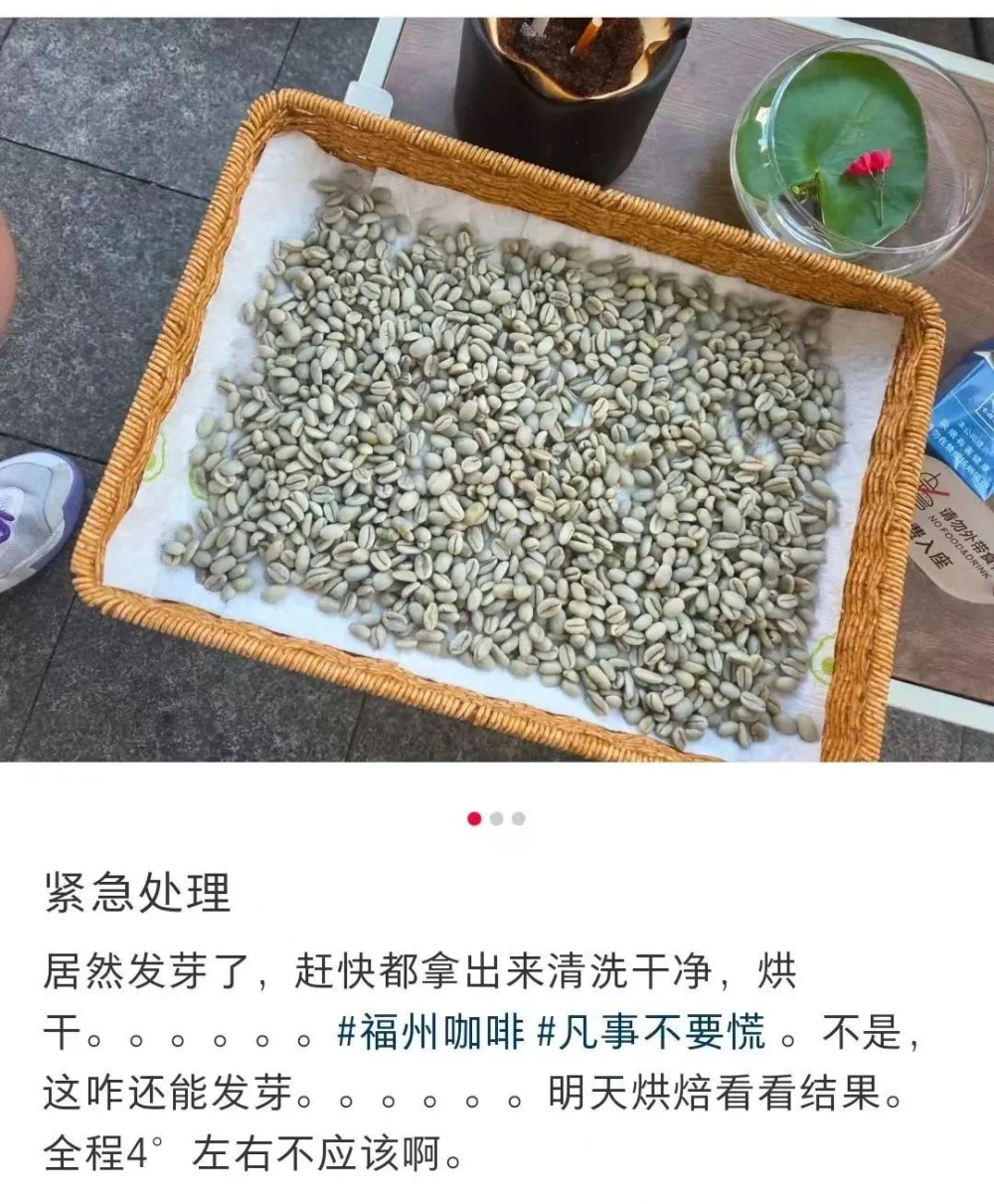
Recently, a coffee shop in Fuzhou accidentally discovered that their coffee beans had sprouted shoots while experimenting with lactic acid bacteria fermentation for green beans. Originally aiming to innovate post-processing by adding lactic acid bacteria, they hadn’t expected the beans to ferment as planned—instead, they quietly sprouted inside transparent containers. The shop owner promptly washed and dried the sprouted beans, planning to roast them to test their flavor profile. This move quickly sparked industry and consumer discussions about whether “sprouted coffee beans are safe to drink.”
According to experimental photos circulating on social media, after soaking in a lactic acid bacteria solution, these green beans did not complete the intended fermentation process. Instead, small but clearly visible green shoots emerged within a short period.While this phenomenon was accidental, it raises curiosity: can coffee green beans truly germinate like ordinary seeds under specific conditions?
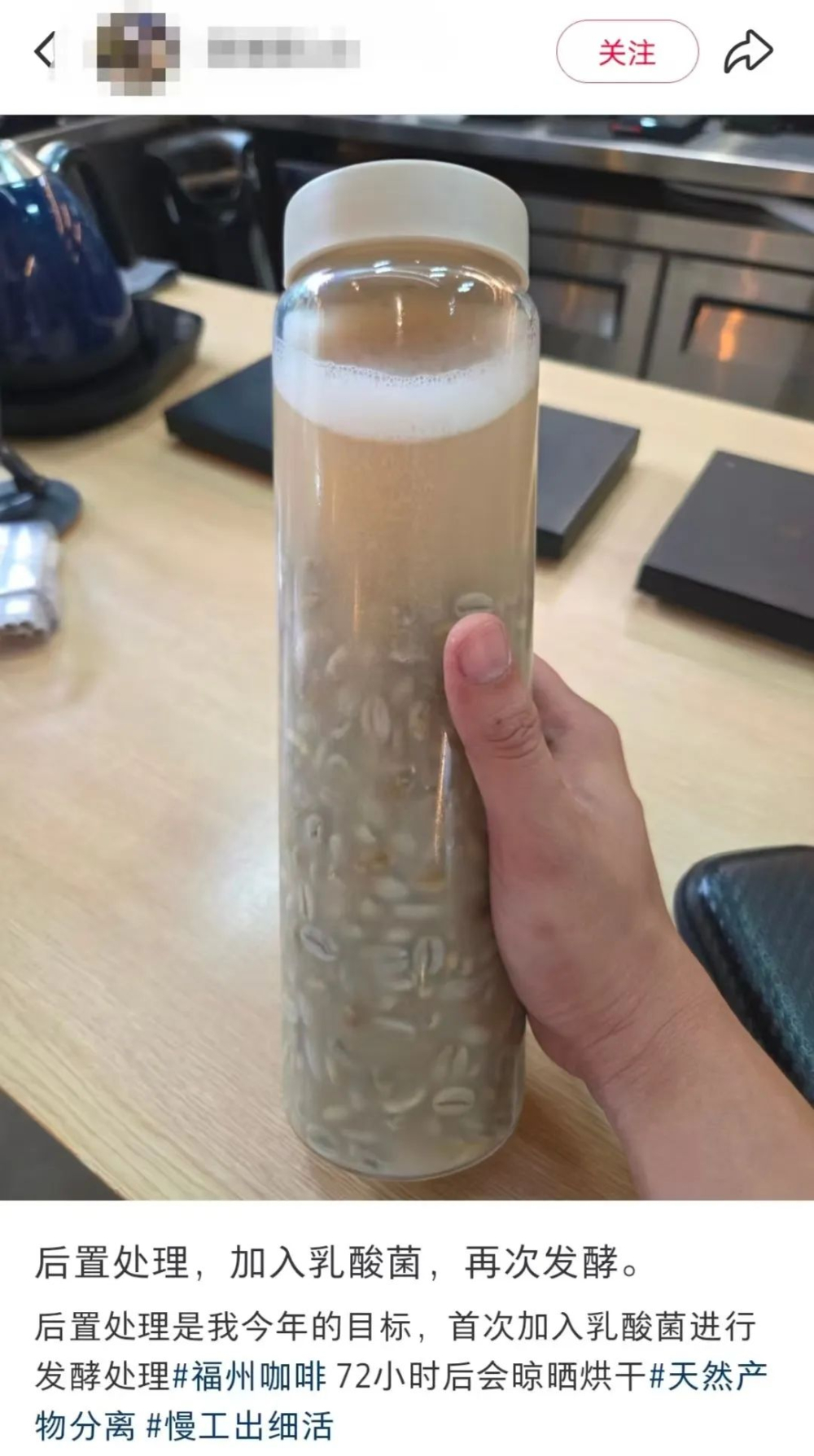
In fact, before roasting, coffee green beans are still biologically alive. Under appropriate temperature, humidity, and microbial activity, they may exhibit phenomena resembling germination. However, this so-called “pseudo-germination” is usually just a manifestation of internal physiological changes in the beans, not equivalent to seeds capable of growing into coffee trees. Industry insiders point out that such sprouting is often caused by changes in storage conditions or microbial stimulation, and is frequently accompanied by unstable quality—even rapid spoilage within a short time.
In this experiment, the shop owner suspects that the involvement of lactic acid bacteria may have altered the internal metabolism of the green beans, prompting the shoots to emerge.Experts explain that while lactic acid bacteria mainly act on fermenting sugars, under certain conditions they might also indirectly influence the physiological activity of seeds. However, this mechanism still requires further research and verification.
Opinions among netizens are divided on whether sprouted coffee beans are safe to consume. Some supporters cite recent international studies suggesting that the sprouting process may reduce certain bitter and astringent compounds in green beans, thereby altering the final flavor profile and making the coffee taste smoother. A small number of green bean processors even “intentionally” induce sprouting before roasting to pursue unique flavor layers. However, such practices require strict control over the sprouting environment to avoid microbial contamination, otherwise they may pose health risks.
Many netizens are concerned that microbes in the lactic acid bacteria solution could foster the growth of other contaminants during sprouting, leading to the pollution of the green beans.The industry recommends that if similar experiments are to be attempted, it is essential to ensure a sterile fermentation environment and avoid excessively long sprouting times to prevent the decomposition or spoilage of the beans’ internal nutrients.
In response to public concerns, the coffee shop has voluntarily taken down related experimental posts and told the media that these sprouted beans were for internal testing only and have not been sold on the market. The shop emphasized that daily operations strictly follow cleaning and disinfection protocols, and samples have been sent to professional institutions for testing. Technicians from the Coffee Research Institute at the Yunnan Academy of Agricultural Sciences also pointed out that the sprouting of coffee seeds themselves does not produce toxic substances, but if mold invades during the sprouting process, it may affect both flavor and safety.
Synthesizing various perspectives, sprouted coffee beans carry both flavor potential and safety risks. For coffee enthusiasts, while such experiments are innovative, attempting them without professional equipment and environmental controls is not advised. In the future, if the conditions for sprouting and post-processing techniques can be better mastered, they may open up new directions for coffee flavor development.
The above content is compiled by CoffeeHunters, a coffee news website.


