







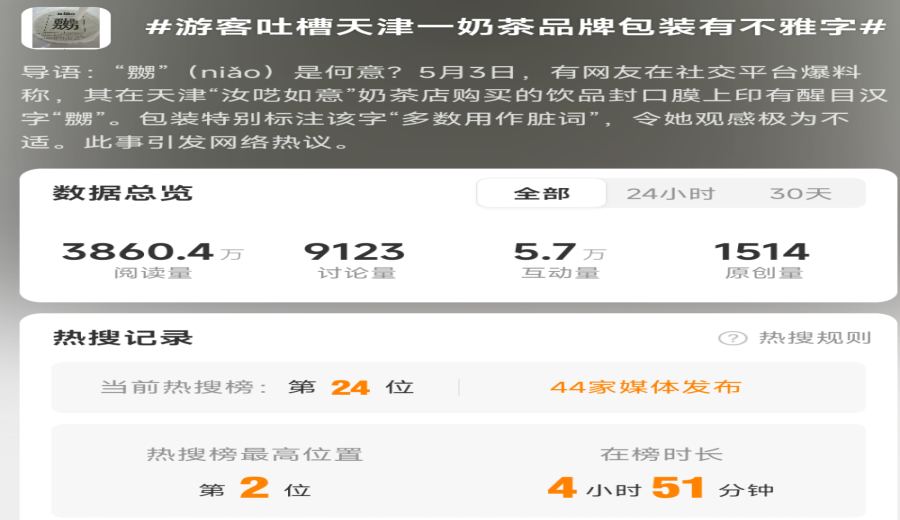
Introduction:A milk tea brand in Tianjin sparked heated online discussion after printing the obscure Chinese character "嬲 (niǎo)" on its drink sealing film. The character is considered vulgar in the local dialect, causing discomfort among consumers. Although the brand claimed the original intention was educational, the note on the packaging stating that the character is "mostly used as a swear word" only intensified the controversy. This article delves into the full story of the incident, explores the cultural sensitivity of beverage packaging design, and offers practical advice to avoid similar pitfalls.
Recently, a milk tea brand in Tianjin has stirred widespread discussion on social media due to an obscure character, "嬲 (niǎo)," printed on the sealing film of its drinks. What seemed like a simple packaging design became the center of online controversy due to cultural differences and dialectal ambiguity.
According to netizens, while purchasing a drink at a milk tea shop in Tianjin, they noticed a large character "嬲" printed on the sealing film. Even more unsettling was the fact that the packaging specifically labeled the character as "mostly used as a swear word." This detail quickly spread online, prompting extensive discussion.
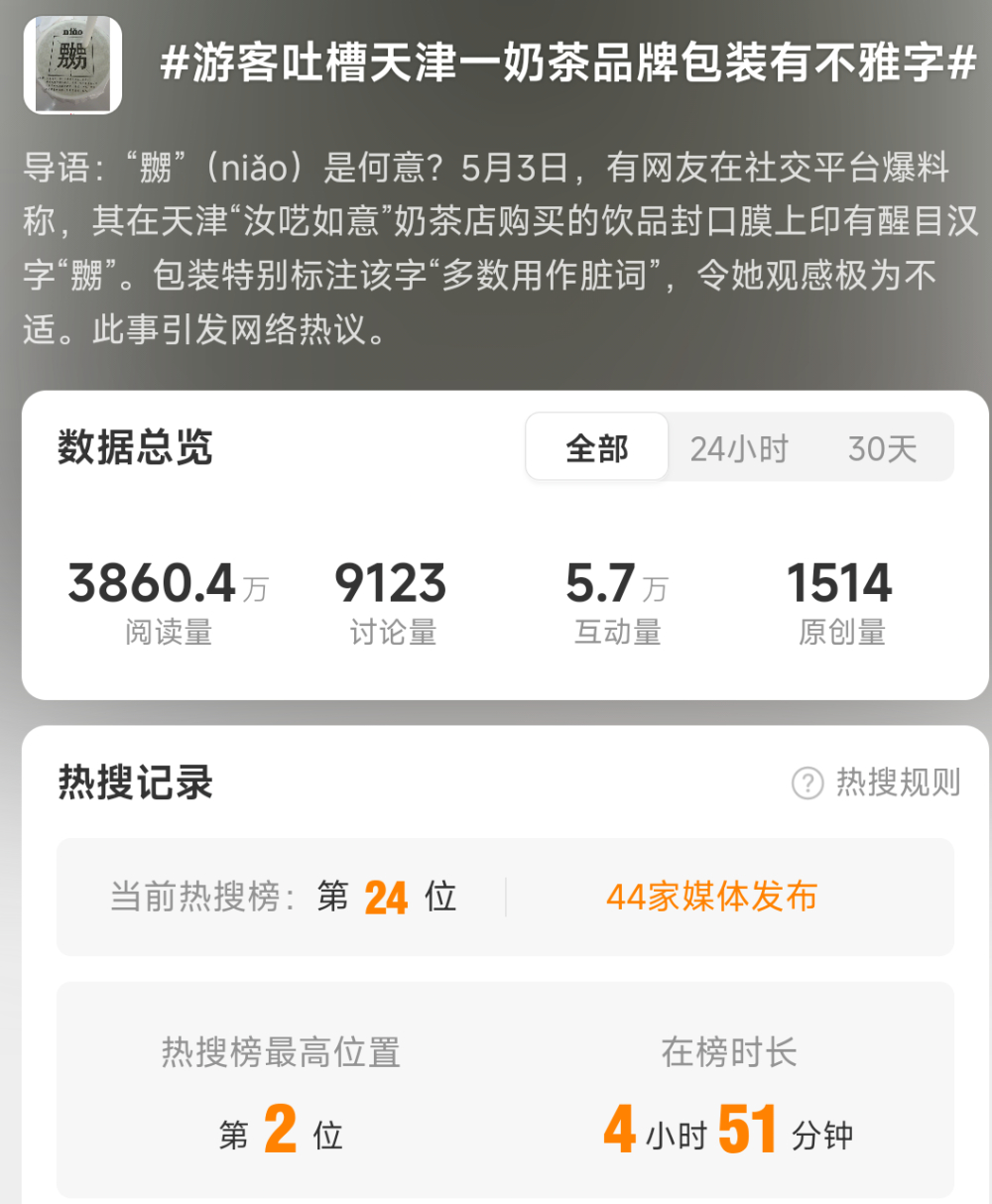
Regarding the meaning of the character "嬲," local netizens in Tianjin pointed out that it is considered vulgar in the local dialect and is often seen as an insulting expletive when used alone. Moreover, in dialects from other regions such as Hunan, the character carries similar negative connotations. Many consumers stated that they would feel offended if they found such a character printed on their purchased drink.
In fact, this milk tea brand has previously had a practice of printing obscure characters on its sealing film. Images shared by netizens show that in addition to the controversial "嬲" character, others included "焱," "恏," "奀," "曌," "饕," and "夯," each accompanied by a brief explanation.
According to Baidu Baike, "嬲" is pronounced niǎo and originally means to tease or provoke. However, as a dialectal character, it is often used as a vulgar term. Notably, in Cantonese, "嬲" means to be angry, and in daily usage, it carries no derogatory meaning.
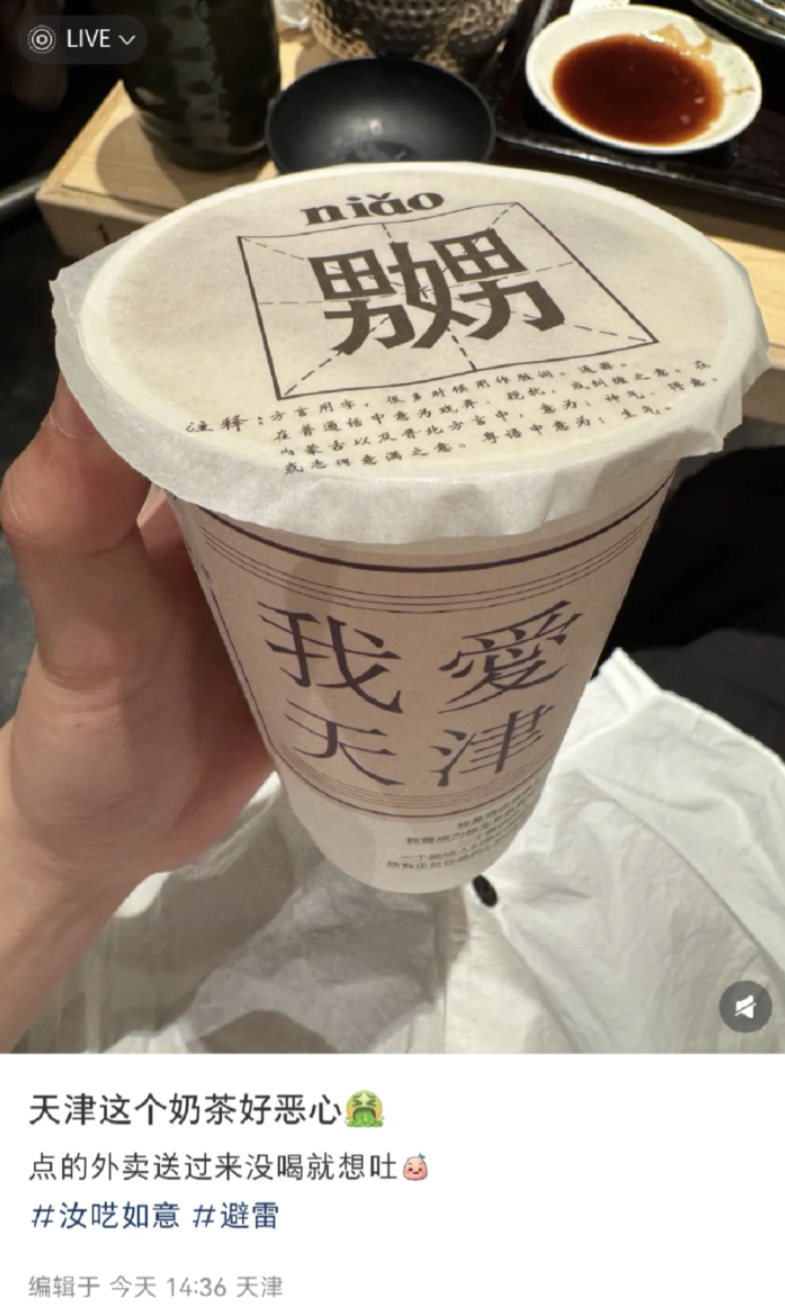
After the incident gained traction, some media contacted staff at the milk tea brand to understand the situation. A staff member responded that employees had noticed the issue and reported it to higher management. They explained, "This character is randomly generated—some sealing films have it, some do not." They also revealed that the character "嬲" had previously caused customer dissatisfaction, "We have received negative reviews on our delivery platform because of this character."
On May 4th, the business officially issued an apology statement, confirming that all sealing films with the character in question had been uniformly destroyed and would no longer be used. The business explained that the original intention behind choosing this packaging was to educate consumers about obscure characters, but upon reflection, they acknowledged that their consideration had been insufficient.
This incident provides important lessons for the beverage industry: when designing packaging, in addition to aesthetics and creativity, cultural differences and dialectal factors must be fully considered. This also holds relevance for the coffee industry—whether it’s decorative text on coffee cups or informational text on packaging, potential cultural misunderstandings should be avoided.
Experts suggest that beverage brands should establish a cultural sensitivity assessment mechanism when designing packaging, especially when targeting national or international markets. For potentially ambiguous dialectal terms or culturally sensitive vocabulary, adequate preliminary research and testing should be conducted.
The above content is compiled by CoffeeHunters, a coffee news website.


