








Introduction:Have you ever wondered if it’s possible to brew drip bags with milk? This article dives deep into the feasibility of pairing drip coffee bags with milk, analyzing common challenges and improvement methods. From hot brewing to cold brew, we offer a variety of practical solutions. Not only do we debunk the drawbacks of milk extraction, but we also recommend drip bag options suited to different flavor preferences, along with detailed steps and precautions—so you can easily enjoy rich milk coffee at home.
Can you directly brew drip coffee bags with milk? This is a question many coffee enthusiasts have. We conducted practical tests and analyzed multiple methods—from traditional hot brewing to creative cold brew—to find the best way to use drip bags with milk.
Many people want to try replacing water with milk to brew drip bags, but milk has very different extraction properties compared to water. Based on past experiments, the components in milk significantly reduce extraction efficiency, especially when heated to high temperatures, where changes in proteins and lactose further affect the final flavor profile. Directly applying pour over parameters and techniques often leads to under-extraction, resulting in weak flavors or even off-notes.

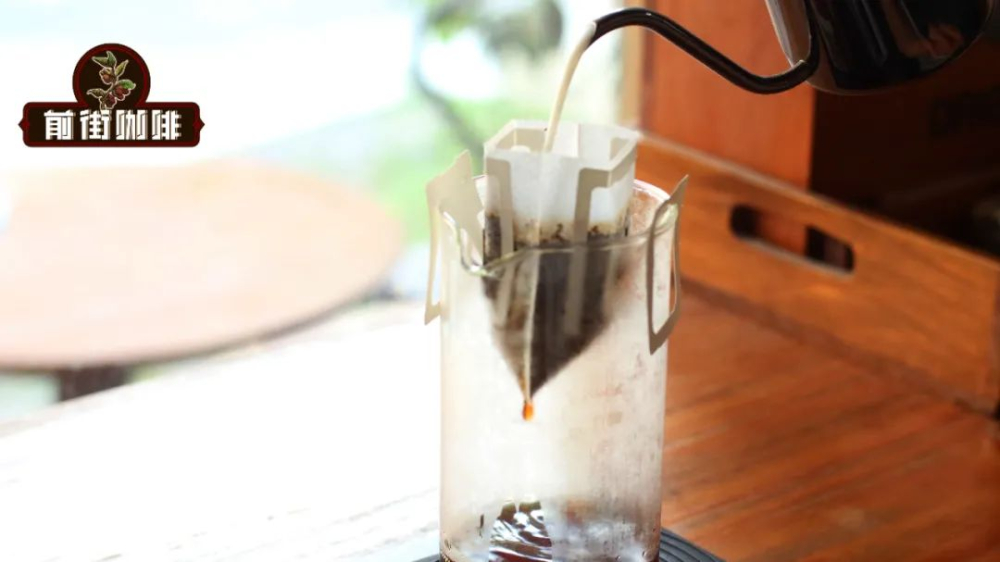
To improve this situation, we tried pre-wetting the coffee grounds with hot water to help them fully absorb moisture and release aroma, then switched to using about 75°C warm milk and slowly poured it in two stages. While this method preserves more of the coffee’s original flavor and delivers an acceptable overall result, the entire process takes up to 20 minutes, and the fine coffee particles can expand and clog the filter bag, making it not very practical.
For readers who want to quickly enjoy milk coffee, we recommend two more practical alternatives: first, extract a concentrated black coffee with hot water, then adjust to taste with fresh milk; second, use the cold steeping method by placing the drip bag directly into milk and refrigerating it overnight—you can enjoy a cool and smooth milk coffee the next day.
If you still want to challenge yourself by brewing drip bags directly with milk, it’s recommended to first choose medium to dark roasted drip bags, as these beans have richer flavors that harmonize better with milk. For example, those who prefer a bold taste can opt for varieties with caramel aromas; while those more sensitive to bitterness are advised to choose options with pronounced fruit acidity and fermentation notes, such as drip bags with preserved fruit, berry, or wine-like characteristics, which can achieve excellent balance with milk.
In terms of specific operation details, if using the hot milk pouring method, it’s recommended to first pre-wet with 90–93°C hot water , using about 25 grams of water, then pour in 75°C milk, keeping the total liquid volume around 150 grams. During this process, pay attention to changes in the filter bag flow rate, as the coffee grounds may swell upon absorbing water and easily clog the filter, potentially leading to a longer overall extraction time.

Besides the above methods, we’ve also compiled two more practical techniques suitable for daily use. The first is to extract black coffee with hot water, then mix it with fresh milk in proportion to make a latte—the most common and stable approach. The second is a completely unheated cold brew method: simply place the drip bag in chilled milk and let it steep for 8–12 hours, at a ratio of roughly 1:12 to 1:15. The next day, give it a gentle shake, remove the drip bag, and you’ll have a smooth iced latte.
The cold brew method doesn’t require any special equipment—just a drip bag, milk, and a refrigerator. It’s perfect for readers in a morning rush or who prefer iced coffee. When brewing, there’s no need to open the outer packaging of the drip bag; just place the whole bag into the milk, shake well to ensure the coffee grounds are fully soaked, refrigerate, shake again, and then remove the drip bag.

Based on our comprehensive testing experience, although brewing drip bags directly with milk is technically feasible, it involves high time costs, complicated steps, and equipment needs. For most people, using pre-extracted black coffee and adding milk afterward, or opting for the refrigerated cold brew method, are more convenient and still deliver great flavor.
The above content is compiled by CoffeeHunters, a coffee news website.


