







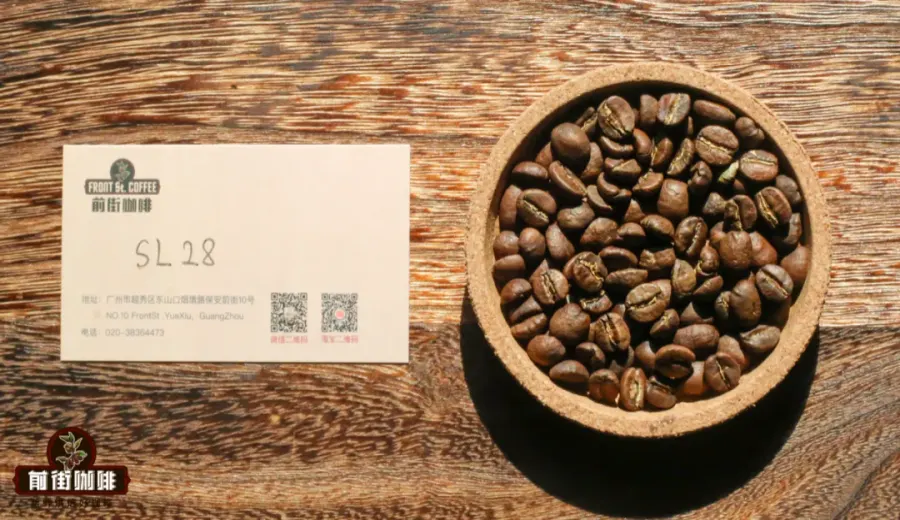
Introduction:Kenyan coffee is renowned for its distinctive bright acidity and flavors reminiscent of small tomatoes and dark plums, and the key variety behind this is SL28. A Bourbon descendant originating in the 1930s, SL28 is not only drought-resistant and high-yielding but also gives birth to the soulful flavors of Kenyan coffee. This article delves into the origins, breeding background, and flavor characteristics of SL28, analyzing how it shapes the distinctive traits of Kenyan coffee, and takes you through the actual brewing experience under classic washed processing.
When it comes to Kenyan coffee, many people immediately think of that bright acidity and the unique fruity aroma reminiscent of dark plums and small tomatoes. These memorable characteristics are largely attributed to a key variety—SL28. This direct descendant of Bourbon, born in the 1930s, has become an important cornerstone of the "Kenyan flavor" due to its outstanding drought resistance, rich flavor layers, and high-yield potential.
SL28 was developed by the then Scott Laboratories, with “SL” being the abbreviation for the laboratory and “28” being the serial number of the variety in the trials at the time. This breeding program began in the 1930s, when the Kenyan government sought to find high-quality coffee varieties that could adapt to the local climate, had commercial potential, and were suitable for large-scale cultivation. Thus, between 1935 and 1939, Scott Laboratories systematically evaluated 42 coffee varieties from different regions, conducting in-depth research on yield, flavor, drought resistance, and disease resistance. Ultimately, several varieties stood out, among which SL28 and SL34 were the two most notable stars.
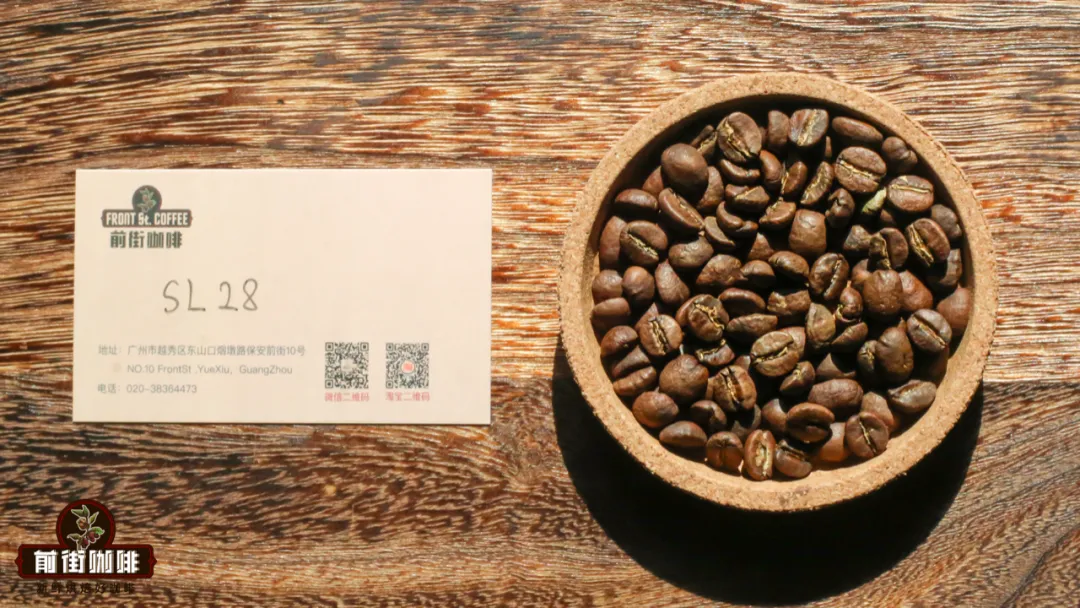
Interestingly, the “predecessor” of SL28 was discovered as early as 1931. At that time, a senior technician at Scott Laboratories noticed a coffee variety in the Munduli area of northeastern Tanganyika (now Tanzania) that seemed to be resistant to drought, pests, and diseases, and subsequently introduced it to Kenya for cultivation. By 1935, this variety had officially entered the experimental stage, which is the SL28 we know today. In addition to its outstanding drought resistance, SL28 also demonstrated extremely high yield potential, excellent flavor performance, and bright acidity, quickly drawing attention. After its promotion, it not only rapidly became widespread in Uganda but was even trial-planted in some Central American producing regions, highlighting its adaptability and market acceptance. However, similar to SL34, SL28 has relatively weak resistance to diseases, which is one of its main drawbacks.
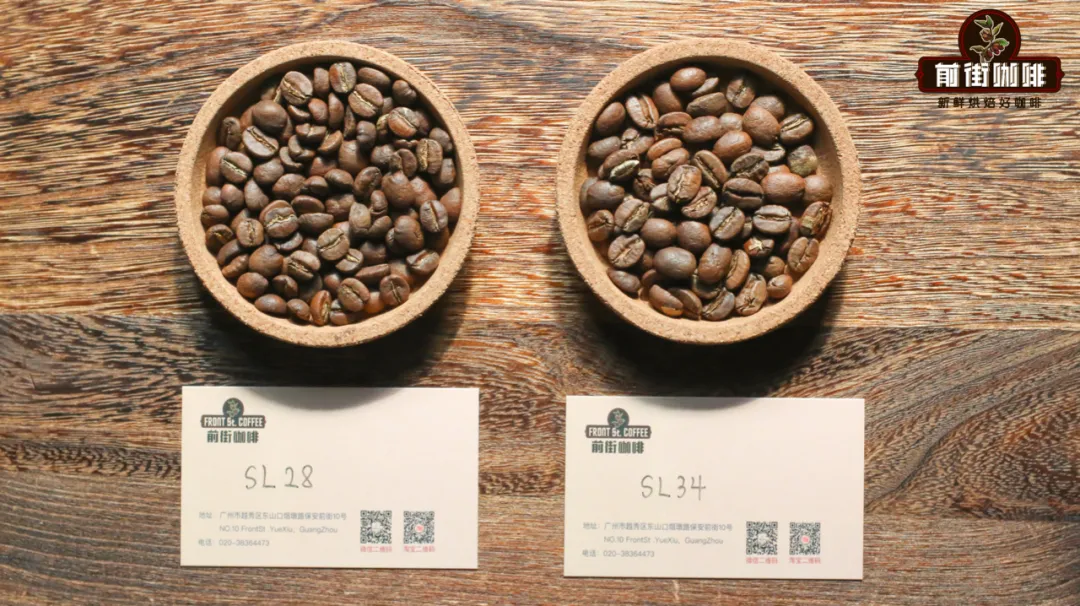
From a varietal classification perspective, SL28 belongs to the Bourbon genetic group, meaning it evolved from the classic Bourbon variety, so its beans are usually rounder in shape and smaller in size, with a highly recognizable appearance. It’s worth mentioning that in many Kenyan producing regions, SL28 is often interplanted with another important variety, SL34, which is a variant of Typica, with more elongated and oval-shaped beans. The two are visually easy to distinguish. Even in mixed lots, experienced roasters or consumers can still roughly judge the proportion of the two based on appearance.
Although SL28 can also be found in other producing countries such as El Salvador and Costa Rica, where it exhibits clear blackberry acidity and bright acidity, the overall mouthfeel is often not as rich as the version grown locally in Kenya. The reason lies not only in the variety itself but also in Kenya’s high-altitude growing environment (mostly between 1500 and 2000 meters), unique microclimate, and classic washed processing method, all of which play a key role in shaping the final flavor.
To gain a deeper understanding of SL28’s actual performance, the most direct way is to taste a washed single-origin lot from a Kenyan producing region. Take, for example, a coffee brand’s “Kenya · Assaliya,” which comes from the Assaliya Factory in the Thika region and is a classic washed single-origin lot blended from SL28 and SL34. The producing region’s altitude ranges between 1550 and 1750 meters, and such height endows the coffee beans with rich acidity and complex aromatic layers.
This lot uses the traditional Kenyan-style washed process, preserving the natural flavor characteristics of the coffee through meticulous depulping, fermentation, washing, and drying procedures. After brewing, the first thing that hits the nose is the clear acidity of dark plums and small tomatoes, followed by the gradual emergence of a brown sugar-like sweetness. Upon tasting, the acidity is bright and substantial, with the flavor profile centered around dark plums, small tomatoes, and black plums, accompanied by a distinct brown sugar sweetness. The finish leaves a subtle oolong tea-like aftertaste, making the overall mouthfeel rounded and balanced. It’s highly suitable for coffee enthusiasts who enjoy bright acidity and fruity notes.
In summary, SL28 is not only the flavor representative of Kenyan coffee but also a classic variety that combines resilience, yield, and flavor potential. Whether you are an industry professional interested in studying coffee varieties or a coffee lover seeking a unique flavor experience, gaining an in-depth understanding of SL28’s history and characteristics will allow you to develop a deeper appreciation and recognition of Kenyan coffee.
The above content is compiled by CoffeeHunters, a coffee news website.


