







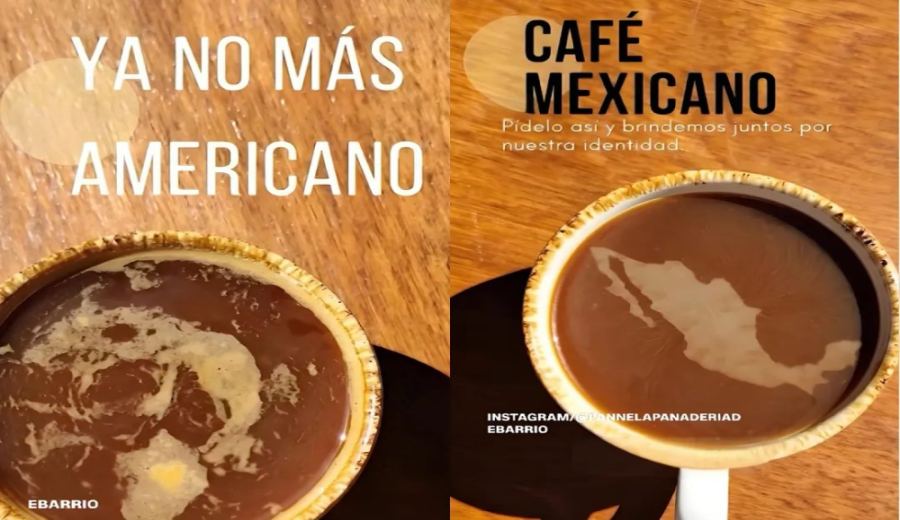
Introduction:In response to the United States' recent hardline stance on immigration policy, tariffs, and geopolitical issues, coffee shop owners across Mexico have launched a trend of renaming "American coffee (Café Americano)" to "Mexican coffee (Café Mexicano)." This is not just a minor linguistic tweak—it carries a firm expression of national identity and political sentiment. This article takes you deep into the background, motivations, and social impact of this renaming movement.
Following similar cultural resistance actions by some cafés in Canada, where "Americano" was renamed "Canadiano," Mexico has also seen a comparable pushback. Recently, from the capital Mexico City to major cities such as Monterrey and Guadalajara, more and more coffee shops have changed the commonly listed "American coffee (Café Americano)" on their menus to "Mexican coffee (Café Mexicano)," using the name of a cup of coffee to convey dissatisfaction with U.S. policies.
This seemingly simple renaming action actually stems from a series of controversial U.S. policies, including the reinstatement of the "Remain in Mexico" immigration application process, threats to increase tariffs on Mexican goods, and the unilateral renaming of the "Gulf of Mexico" to the "Gulf of America." For many Mexicans, these moves not only affect trade and livelihoods but also touch upon national dignity.
Fueled by social media, the #MexicanoNotAmericano (Mexican, not American) hashtag quickly went viral. Many consumers actively seek out shops that label their coffee as "Mexican coffee," sharing their support through check-ins. Moreover, some cafés have even gone so far as to erase the original "AMER" on their chalkboards or menus and rewrite it as "MEX," symbolically completing the shift from American to Mexican.
Café Cicatriz is one of the well-known coffee shops in Mexico City that was among the first to respond to this movement. The shop’s founder, Scarlett Lindeman, publicly stated: "Language itself holds power, and if employees want to change Americano to Mexicano, I fully respect that choice." Her stance has been echoed and supported by many in the industry.
Notably, this renaming trend is not an isolated act by a single shop, but is gradually becoming a cross-city social phenomenon. Starting in early April, this movement has spread outward from the capital and sparked discussions and imitations across the country. Many small independent coffee shops have also joined in, removing the term "Americano" from their menus and replacing it with the more locally conscious "Mexican coffee."
For many advocates, this is not only a silent protest against U.S. policies, but also a reshaping of identity. Through the most common everyday beverage—coffee—they express support for their country’s stance and concern for international relations. Observers have noted that such actions are strikingly similar to the renaming campaigns by Canadian coffee shops, all using beverage names as a medium to convey deeper cultural and political messages.
Experts point out that "American coffee" is essentially a simple recipe of adding hot water to espresso, and its name originates from the term used by U.S. soldiers stationed in Italy during the last century to describe the local concentrated drink. However, when this name is imbued with political and cultural symbolism, it is no longer just an option on a menu, but becomes a display of attitude and values.
For consumers, choosing a "Mexican coffee" may be out of curiosity or support, but in the current international climate, such a choice also becomes a way to participate in social dialogue. Whether at a street-corner café in Mexico City or through hashtag movements on social media, this cup of coffee is no longer just about flavor or brewing method—it represents a group of people’s profound reflection on self-identity and international relations.
The above content is compiled by CoffeeHunters, a coffee news website.


