







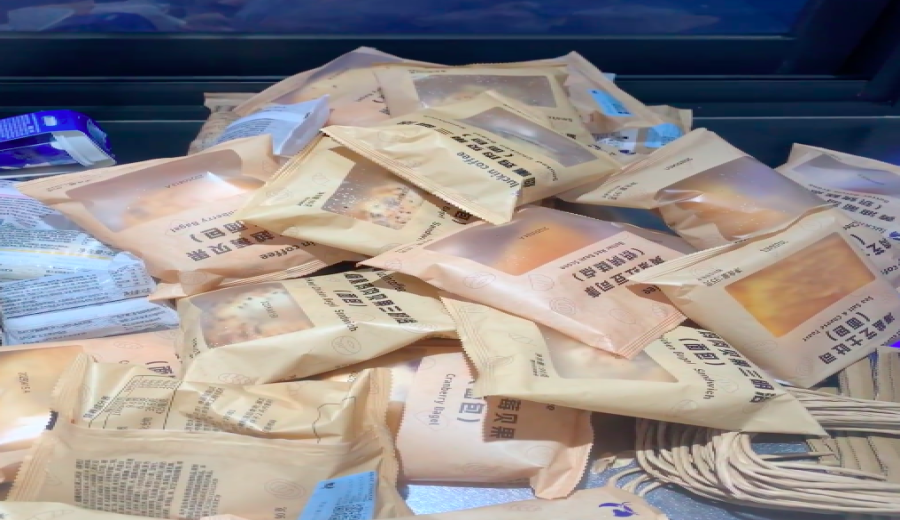
Introduction:Delivery platforms have rolled out hefty subsidies, making it easy for consumers to purchase coffee and baked snacks. But behind this commercial battle, frontline staff at Luckin stores are under immense pressure. The volume of thawed baked goods has surged several times over, turning what used to be a simple process into a time-consuming and cumbersome one. Additionally, the cancellation of performance bonuses and mandatory overtime have sparked widespread dissatisfaction. This article delves into store operational procedures, the real struggles faced by employees, and industry hidden rules—shedding light on the other side of the takeaway subsidy war.
Recently, delivery platforms have been competing to offer promotional subsidies, attracting hordes of consumers to snap up coffee and snack products. On the surface, customers are enjoying a variety of meals at low prices, but this promotional war has stirred up turbulence within Luckin stores. Especially with baked snack items, as the public stocks up during the promotions, the number of baked goods that need to be thawed daily in stores has skyrocketed. What used to take just over ten minutes to handle now often drags on for more than half an hour.
Employees revealed that with the launch of ultra-value deals such as “1 Yuan Bagel” by Luckin, the number of snacks that need to be thawed each night has ballooned from around a dozen to dozens or even hundreds of items, instantly doubling the workload. Not only that, the company has canceled performance bonuses for baked snack sales, and now requires staff to follow strict procedures to complete the thawing tasks after closing, forcing many to work unpaid overtime and leaving them deeply frustrated.
The thawing process may not seem complicated: after a receipt printer generates expiry labels, staff must go to the warehouse to locate the corresponding baked goods, inspect the packaging integrity and food appearance one by one. Once confirmed to be correct, they then affix the labels, take photos for record-keeping, and finally place the products in the refrigerated fridge. However, all these steps must be carried out after the store closes, and according to internal regulations, once baked goods leave the frozen area, they cannot be out for more than 15 minutes—meaning staff have to complete the entire procedure within an extremely tight timeframe.
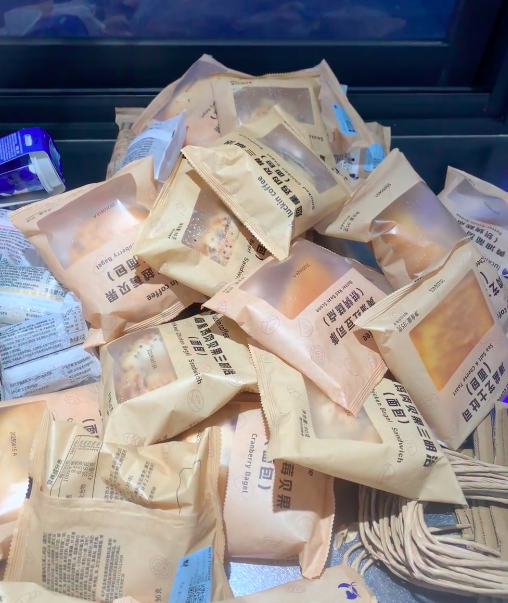
Some employees pointed out that in the past, the daily thawing load was limited and manageable. But as the takeaway platform subsidy battle intensified, especially when consumers started buying baked snacks like bagels, bread, and daifuku in bulk, the workload suddenly exploded. What used to be a routine task taking just over ten minutes now often takes over half an hour, or even longer, severely affecting off-duty times.
What angers employees even more is that previously, if a store met its baked snack sales targets, staff could earn corresponding performance commissions. But now, despite the significant increase in sales volume, the official policy has canceled this reward system. With no overtime pay and no performance bonuses, late-shift employees are growing increasingly resistant to the post-closing thawing tasks. “It wasn’t this bad before, but now it’s getting later and later,” “They mark us as working overtime but don’t count the hours,” “I really hate thawing baked snacks”—complaints like these are constantly circulating among the staff.
Many employees say that although thawing isn’t as technically demanding as making drinks, the overall process is tedious, time-consuming, and severely encroaches on personal time. Whenever the receipt printer spits out a long string of expiry labels, the stress level spikes. Some even bluntly say, “The real victims of the takeaway war are the Luckin workhorses.” They emphasize that this state of unpaid overtime not only affects morale in the long run, but also takes a toll on their quality of life.
Experts point out that while delivery platform subsidy battles may stimulate consumption in the short term, they can also have negative impacts on brand store operations and employee welfare. Especially in terms of baked snack supply chain management and staffing, if strategies aren’t adjusted promptly, it could further burden frontline employees, thereby affecting service quality and staff stability.
The above content is compiled by CoffeeHunters, a coffee news website.


