








Introduction:A chain coffee shop in Shanghai introduced a pour over Geisha coffee priced at 1,800 RMB, sparking heated discussion in the market. What makes this beverage, made from top-tier auction-grade beans from Panama, so special? This article delves into the bean variety’s origin, flavor profile, reservation model, and explores the pricing logic and consumption trends in the premium coffee market.
A pour over coffee priced as high as 1,800 RMB is not an internet rumor but a real menu item from a chain coffee brand in Shanghai. This ultimate coffee offering uses washed Geisha beans from Sophia Estate in Panama, which won the runner-up prize in the Washed Geisha category of the 2024 Best of Panama (BOP). Its flavor profile has been described by professional cuppers as bright jasmine floral notes, fresh bergamot aroma, paired with the sweet fruitiness of lychee and a smooth honey finish.
It’s worth noting that such ultra-high-priced coffee options are not a recent phenomenon. According to historical menu images circulating online, as early as last year, the same coffee shop offered a 1,800 RMB cup of sun-dried Geisha from Guava Fruit Estate, which won the championship in the BOP Natural category in 2022. Its flavor characteristics were based on a citrus tone, accompanied by the sweet aroma of apricots, caramel-like brown sugar layers, and a lively berry finish. Despite the astonishing price, according to staff, such beverages made from top-tier coffee beans have almost no actual sales record—even staff members who have worked there for over a year have never personally seen or tasted them.
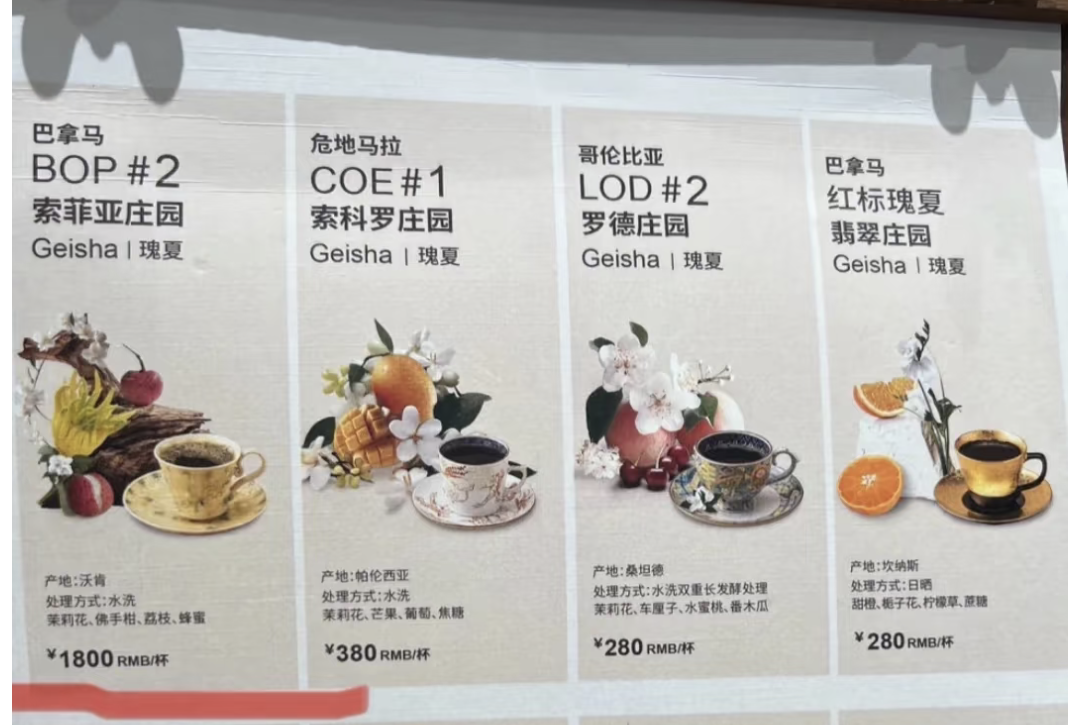
This expensive coffee product is listed at the top of the store’s “Rare Coffee Beans” exclusive menu, followed by other high-quality options such as Panama Emerald Red Label Geisha, Deborah Geisha, Indonesian Kopi Luwak (commonly known as cat poop coffee), and Ethiopia’s COE Auction #7. The prices of these products are relatively more affordable, ranging from 158 RMB to 280 RMB. Additionally, the brand has specifically launched a “Competition Micro-Lot” series for auction-grade Best of Panama beans, with prices controlled between 128 RMB and 228 RMB per cup, catering to consumers who seek high quality but have budget constraints.
In reality, the 1,800 RMB price tag is not a sudden idea but has long been in place. According to past experiences shared by netizens, the top items on this menu have existed for some time, though they didn’t attract widespread attention. The current wave of discussion not only makes the public re-examine the limits of coffee pricing but also highlights how “scarcity” and “quality certification” directly impact prices in the premium market.
Regarding the actual availability of this ultra-expensive coffee, reporters contacted the brand’s store. Staff confirmed that this coffee does exist but must be reserved in advance and is not available for on-the-spot ordering or ad hoc preparation. The store does not prepare or brew it individually—all reservations are handled through unified coordination by the headquarters. In addition, another product made from Guava Fruit Estate Geisha beans, although slightly cheaper (780 RMB per bag), is currently sold out. Interestingly, to avoid public controversy, the menu item that originally clearly stated “1,800 RMB per cup” has now been changed to the more subtle phrase “available by reservation.”
When further asked about the actual serving status of this top-tier Geisha coffee, the staff admitted: “Since I’ve been working here for over a year, I’ve never seen this coffee ordered, nor have I ever witnessed it being made. Almost no customers have inquired about it or placed an order.” This reflects that even in the premium consumption market, products with extreme pricing still face challenges of insufficient actual demand.
The brand’s person in charge explained in an interview that the 1,800 RMB coffee uses Geisha beans from Sophia Estate and is indeed the most expensive item on the menu. She emphasized that such products are mainly targeted at the needs of “regular customers” and must be booked in advance. The store only places orders with overseas coffee farms after receiving consumer orders, so delivery times are not fixed and cannot be predetermined. However, when asked for more specific information, including details on the origin of the beans, actual sales figures, the coffee-to-water ratio and brewing parameters for a single cup, and the profile of the main consumer group, the person in charge chose not to respond further, citing that she is “not responsible for specific operations.”
Nevertheless, the brand emphasizes that its regularly sold espresso and pour over coffee products generally range in price from 50 RMB to 200 RMB, aligning with the mainstream pricing strategy in the Shanghai market and staying within a reasonable range. This “high-low mix” product strategy not only meets the daily needs of general consumers but also provides top-tier quality options for specific groups, forming a complete product matrix.
The above content is compiled by CoffeeHunters, a coffee news website.


