







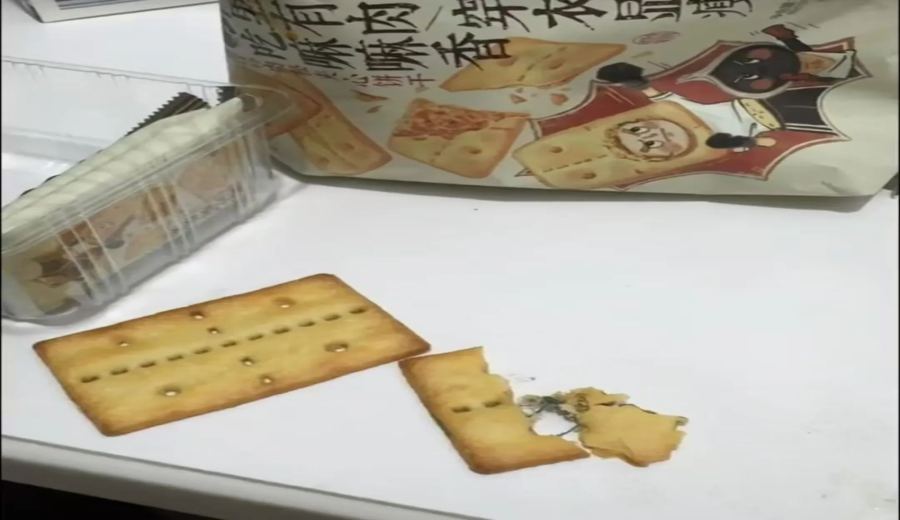
Introduction:Recently, a consumer discovered black woolen thread mixed inside a Black Garlic Meat Floss Sandwich Cookie purchased from Cha Yan Yue Se, sparking heated discussion on social media platforms. The brand demanded the return of the problematic product before offering compensation, raising questions among consumers about evidence preservation and after-sales procedures. This article outlines the incident, analyzes common approaches to food safety disputes, and provides practical advice for consumer rights protection and evidence retention.
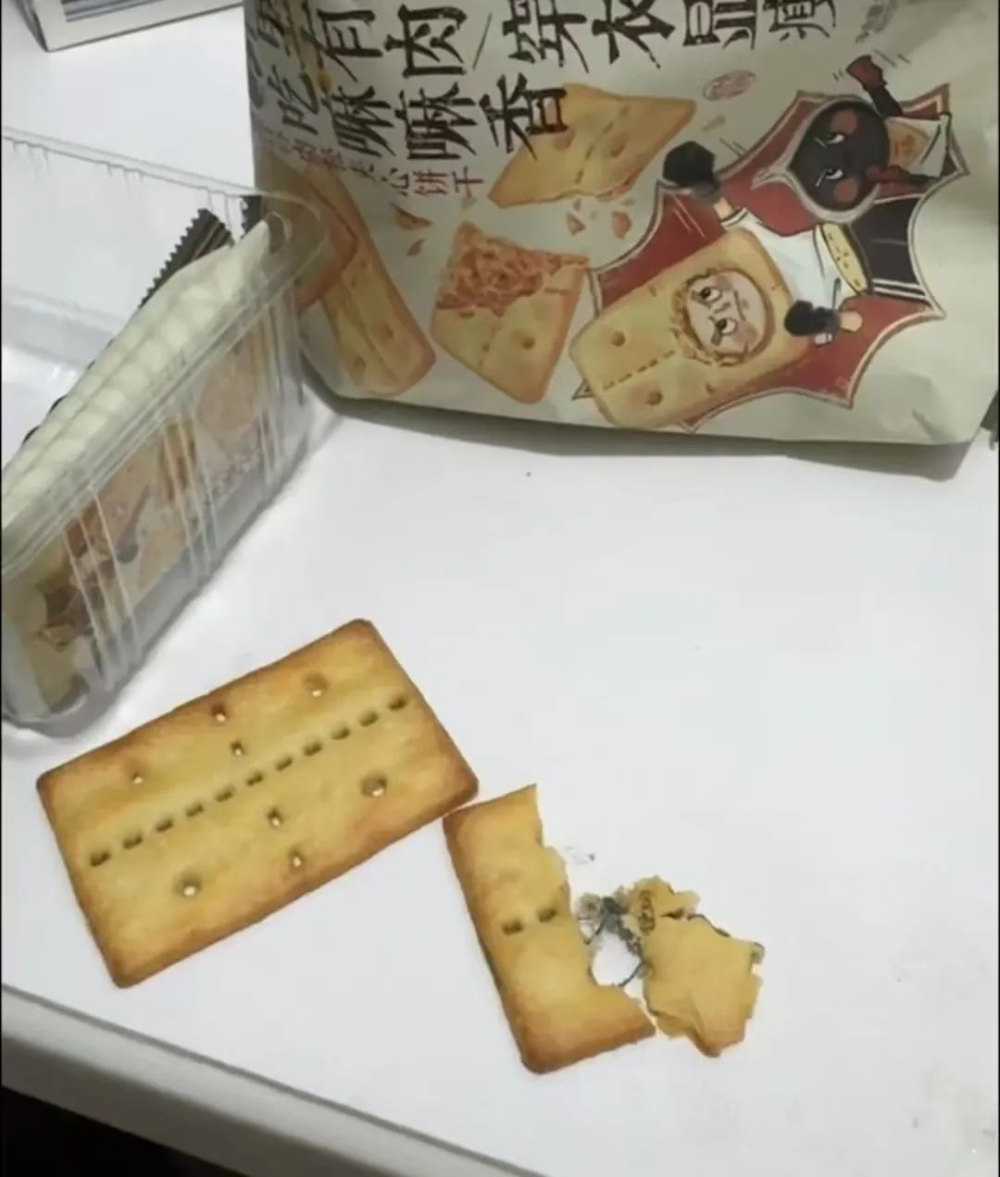
Recently, a consumer shared a video on social media revealing a black, thread-like foreign object—suspected to be sewing thread—inside a Black Garlic Meat Floss Sandwich Cookie bought from a Cha Yan Yue Se outlet. The thread appeared to connect broken pieces of the cookie, creating a shocking sight akin to stitching. The incident quickly spread online, triggering widespread discussion about quality control in snack manufacturing and after-sales mechanisms.
According to the poster, she purchased several snack packs, including this Black Garlic Meat Floss Sandwich Cookie, from a Cha Yan Yue Se outlet in Chongqing. Days later, while eating it, she bit into the foreign object. Upon inspection, she found black threads that seemed to glue fragments of the cookie together, as if sewn. She immediately took photos and videos and contacted the brand’s customer service but did not consume the remaining cookies.
After the video went viral, many netizens who had purchased the same product expressed concern. Comments included: “I still have a pack at home but dare not eat it,” “It looks like artificial turf,” and “Are the cookies sewn together with thread?” The incident clearly struck a nerve regarding food safety among many consumers. As the video gained traction, Cha Yan Yue Se proactively contacted the poster but proposed returning the problematic cookie before further handling compensation, drawing skepticism from many netizens.
Industry insiders speculated that since most of Cha Yan Yue Se’s snack products are OEM-manufactured, the brand’s request to return the problematic item might be to further identify the source of the foreign object, determine whether it was due to a production error, and then coordinate with the contract manufacturer. However, many netizens opposed this approach, arguing that returning the evidence could cause consumers to lose key proof for their claims.
Netizens generally advised against rashly returning problematic products. Instead, they should prioritize formal channels for rights protection and consider sending the foreign object to a third-party testing agency for analysis.More importantly, they should properly take photos and videos as evidence and retain the original packaging and purchase records to facilitate subsequent complaint processes.
Notably, this is not the first such incident involving Cha Yan Yue Se. In the past, consumers have reported finding hair, insects, and even screws in products like the brand’s bread crumbs and corn cakes. However, the brand often required consumers to return the products before offering compensation in the form of gift packs or coupons, rarely providing cash refunds under consumer protection laws.
As a result, many consumers with similar experiences expressed disappointment with this handling method, fearing that returning the evidence would prevent them from effectively asserting their rights. One netizen bluntly stated: “Absolutely do not send it back—the evidence will be gone.” They urged others to stay vigilant and avoid losing their right to redress due to improper procedures.
Some netizens argued that the brand’s request to return the product to clarify responsibility was a reasonable business process and emphasized viewing the matter rationally. However, most public opinion still leans toward the idea that consumers facing food safety issues should first ensure the integrity of their evidence before seeking fair compensation through proper channels.
This incident once again highlights the challenges consumers face in asserting their rights when encountering foreign objects in food, and serves as a reminder to inspect packaging integrity and storage conditions when purchasing food. If a foreign object is found, consumption should be stopped immediately, and evidence should be documented with photos.Consumers are advised to keep receipts and original packaging, contact the merchant as soon as possible, and report the issue to consumer protection agencies or relevant authorities to safeguard their rights.
The above content is compiled by CoffeeHunters, a coffee news website.


