







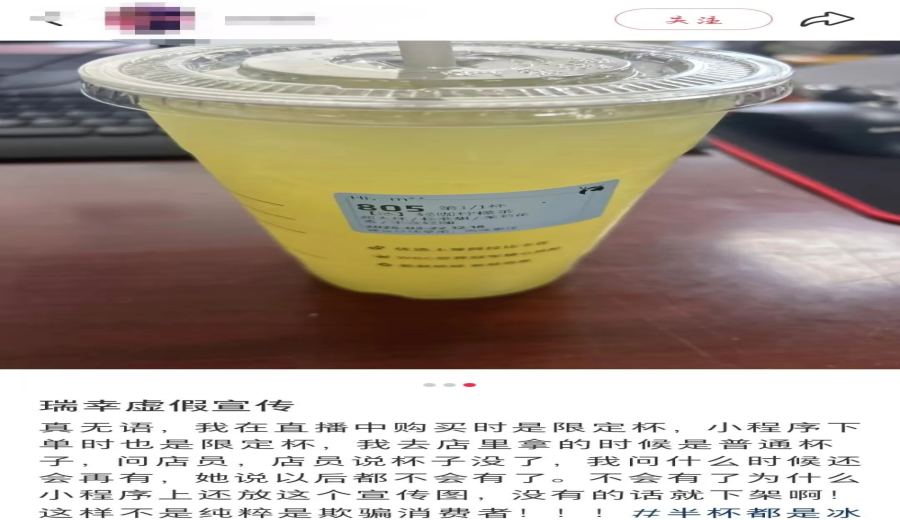
Introduction:Recently, the limited-edition takeout cups launched by Luckin Coffee through a collaborative campaign sparked considerable discussion on social media platforms. Many consumers reported that although they purchased the cups after seeing promotions during live streams, they only received regular cold drink cups when picking up their orders in-store. Some were even unable to get the limited cups due to plastic restriction policies. This article delves into the promotional gaps, regional limitations, and store execution issues behind this incident, aiming to help readers understand how to avoid similar situations and adopt more informed purchasing strategies.
Luckin Coffee’s recently launched limited-edition takeout cups, in collaboration with a certain IP, created a buzz on social platforms. Many consumers, drawn by the exquisite design of the co-branded cups after watching the brand’s livestream, decided to place orders. However, upon picking up their orders at the store, they only received regular cold drink cups, leaving those who were looking forward to collecting limited-edition merchandise deeply disappointed.
One consumer revealed that she saw the new products and the matching limited-edition co-branded cups promoted during a Luckin livestream, so she immediately placed an order. But when she went to the store to collect her order, the staff gave her a regular cold drink cup instead of the advertised limited cup. Upon inquiry, she was told that the limited cups had already sold out and would not be restocked, which left her quite disappointed. She questioned, “If the cups are already out of stock, why is the promotional image of the limited cup still displayed on the mini-program?”
In response to this situation, some netizens believe that it might be because the specific store where the consumer shopped had run out of all the limited cups, hence they temporarily switched to regular cups—an occurrence that’s common during promotional events. However, more consumers pointed out that even if there is a material shortage at the store level, the brand's promotional practices still contain elements that can easily mislead customers.
Especially in regions such as Hainan and Jilin, where plastic restriction policies are in place—due to local regulations limiting the use of certain plastic products—Luckin’s limited injection-molded cups simply cannot be offered in these areas. Yet the promotional images on official sales channels still display these limited cups, causing many customers to make special trips only to be disappointed. Some consumers suggest that in regions where limited packaging cannot be used, the brand should provide clear disclaimers and replace promotional materials that could cause misunderstandings.
Additionally, many netizens also criticized Luckin for not including phrases such as “limited quantity, first come first served” or similar disclaimers on the promotional images or webpages for the co-branded cups, leading consumers to assume they could reliably obtain the limited items. Moreover, when store materials ran out, the official team did not promptly update or remove the relevant promotional images. Instead, they continued promoting the items on platforms such as livestreams, resulting in fans seeking merchandise ultimately having to settle for standard packaging.
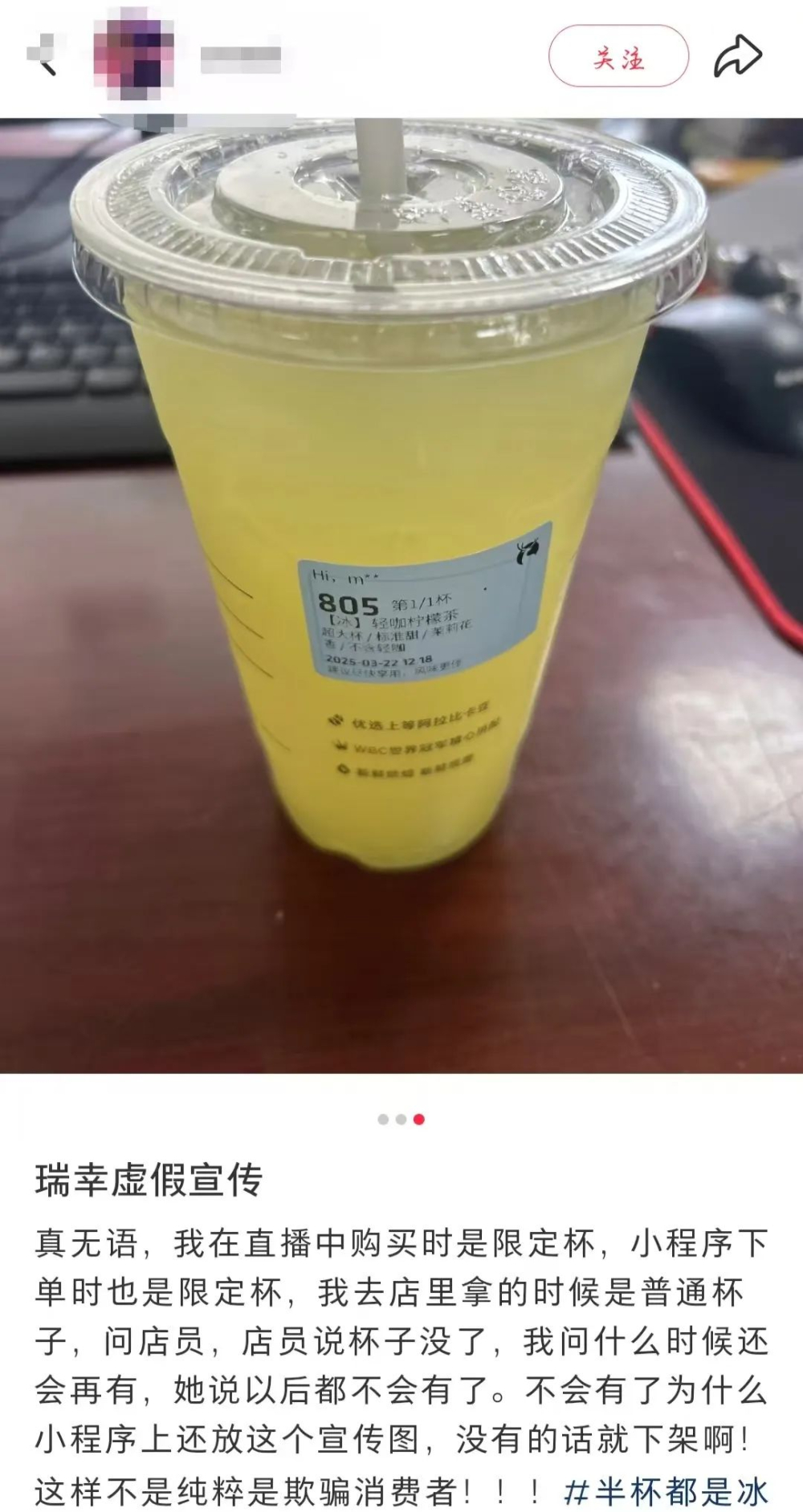
Notably, Luckin’s frontline employees have also expressed dissatisfaction with the company’s approach to promoting its merchandise. They pointed out that many customers purchase drinks specifically to get the limited cups, but when the inventory runs out, the promotional images are not updated in time. This leads to customers expressing frustration to the staff for not receiving the desired item, leaving negative reviews or even filing complaints.
To reduce such issues, some employees suggest that Luckin could adopt practices used by other brands: when limited materials are exhausted, allow store staff to pin notifications on various purchasing platforms—such as “the event merchandise has been distributed”—so that consumers are informed in advance. This could help lower the disappointment gap and also relieve the pressure on staff to repeatedly explain the situation.
In addition, both consumers and staff have reported that Luckin frequently promotes new products through livestreams, but the content of some streams does not align with the actual products, which can easily lead to misplaced expectations and unnecessary misunderstandings. They urge the brand to strengthen the review and management of livestream content to ensure that promotional information matches actual supply, thereby avoiding disputes between consumers and staff.
In summary, the incident where Luckin’s promotional campaign for limited-edition co-branded cups did not match the actual supply not only highlights the brand’s shortcomings in managing merchandise and regulating promotional practices, but also serves as a reminder to consumers to stay rational when participating in limited-time campaigns. It is advisable to confirm local policies and stock status in advance to avoid leaving empty-handed.
The above content is compiled by CoffeeHunters, a coffee news website.


