







Introduction:A former employee of a Heytea franchise revealed their long-term experience of unpaid overtime and promised salaries not matching reality, sparking public concern over labor management practices in tea beverage brands. This article details the incident, analyzes differences in salary structures and overtime compensation policies between company-owned and franchised stores, and provides practical advice on safeguarding labor rights to help industry professionals avoid potential risks.
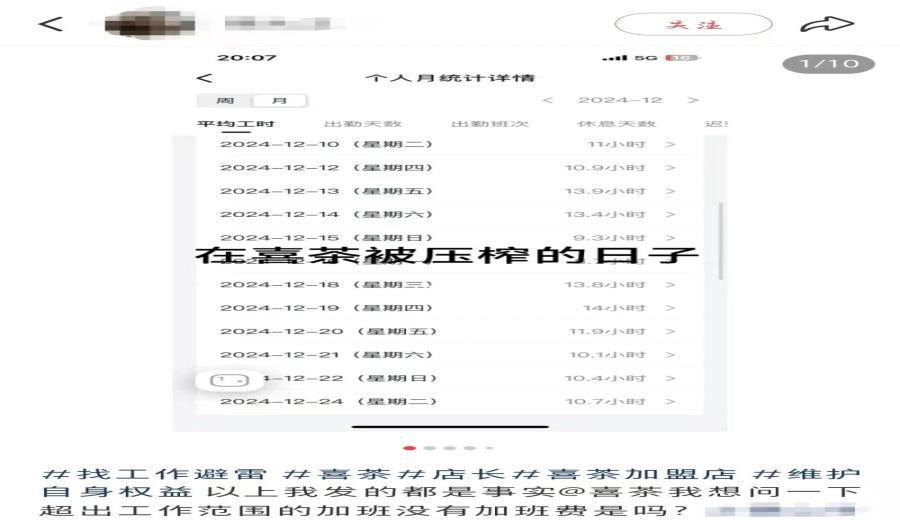
Recently, a former employee who worked at a Heytea franchise shared their experience on social media, exposing long hours of overtime without compensation and even deductions for being late. The post quickly became a hot topic among netizens. The employee’s clock-in records showed that over the past month, they frequently worked more than ten hours a day, with overtime becoming the norm. However, their paycheck included no overtime pay, and they were even deducted as much as 700 yuan for being late.
Beyond the dispute over overtime pay, the employee also disclosed that the store manager initially promised a base salary of 7,000 yuan, but when asked, the figure was revised to 4,000 yuan. Both being late and leaving early resulted in deductions, yet overtime work was not compensated at all. This disparity in treatment left her extremely dissatisfied, prompting her to ask, “So there’s no overtime pay for working beyond the assigned duties?”
It is understood that the store where the employee worked is a franchise, and she has been employed there since its opening. She stated that the store manager often monitored employees’ actions via surveillance cameras, issuing fines for even minor mistakes, creating a high-pressure work environment. Many colleagues eventually quit due to the unbearable stress. Even after nearly a year of work, she had not received the compensation she deserved, leading her to ultimately resign.
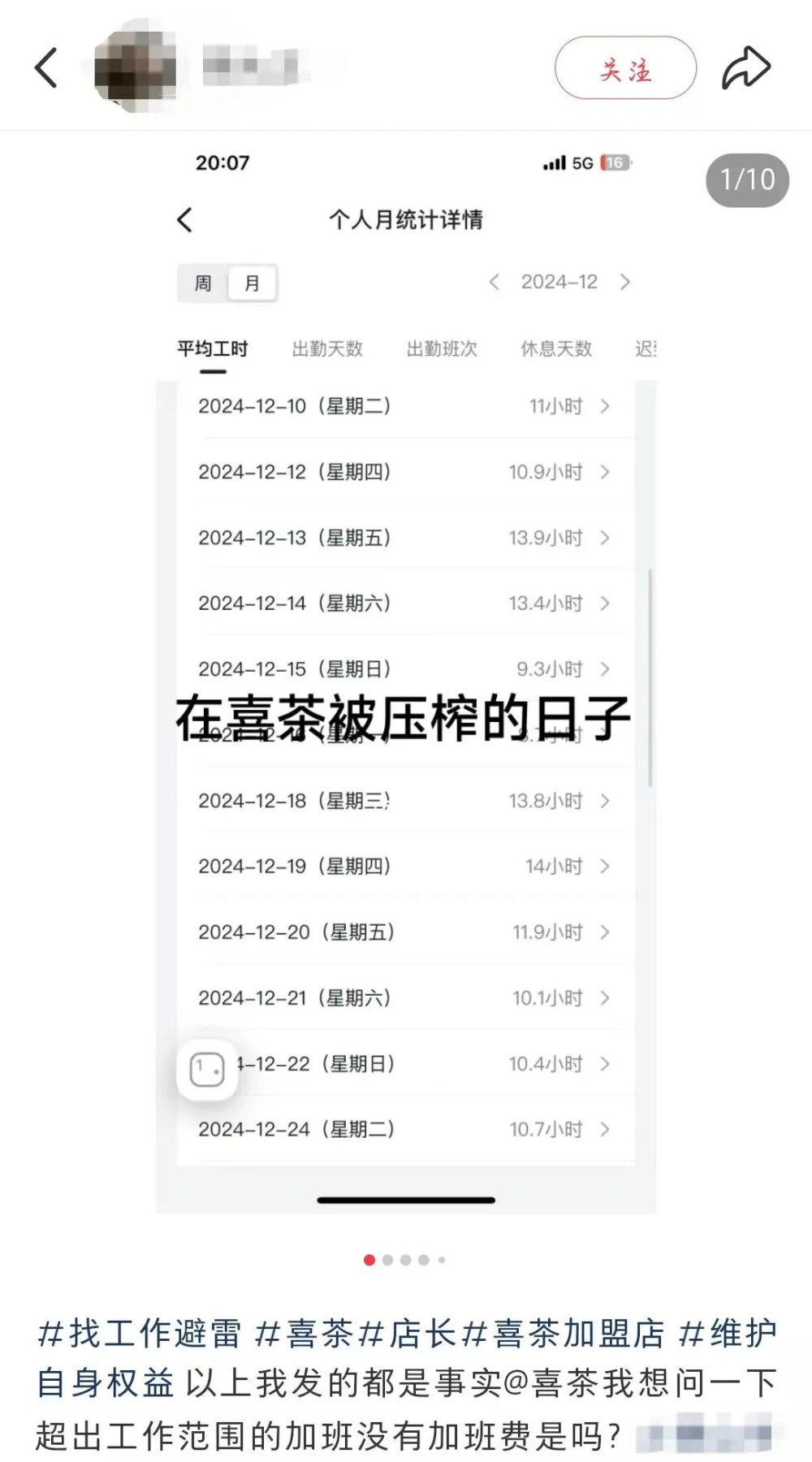
After the incident came to light, many netizens expressed sympathy for the employee, arguing that the clock-in records seemed meaningless, and expressed shock at the daily working hours exceeding ten. Numerous netizens advised her to seek justice through official channels or labor arbitration to claim the overtime pay she was owed.
A Heytea company-owned store employee revealed that the official standard working hours are eight hours, with overtime pay provided for extra hours worked. As for lateness fines, although they may vary by region, it is rare to see deductions as high as 700 yuan in a single month. The monthly salaries of store managers or duty managers at company-owned stores are typically above 9,000 yuan, whereas the franchise employee, despite holding a managerial position, was paid significantly less.
Notably, Heytea’s management approach differs between company-owned and franchised stores. Employees at company-owned stores generally have more secure salaries and benefits, while those at franchises have their pay determined by the franchisee, with limited intervention from the corporate office. As a result, if the franchisee values employee rights, the treatment may be similar to that at company-owned stores. However, if the manager prioritizes high performance, employees may face unfair situations such as unpaid overtime—for example, one employee reported working 17 hours despite an 8-hour schedule, leading to physical exhaustion.
This case serves as a reminder to job seekers to pay attention to the actual management practices of franchised stores and understand their own rights. If faced with unreasonable treatment, one can file a complaint with the labor bureau or relevant authorities to ensure their interests are protected.
The above content is compiled by CoffeeHunters, a coffee news website.


