







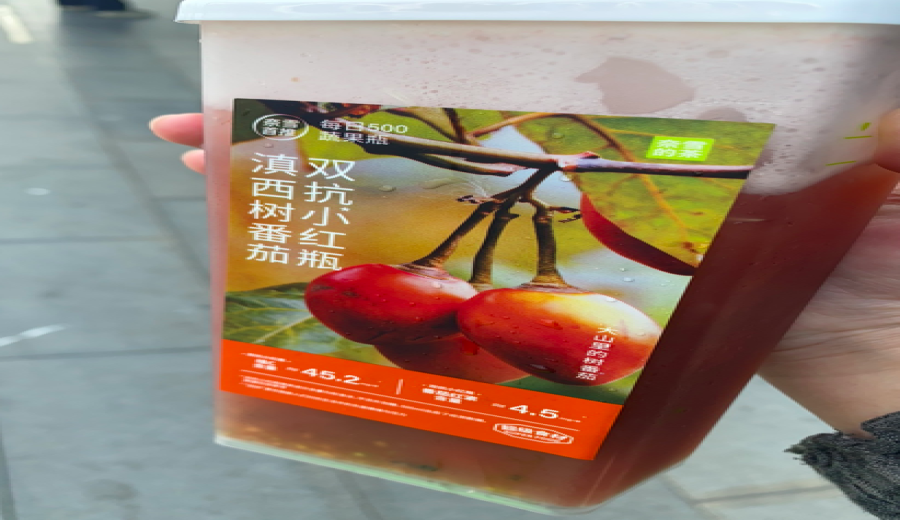
Introduction:The "Dual-Antioxidant Red Bottle" launched by Nayuki, made with Yunnan tree tomatoes and a variety of freshly squeezed fruits, is marketed for its high vitamin C and lycopene content. However, shortly after its release, it sparked heated discussions due to the large amount of fruit residue at the bottom of the cup. This article delves into the production process of this new product, the polarized consumer feedback, and explores the trade-off between "real ingredients" and drinking experience in freshly squeezed beverages, offering practical advice for selection and enjoyment.
Nayuki Tea recently introduced a new product called the "Dual-Antioxidant Red Bottle," which uses Yunnan’s unique wild fruit—the tree tomato—as its main base, blended with freshly squeezed blueberries, cherry tomatoes, and lemons. The brand claims that the drink has a sweet and tangy taste, rich in vitamin C and lycopene, precisely targeting modern consumers’ demand for both health and flavor.
However, not long after its launch, the product drew many complaints from consumers. Many reported that after their first sip, they found a significant amount of fruit peels and seeds settled at the bottom of the cup. When sipping, they often drew in pulp or even nearly choked on lemon seeds. Photos shared online clearly show transparent cup bottoms piled with tomato skins, blueberry peels, and lemon seeds. Stirring the straw brought these residues into the mouth along with the juice, causing quite a bit of discomfort.
Early tasters’ feedback was generally less than ideal. Some commented: “It tasted like drinking peels and seeds—the 500ml drink was half pulp.” “Every sip required spitting out seeds; the experience was terrible.” “Halfway through, I even sucked in a huge lemon seed and almost choked.” These complaints show that while the product promotes being all-natural and freshly squeezed, the actual drinking experience in terms of texture and convenience was greatly compromised.
In response to consumer concerns, Nayuki staff explained that the production process does not require filtering the fruit puree. It is understood that staff are instructed to wash the tree tomatoes, mash them into a pulp, then mix them with fresh blueberries, cherry tomatoes, and other fruits. Next, they manually pound the mixture to extract the juice, and finally stir in the tea base to complete the drink. Throughout this process, the brand does not mandate that the fruit puree be filtered, resulting in noticeable variations in clarity and taste across different outlets.
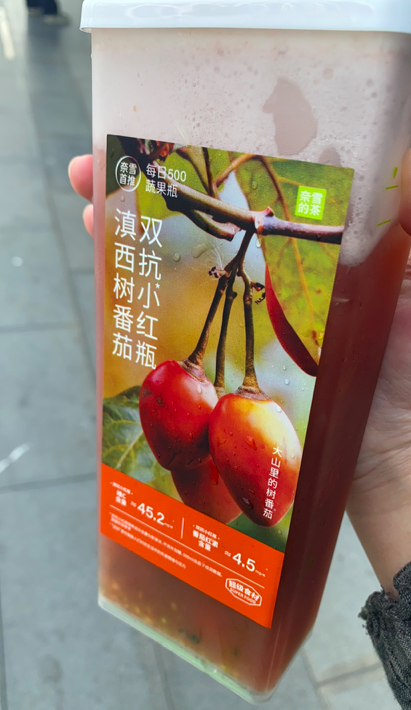
In reality, some stores produce Red Bottles that are clear and almost free of impurities, with a pleasant sweet and tangy taste. However, many others, as complained about by users, have noticeable sediment at the bottom, with fruit peels and seeds visible to the naked eye, severely affecting the drinking experience. Due to differences in pounding strength and handling methods among staff, the final product quality varies, further intensifying the polarized reviews from customers.
Public reaction to this issue is clearly divided. Some consumers believe that too much fruit residue not only affects the taste but may also pose a choking hazard when sipping, suggesting that the brand should add a filtration step in the production process to improve overall quality and safety. However, many supporters argue that these residues are proof of “freshly squeezed fruit,” showing that the brand hasn’t over-processed or filtered out nutrients, making drinkers feel more reassured and willing to accept some sediment at the bottom.
This controversy over fruit residue actually reflects a common challenge in the current market for fruit and vegetable teas: how to preserve the natural flavor and nutrition of ingredients while also ensuring a smooth and comfortable drinking experience. For consumers, when selecting freshly squeezed drinks, it’s advisable to first observe whether there is obvious sediment at the bottom of the cup, or directly ask the staff about the preparation method, to anticipate potential differences in taste.
In summary, the fruit residue controversy surrounding Nayuki’s "Dual-Antioxidant Red Bottle" is not just a snapshot of product feedback, but also a reminder to the industry that while promoting "real ingredients," the actual drinking experience of consumers must also be considered. For those who prefer a cleaner taste, choosing fruit and vegetable drinks with filtration steps might be more suitable. Meanwhile, consumers who appreciate natural flavors and don’t mind slight sediment can continue to support these “authentic” and innovative products.
The above content is compiled by CoffeeHunters, a coffee news website.


