







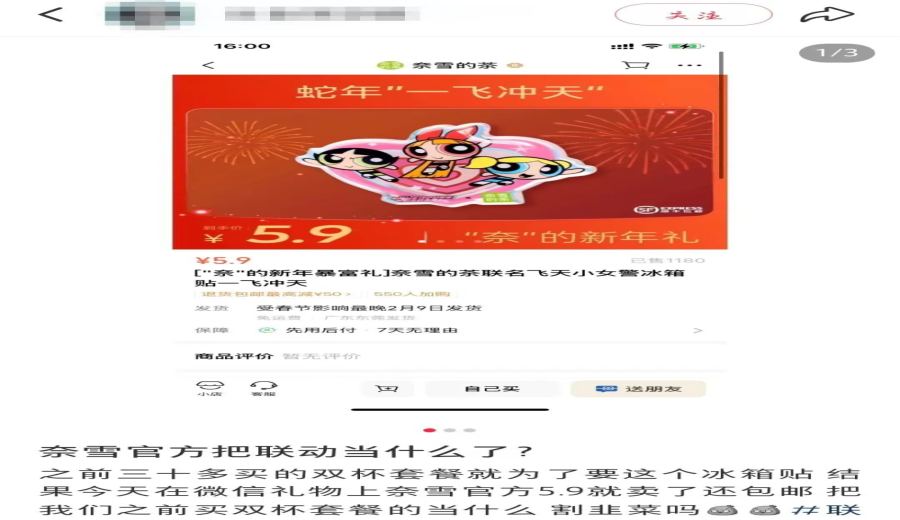
Introduction:When brand collaboration merchandise goes on sale at surprisingly low prices, consumers who previously paid premium prices for limited-edition items often feel shortchanged. Recently, Nayuki offered last year’s Powerpuff Girls collaboration fridge magnets and other peripherals for just 5.9 RMB with free shipping, sparking strong dissatisfaction among fans who had purchased specific combo sets. This article analyzes how limited-time collaboration events handle inventory, explores the balance of rights between brands and consumers, and offers practical advice to help readers avoid falling into similar “buying the box and returning the pearl” collaboration traps.
Nayuki recently launched an ultra-low-price clearance sale in its official store, selling multiple limited-edition collaborations with well-known IPs from last year at just 5.9 RMB each with free shipping—including the once-popular Powerpuff Girls collaboration fridge magnet. This move quickly caused an uproar among fans, especially those who had bought specific double-drink combo sets just to get these peripherals, who pointed out that the brand’s approach was unfair.
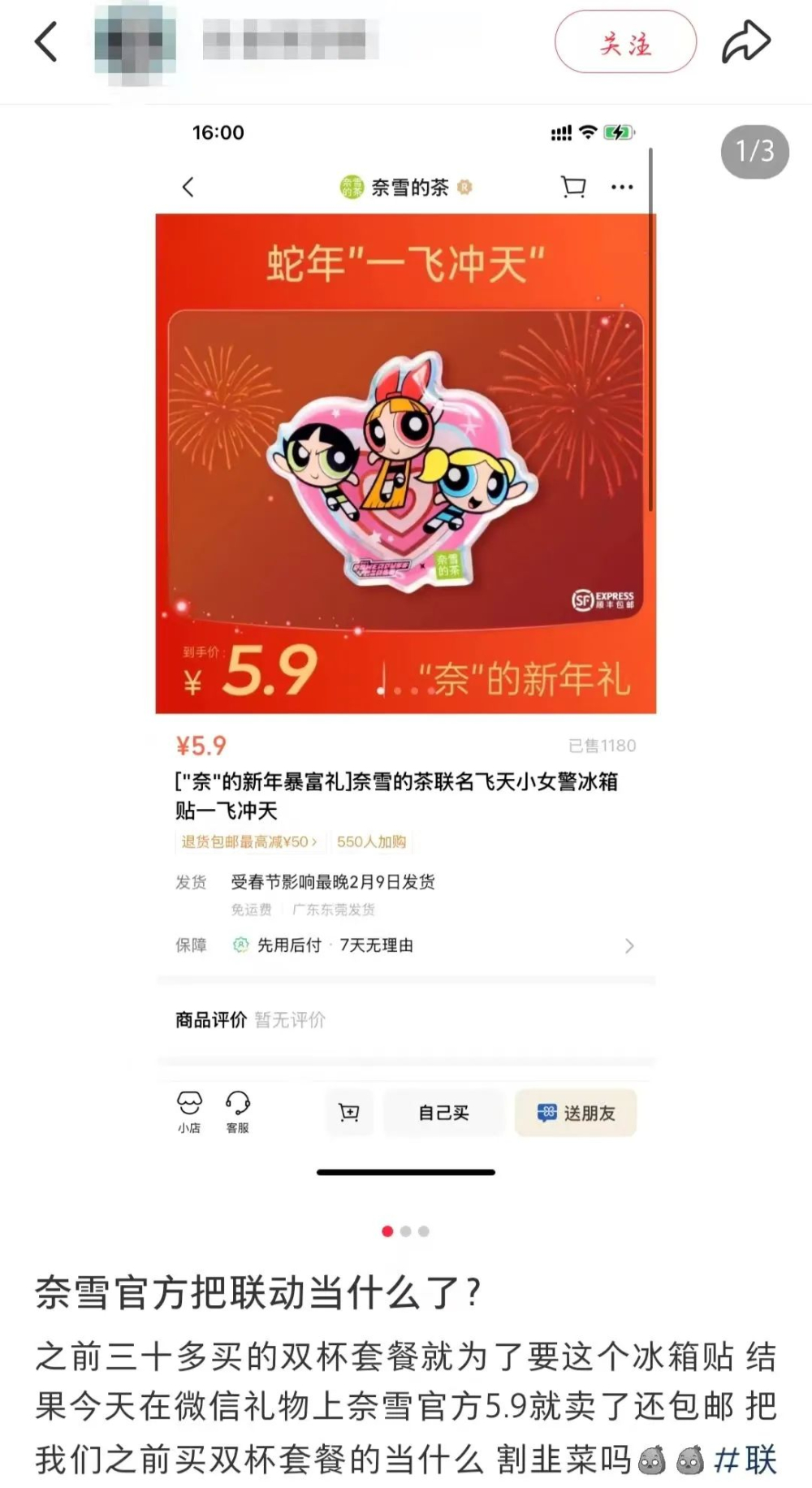
One user who shared their experience on social media said they had originally bought an expensive combo set just to get the desired fridge magnet, but now seeing the brand sell it at near cost price with free shipping, they couldn’t hide their disappointment and questioned: “Nayuki is selling it officially for 5.9 with free shipping—what do they take us, who bought the double-drink combo, for?” This comment resonated with many customers who had “bought the box and returned the pearl.”
Many consumers recalled that at the time, in order to collect the full set of limited-edition peripherals, they not only spent extra money on specified drinks but also wasted additional time waiting in line. One person bluntly said: “I drank two bowls of hotpot water just for this fridge magnet,” while another complained: “So what was I paying over 100 RMB for if not for the whole set except the thermos?” Clearly, these fans felt their efforts were not given the respect they deserved.
Even more surprising, some informed customers revealed that certain expired peripherals could be obtained for free without any purchase—just by visiting the store, checking in simply, and leaving a positive review, and that “just check in and get it—can even choose freely.” This nearly zero-barrier access method further fueled the dissatisfaction of customers who had bought the combo sets.
According to an explanation from an internal Nayuki employee, some collaboration events did not perform as expected in certain regions, leading to a large backlog of undistributed peripheral materials after the events ended. Unlike the usual practice of directly destroying them, these off-season peripherals were typically used as reward gifts for customers who checked in and left positive reviews or given away as promotional items during in-store sales events.
However, this inventory handling method has sparked polarized reactions among consumers. Supporters of the clearance argue that it’s better for the brand to sell unsold peripherals at low prices or give them away as rewards than to waste them outright—this reduces environmental burden and gives customers who didn’t participate in the collaboration a chance to get desired items. But many fans worry this approach will encourage “bargain hunters” to exploit loopholes, affecting the fairness of future collaboration events.
Industry analysis points out that the appeal of limited-edition peripherals lies in their timeliness and the scarce attribute of limited supply. Once these characteristics disappear, if the brand sells the remaining inventory at low prices or gives it away for free, it inevitably makes consumers who previously paid feel betrayed. One netizen bluntly said: “Now when they do a collaboration, my first reaction is not to buy—I’ll just wait until they give it away with orders,” reflecting a decline in consumer trust in the brand.
However, there are also rational viewpoints suggesting that brands have the right to dispose of leftover materials after an event ends—as long as they ensure transparency and fairness in future collaborations, moderate inventory-clearing measures are understandable. The key lies in balancing the interests of all parties and avoiding hurting the enthusiasm of core consumers.
Regarding the potential “bargain hunter” issue, some netizens suggest that brands should list remaining peripherals on e-commerce platforms in a unified manner, using open and transparent methods to clear inventory. This can effectively digest stock while reducing the risk of damage to the reputation of collaboration events due to free giveaways, maintaining market order.
This Nayuki limited-edition peripheral clearance controversy provides a thought-provoking case for collaboration marketing in the coffee and F&B industry. For consumers, participating in limited-time collaboration events requires rational assessment of their own needs to avoid blindly chasing scarcity effects; for brands, it’s necessary to find a better balance between inventory management and consumer rights.
The above content is compiled by CoffeeHunters, a coffee news website.


