







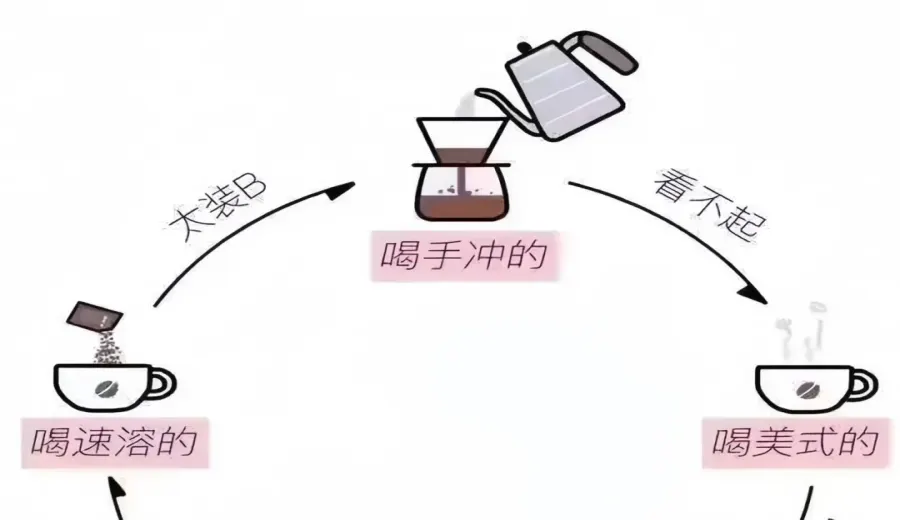
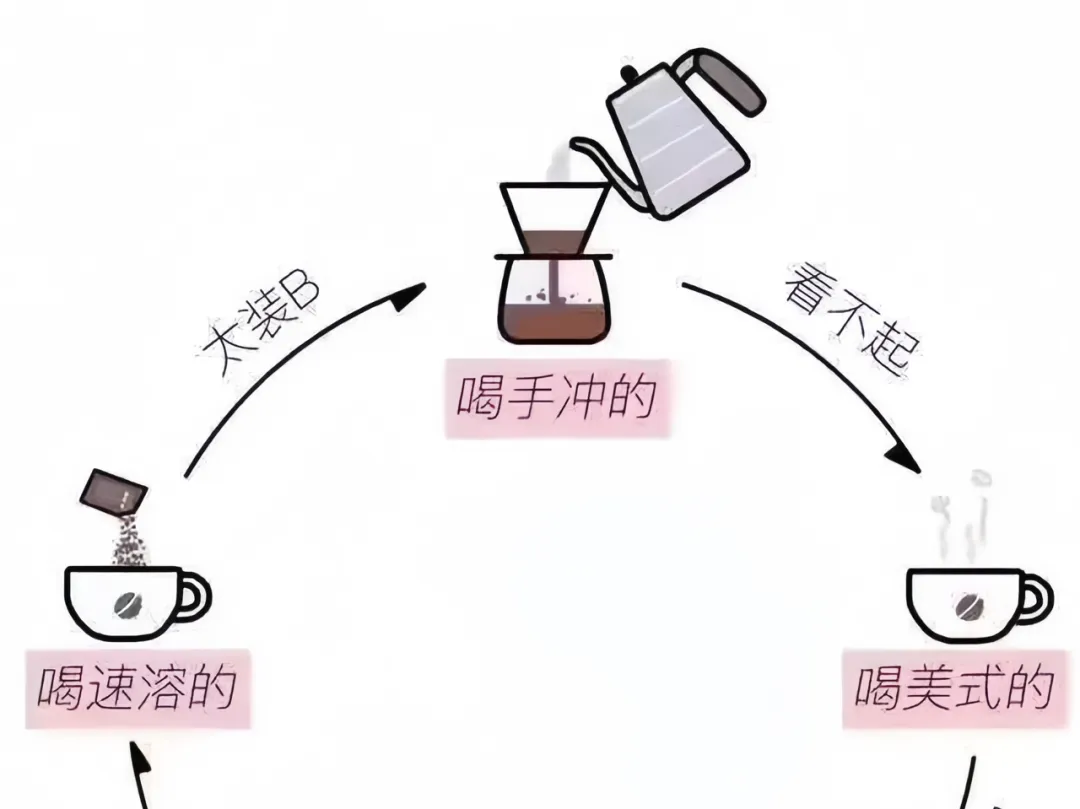
Introduction:Many coffee enthusiasts often compare Americano, pour over, and espresso—three types of black coffee—and develop various preferences and biases. This article delves into the principles behind these three brewing methods, their bean characteristics, value differences, and debunks common misconceptions such as “Americano is inferior to pour over” or “blends are always worse,” while also providing practical parameters and background knowledge to help you gain a more comprehensive understanding of these classic coffee beverages.
Among the many types of coffee, Americano and pour over are often categorized as representatives of black coffee. However, they actually stem from completely different brewing logics, which is why they are frequently compared in terms of superiority or inferiority. Many people even form the stereotype that “Americano is not as good as pour over” based on appearance, price, or preparation method. Yet, this comparison is akin to asking whether fried eggs or steamed eggs are better—it overlooks the inherent characteristics and purposes of the beverages.
This article will start from basic definitions and explain the differences between Americano, pour over, and espresso one by one. We’ll explore their production processes, bean strategies, cost structures, technical thresholds, and debunk some common misunderstandings and biases. Whether you’re a beginner just getting into coffee or an enthusiast seeking new inspiration, you’ll gain a clearer understanding from this guide.
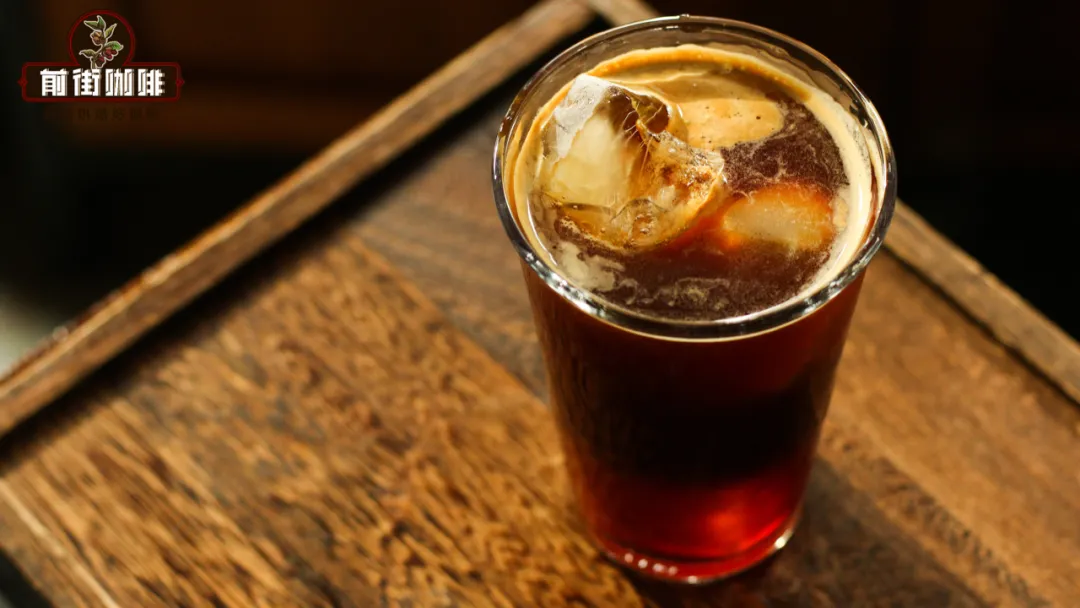
Americano is actually part of the espresso system. It is made by first using an espresso machine to extract concentrated coffee with a rich flavor under high pressure, and then adding hot water in a certain proportion to adjust the concentration. This practice originally originated during World War II, when American soldiers found it hard to accept purely strong espresso and asked the shop owners to dilute it with water. Over time, this became what we now know as “Americano.”
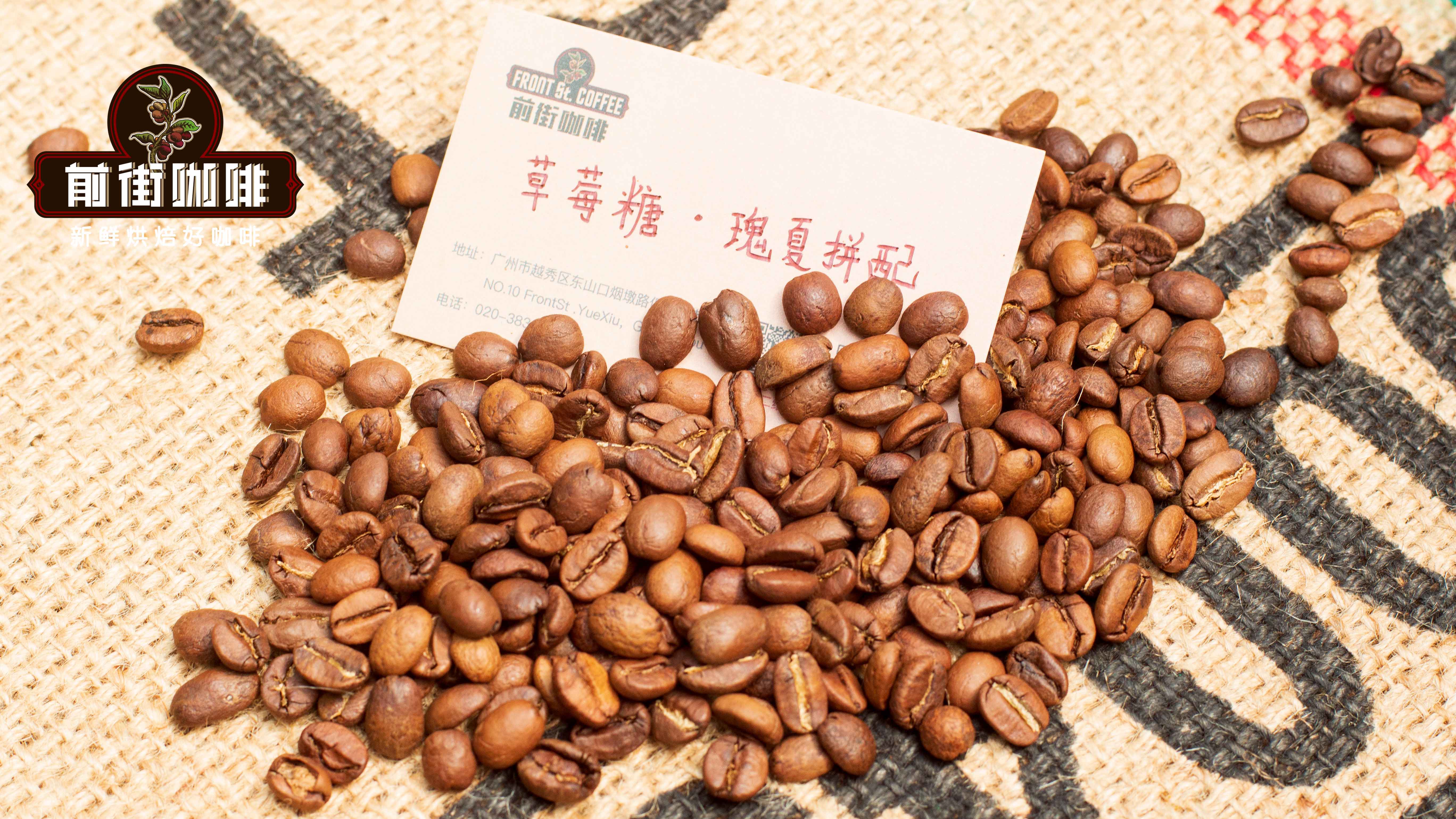
With its affordable price and consistent energizing effect, Americano has become one of the best-selling items in many coffee shops and is also very suitable for busy office workers as a daily pick-me-up. Common recipes use medium to dark roasted blends, such as classic blends rich in body and crema, or medium roasted blends leaning toward fruity and floral notes, like the Strawberry Sugar · Geisha Blend, which offer a balanced acidity, sweetness, and mouthfeel.
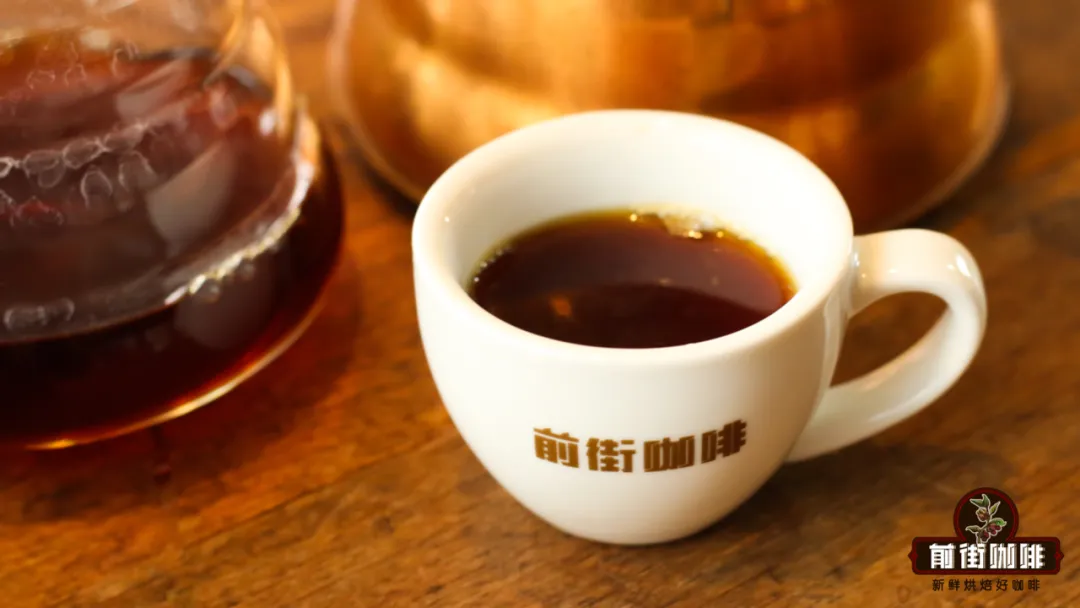
In contrast, pour over is a completely manual brewing method that mainly relies on controlling the pouring speed, water temperature, and grind size to allow hot water to slowly penetrate the coffee grounds and extract their flavor compounds. Since the entire process is controlled manually, there are many variable factors in pour over, including the choice of equipment, water temperature settings (usually recommended between 88°C and 94°C), pouring technique, and brew time—all of which significantly impact the final flavor.
It is precisely because pour over offers a high degree of playability and personalization, along with relatively affordable equipment costs, that many coffee enthusiasts are particularly fond of it. Common choices for pour over beans are mostly single-origin beans, such as Little Tomato with its berry notes, Guodingding exuding jasmine floral aromas, Golden Mandheling showcasing herbal and woody flavors, or Red Label Geisha with its orange blossom and honey sweetness—these beans can more directly express the unique terroir of their origins.
By now, readers may also realize that Americano and pour over are actually two fundamentally different brewing logics. Forcing a comparison between them is like comparing which is tastier—steamed rice or baked bread—there’s no absolute answer. But why do many people still believe Americano is inferior to pour over? This mainly stems from the following three common conceptual differences.
The first is the choice of beans. Pour over mostly uses single-origin beans, which come from a single growing region and have distinct flavors, whereas Americano generally uses blends—coffee beans blended in certain proportions from two or more sources. Due to the long-standing market perception that “single-origin beans are more premium than commercial blends,” some consumers assume that pour over is naturally superior to Americano.
The second is the price factor. Taking common market prices as an example, a cup of pour over coffee typically sells for around 30 yuan, while Americano is usually around 23 yuan. Many consumers intuitively think that “the more expensive, the better,” and thus conclude that pour over must be of higher quality.
The third is the difference in brewing methods. Pour over requires the brewer to personally pour water, control time, and manage water flow, making the process appear more professional and meticulous, whereas Americano is simply made by adding water to concentrated coffee, seemingly too simple. However, this perception ignores the technical expertise and cost structure behind Americano.
In fact, blends do not mean low quality. Often, blends are carefully crafted to achieve a balance of flavor and mouthfeel. For example, some single-origin beans may have outstanding flavors but lack body, while others may have rich body but insufficient flavor complexity. Blending allows the strengths of different beans to complement each other, creating a more complete taste experience.
Take the Warm Sun Blend as an example. This blend, mixed in a 7:3 ratio of Honduras Sherry and Ethiopia Red Cherry, not only offers the steady aromas of whiskey and buttery cookies but also carries a touch of lively berry notes. The overall profile is layered and highly distinctive. This proves that blends can also exhibit exceptional quality and character, and are by no means entirely replaceable by single-origin beans.
Now, let’s revisit the price issue. A typical cup of pour over uses about 15 to 16 grams of coffee beans (including pre-wetting beans), while the espresso required for an Americano needs at least 18 grams of coffee powder or more (using a 20g portafilter basket as an example). If we calculate purely based on bean usage and cost, the raw material cost of Americano might even be higher. So why is its price lower? This mainly relates to sales volume, preparation efficiency, and operation time.
Because Americano is in high demand and can be served quickly, shops can often reduce bean costs through bulk purchasing. Additionally, the extraction process relies on machines, significantly saving on labor and time costs, enabling them to offer more competitive pricing.
As for the operation side, although pour over may seem more ritualistic and technical, the preparation of Americano is equally meticulous. Baristas need to precisely grind the beans in advance, control the extraction time and pressure, and ensure that the espresso’s flow rate, crema, and concentration all meet standards. If using the same beans to make both Americano and pour over, the technical threshold for producing a high-quality Americano is no less than that of pour over.
In summary, Americano, pour over, and espresso are just different brewing forms, each suited to specific scenarios, flavor profiles, and technical requirements. Placing them on a “hierarchy” for comparison not only ignores their diverse values but may also cause people to miss out on discovering the unique charms of different coffees. No matter which you prefer, what matters is understanding the craftsmanship and spirit behind it, so you can truly appreciate the depth and breadth of coffee.
The above content is compiled by CoffeeHunters, a coffee news website.


