







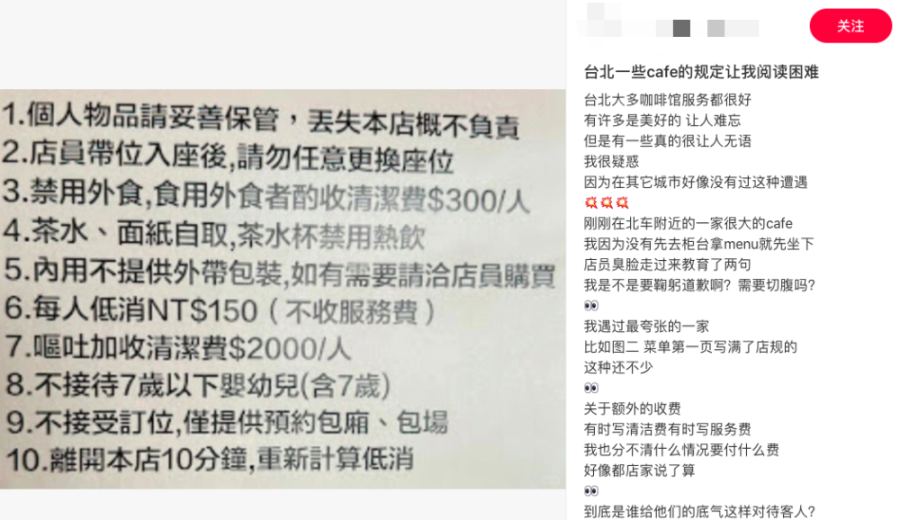
Introduction:A café in Taipei printed ten store rules on the first page of its menu, including clauses such as "vomiting incurs an additional cleaning fee of NT$2,000 per person" and "minimum spend recalculated if you leave the premises for 10 minutes," sparking widespread discussion. Although some of these rules may seem harsh, they reflect the practical needs of independent cafés to maintain a manageable operating environment. This article delves into the rationale behind these policies, explores the mutual selection between consumers and shop owners, and offers practical advice for choosing the right coffee space.
Recently, a photo of a Taipei café’s menu circulated on social media, with its first page densely listing ten store regulations. These included special clauses such as "a cleaning fee of NT$2,000 per person for vomiting" and "minimum spend resets if you exit the store for 10 minutes," leaving many netizens exclaiming "headache." However, many also acknowledged that although the rules were strict, they could understand the café owner’s perspective.
The original poster noted that the first few café rules—such as "no smoking" and "no pets allowed"—were fairly common, but subsequent ones became notably stricter, especially those involving monetary penalties and time restrictions, which left customers puzzled. Many netizens commented under the post, suggesting that these "quirky" rules actually reflected unpleasant experiences the owner may have previously encountered.
In Taiwan, many independent cafés choose to clearly display their store regulations on menus or in prominent in-store locations, aiming to inform customers in advance about the shop’s operational philosophy and behavioral standards.This approach can effectively reduce misunderstandings and disputes between customers and shop owners,particularly when dealing with common issues such as seat-hogging or excessive noise, serving as a certain deterrent.
Some netizens stated that they actually prefer cafés with "clear rules," believing that well-defined regulations lead to a more comfortable experience. "I like this kind of shop. It makes the whole experience much more pleasant after sitting down," or "I actually prefer going to places with rules," such comments show that some consumers appreciate explicit guidelines. In contrast, chain cafés may have fewer rules, but issues like non-paying seat-hogging or loud conversations often affect other customers' dining experiences.
Experts point out that by setting clear store regulations, independent cafés can filter for customer groups that align with their operational philosophy, thereby delivering higher-quality service and coffee experiences.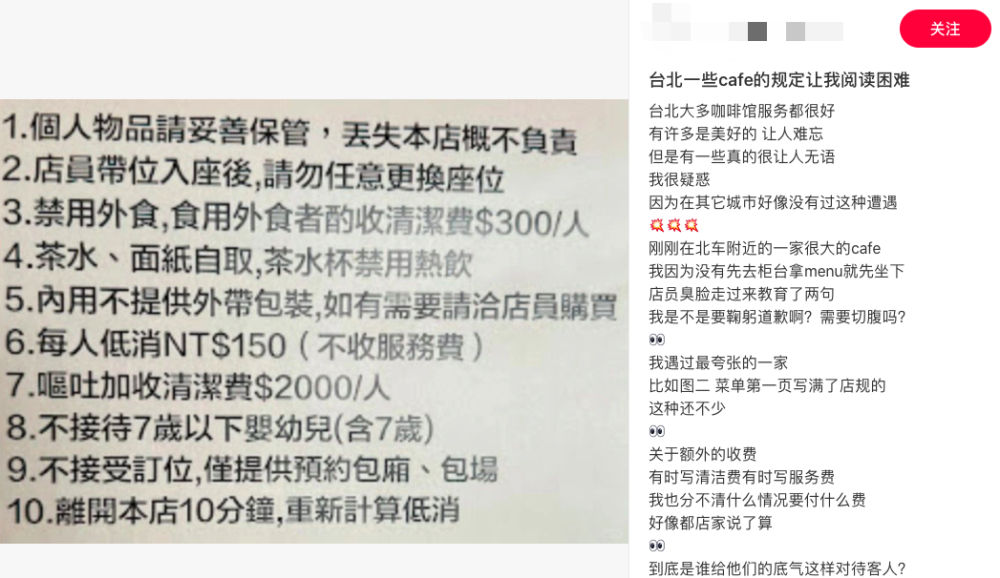 For example, certain specialty cafés post reminders in-store such as "please keep quiet" or "no loud phone calls." Though these details may seem minor, they can significantly enhance the overall atmosphere.
However, some customers feel that overly complicated rules might make them uncomfortable, worried that harmless behaviors could be misinterpreted and thus negatively impact their mealtime mood.For such customers, opting for chain cafés with more relaxed regulations may be more suitable.But it’s worth noting that while chain stores may have fewer rules, they can also give rise to other problems due to a lack of management.
In summary, the original intent behind cafés establishing store rules is to uphold the quality of the operating environment and customer service. Customers, in turn, can choose the coffee space that best fits their needs and tolerance level. Whether preferring independently run cafés with strict guidelines or more flexible chain brands, understanding each other’s expectations and limitations is key to creating a win-win consumption experience.
The above content is compiled by CoffeeHunters, a coffee news website.


