







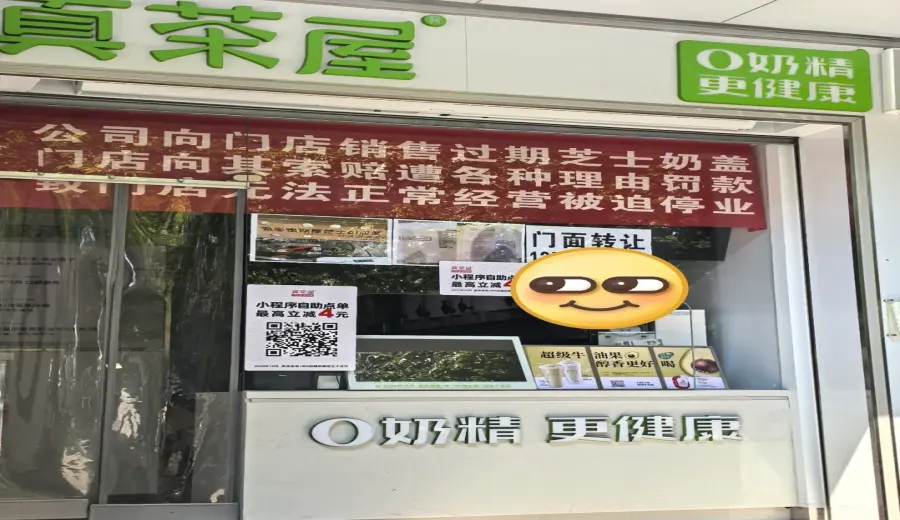
Introduction:A branch of Wuhan tea brand Zhen Chawu, named the Luguang Store, sparked heated discussion after hanging a banner accusing the company’s headquarters of selling expired cheese foam topping, which led to its forced closure. The brand responded that the topping never reached the market and that the store was shut down due to failing audits. This article details the statements from both sides, analyzes food safety control and management conflicts within the tea franchise system, and provides details on store inspection assessments to help readers better understand the current state of the industry.
Recently, a branch of Wuhan tea brand “Zhen Chawu” called the Luguang Store hung a red banner at its entrance accusing the company of selling expired cheese foam topping to its outlets, forcing it to cease operations. The incident quickly gained attention on social media. The banner read: “The company sold expired cheese foam topping to the store. When the store sought compensation, it was fined under various pretexts, making normal business impossible and leading to its closure.” After the photo spread, many consumers expressed shock.
Faced with public pressure, Zhen Chawu’s brand side responded the next day (September 25), stating that the so-called expired topping was actually “a certain brand’s cheese foam base,” and that due to an error by the supplier’s staff, an expired sample was mixed in with the regular products. The store’s staff discovered the issue during inspection on August 12, immediately scrapped the batch, and reported it to the company—meaning the expired topping never entered the market. The supplier also compensated the store in accordance with the agreement, offering a “one-for-ten” refund.
In addition, the brand emphasized that to strengthen future food safety management, it has suspended cooperation with the involved supplier and upgraded its warehousing and supply chain systems. However, if the expired product never reached the market, why did the store still hang such an accusatory banner?
The brand explained that the store had repeatedly violated store management regulations, performed poorly in monthly audits, and failed to meet standards multiple times, prompting the company to initiate the store closure process. But during the execution of the closure, a dispute arose between the audit department and the store manager. In the heat of the moment, the store side created a banner that “falsified facts” and hung it at the storefront. Later, the store manager realized the action was inappropriate and took the banner down, but it had already been photographed by passersby and uploaded online.
To verify the brand’s claims, some media tried to contact the Luguang Store manager, but the phone was unreachable. An interviewee claiming to be an administrative staff member at the brand’s headquarters stated that the store closure had nothing to do with the expired topping. “At the time, the store owner was very satisfied with how the expired sample issue was handled.” She further explained that the main reason for the closure was repeated failures in audits, covering comprehensive evaluations such as service quality, business performance, and food safety. The brand had given the store multiple opportunities to improve, but it still did not make the necessary changes.
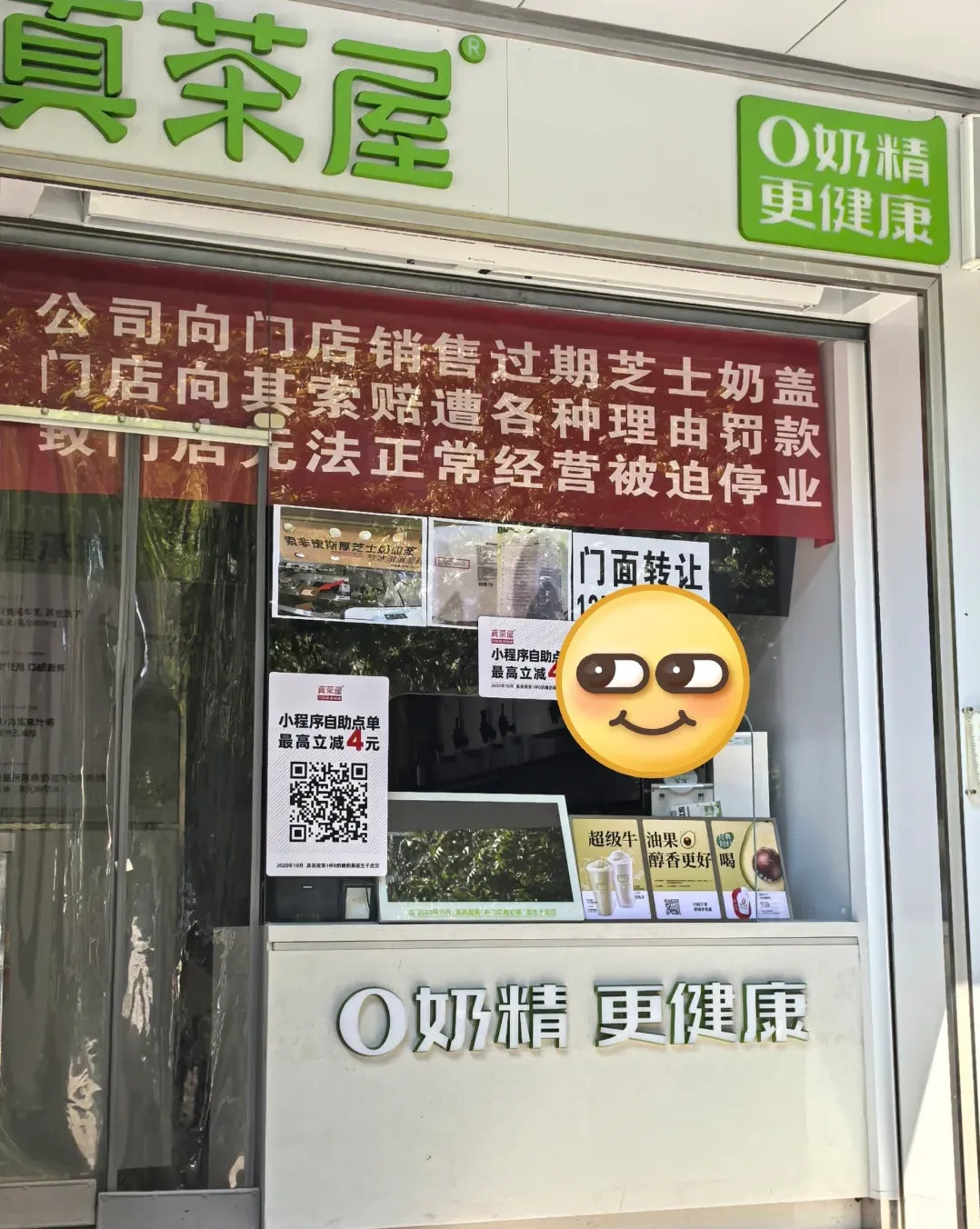
It is understood that the store had completed its transfer on September 26, with all equipment cleared out and only workers carrying out final cleaning. Nearby merchants revealed that the space will soon be turned into a wonton shop.
Inside the now-empty store, an uninspected inspection checklist could still be seen. The checklist showed that the store’s total score was 100 points, with 60 as the passing mark. The brand’s headquarters conducts monthly inspections and gives comprehensive scores based on multiple criteria. The managers of the bottom three stores each month will be called in for discussions. If a store fails its first assessment during the contract period, it will receive a warning; a second failure leads to a deeper discussion; and upon accumulating three failures, the store must “voluntarily donate” 5,000 yuan, close for rectification and training, and the brand reserves the right to unilaterally terminate the partnership.
The inspection content is mainly divided into four categories: food safety, product standards, hygiene conditions, and store management. Each category is further divided into multiple indicators, and any non-compliance results in point deductions. Some violations also have clearly defined “voluntary donation” amounts—for example, deliberately concealing externally sourced ingredients or altering expiration dates will result in a 5,000 yuan donation, while expired food products require a 1,000 yuan donation. These details reflect tea brands’ strict requirements for the operational quality and food safety control of their franchises, and also highlight potential management and communication conflicts between the headquarters and the stores.
The above content is compiled by CoffeeHunters, a coffee news website.


