







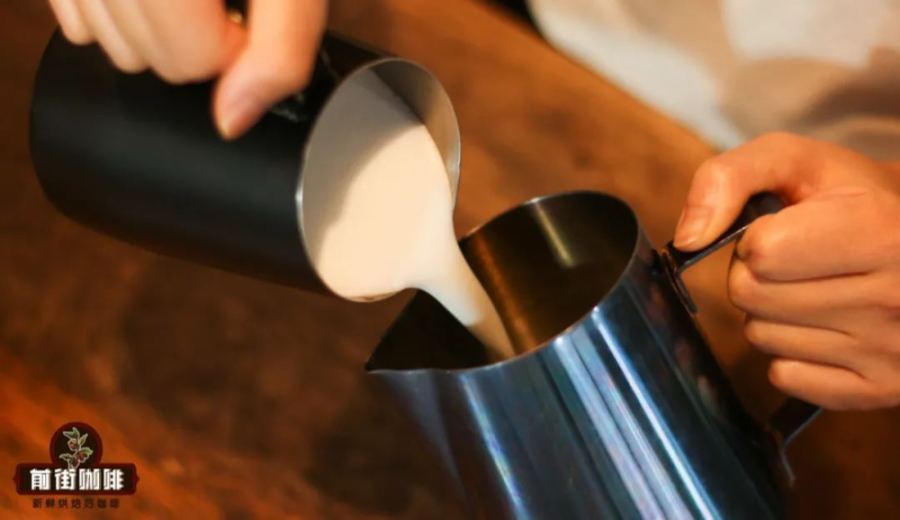
Introduction:The "pouring between pitchers" motion during coffee latte art may seem simple, but it is a key step in improving milk foam texture and latte art quality. This article delves into how pouring between pitchers enhances milk foam fineness, eliminates large bubbles and clumps, and reduces the difficulty of latte art. It also provides practical advice on pitcher selection, pouring technique, and pouring angle to help coffee enthusiasts master more precise latte art skills.
During the process of creating coffee latte art, "pouring between pitchers" is a common yet often overlooked technique. Many novice baristas or coffee enthusiasts, when practicing latte art, often wonder why it’s necessary to pour milk foam from one pitcher to another. In fact, this action not only improves the texture of the milk foam but can also significantly enhance the success rate of latte art. This article will explain in detail the principle and practical benefits of pouring between pitchers, and explore how this technique can help create more refined latte art patterns on lattes.
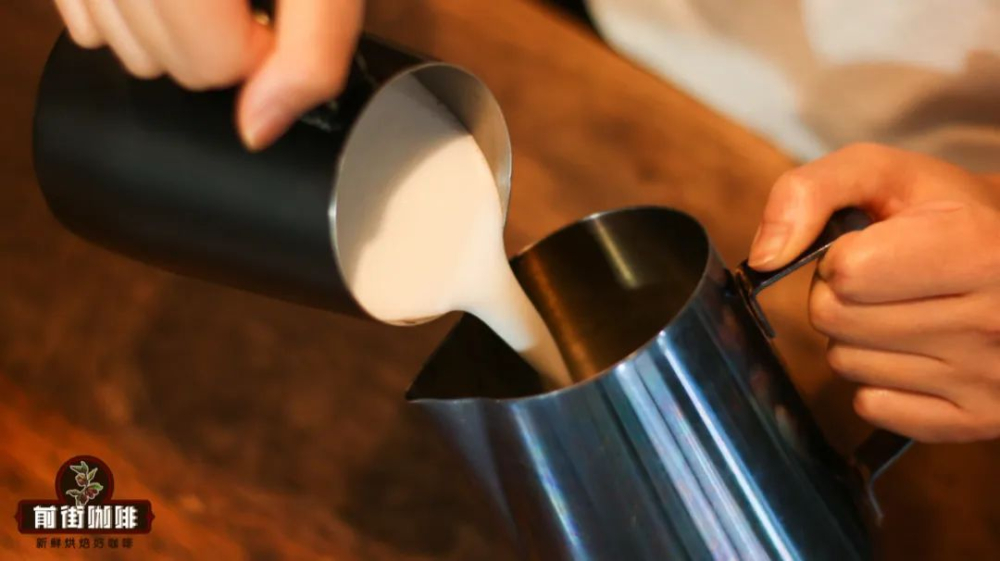
The so-called "pouring between pitchers" refers to transferring the steamed milk foam from the original small-capacity latte pitcher to another larger or similarly sized pitcher. This action is sometimes also referred to as "secondary blending" in the industry. Through the process of pouring between pitchers, the milk foam is re-mixed and optimized due to the flow and impact between the pitchers. For cases where the milk foam texture is suboptimal—such as having too many large bubbles, clumps, or even separation due to being left standing for too long—pouring between pitchers can serve as an effective corrective measure.
Why is the fineness of milk foam so important for latte art? Latte art is essentially the process of “painting” on the surface of coffee crema using milk foam. The finer and more fluid the milk foam, the smoother and more detailed the patterns that can be formed on the liquid surface. On the contrary, if the milk foam is coarse with overly large bubbles, it not only affects the details of the design but can also lead to broken lines or uneven textures during pouring. Therefore, maintaining the optimal state of milk foam is the foundation of successful latte art.
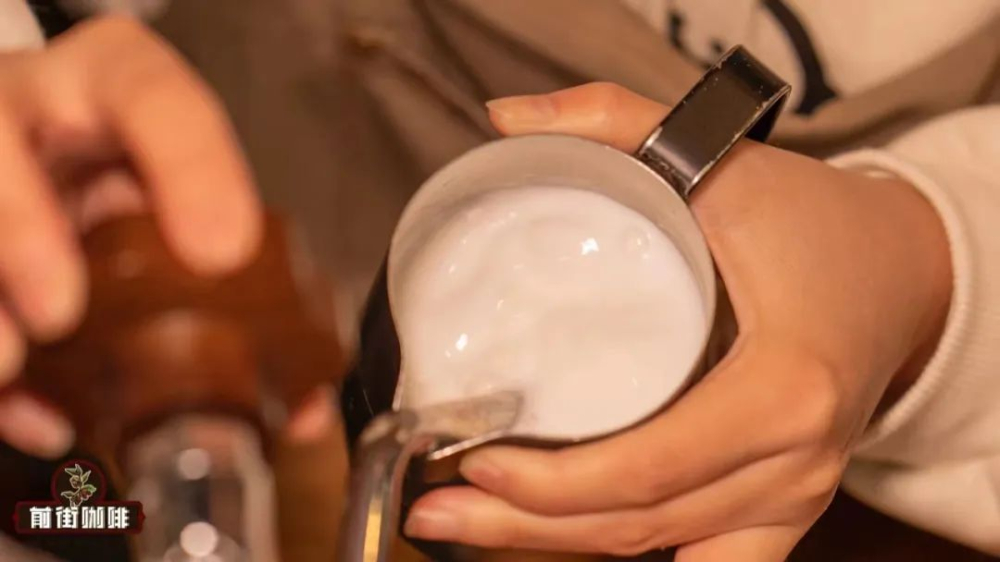
But in actual practice, due to factors such as steaming technique, steam pressure, or milk temperature, the milk foam often ends up in less-than-ideal conditions. Common issues include: milk foam that is too rough, containing many large bubbles that don’t dissipate easily; milk foam that is too thick, with poor fluidity that makes control difficult; or milk foam that, after sitting for a while, develops clumps and separation. These problems directly affect the texture and visual presentation of the latte art. In such cases, pouring between pitchers becomes a simple yet effective remedy.
During the process of pouring between pitchers, the milk foam, subjected to the collision and flow impact between pitchers, achieves three main improvements: First, the milk foam is re-mixed evenly with the milk, enhancing overall consistency; second, the impact helps break up coarse large bubbles, making the foam finer; third, any previously clumped or settled foam is dispersed, restoring smooth fluidity. Such milk foam is better suited for detailed latte art, especially when drawing fine lines or complex patterns, resulting in superior performance.
In addition, pouring between pitchers can indirectly reduce the operational difficulty of latte art. When creating latte art, baristas need to tilt the pitcher at an appropriate angle, bringing the spout as close as possible to the coffee surface to minimize the impact of the foam and ensure it floats smoothly on the crema. If the milk foam is too stiff or has poor fluidity, it’s hard to control the pattern even with proper tilting. By optimizing the foam through pouring between pitchers, baristas can more flexibly adjust the pitcher angle and choose a larger pitcher to increase milk volume and maneuvering space.

Some baristas might wonder: why not just use a large-capacity pitcher to steam the milk in the first place? Wouldn’t that be more convenient? However, large-capacity pitchers require a greater base amount of milk, whereas the amount of milk typically needed for latte art isn’t that much. Using a large pitcher directly not only wastes milk but may also cause operational inconvenience due to insufficient milk volume. Therefore, a more practical approach is to first steam the milk foam in a smaller pitcher, then pour it into a suitably sized larger pitcher for latte art. This way, you can control the milk volume while enjoying greater operational flexibility.
It’s worth noting that there are some details to pay attention to when pouring between pitchers. First, the pouring motion should not be too high, as this could introduce additional bubbles and affect the fineness of the milk foam. Second, latte art should be performed as soon as possible after pouring, because the milk foam processed this way may lose its foam stability more quickly. If left standing for too long, the foam may once again become less fluid, affecting the final latte art outcome.

The above content is compiled by CoffeeHunters, a coffee news website.


